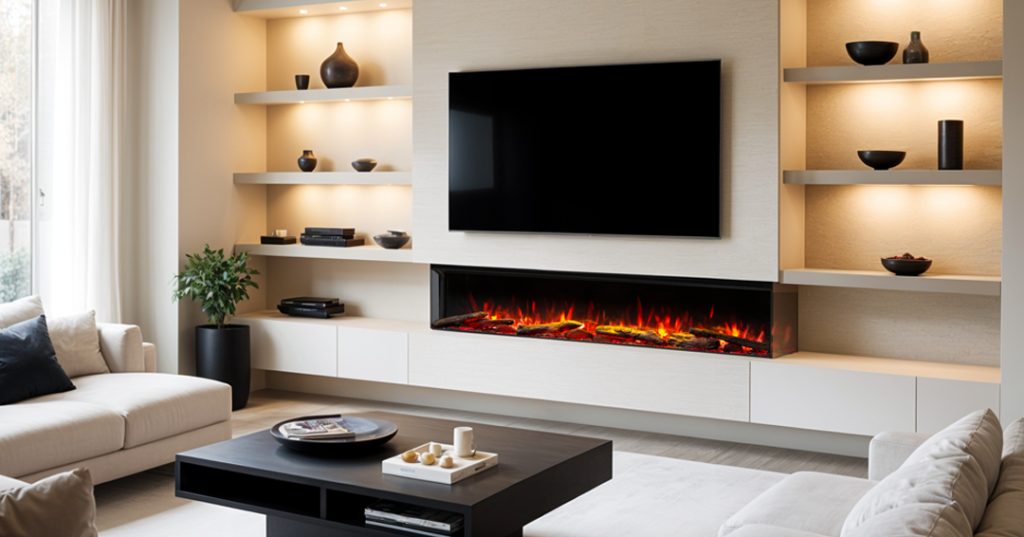
It is one of the most common questions asked in fireplace showrooms up and down the country: do electric fires actually heat a room, or are they just a pretty light show? The short answer is yes, a modern electric fire genuinely heats a room. The longer answer involves understanding how they work, what size of room they can realistically warm, what type of heating technology is inside your chosen model, and when an electric fire works best as a heating solution in a UK home.
This guide covers everything you need to know before you buy, from the science behind electric fire heat output to practical room-by-room guidance that will help you choose the right model for your space.
Yes, Electric Fires Really Do Heat a Room
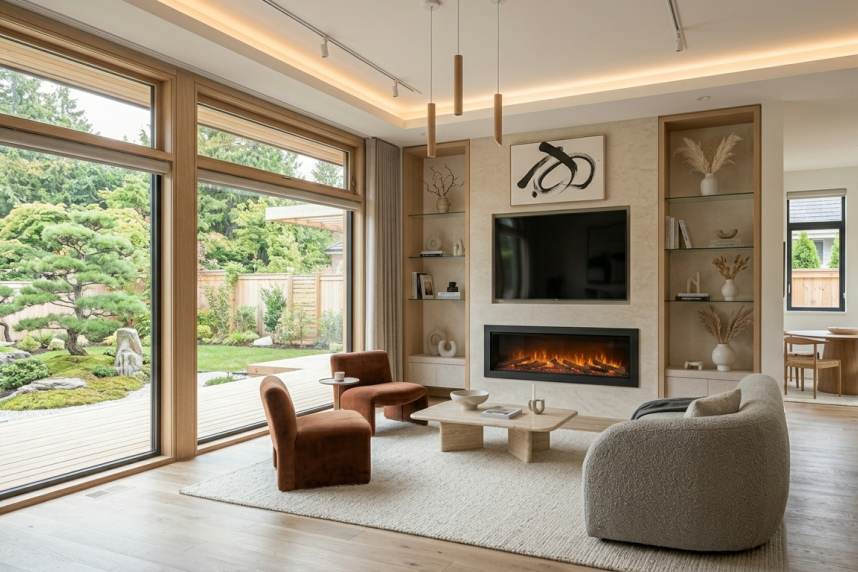
Modern electric fires are not decorative novelties. They contain real heating elements that convert electricity into warmth with 100% efficiency at the point of use. Every watt of electricity drawn by the fire becomes heat in your room. There is no flue, no chimney, no combustion process to waste energy. The heat stays exactly where you need it.
Most electric fires sold in the UK today are rated between 1kW and 2kW. A 1.5kW electric fire generates around 5,000 BTU (British Thermal Units), which is sufficient to heat a small to medium-sized living room. A 2kW model generates approximately 6,800 BTU, making it well suited to larger spaces.
The important distinction is that electric fires work best as zone heaters, meaning they are designed to warm the specific room you are using rather than replace a whole-house central heating system. Used in this way, they are highly effective.
How Do Electric Fires Produce Heat?
Understanding the heating technology inside your electric fire helps you choose the right model and set realistic expectations for performance. Electric fireplaces primarily use two different heating technologies: fan-forced heating and infrared heating. Each has distinct advantages and limitations that affect performance, comfort, and energy efficiency.
Fan-Forced (Convection) Heating
Fan-forced heating uses a metal heating element that warms air, which is then distributed throughout the room by a built-in fan. This convection heating method is the most common and affordable option found in standard electric fireplaces.
Here is how it works in practice: cool air is drawn in from the room, passed over a heated metal coil or element, and then blown back into the room as warm air. The fan circulates this warm air steadily, gradually raising the temperature of the whole room. Most fan-forced electric fires can warm a small to medium room within 15 to 20 minutes of being switched on.
The advantages of fan-forced models include widespread heat distribution, fast initial warm-up, and lower purchase prices. The slight downside is that the fan can be audible in a very quiet room, and heat can feel less immediate than infrared because you are warming the air rather than objects directly.
Fan-forced models are the most common type found in UK electric fires, including the majority of inset fires and fire suites you will see in showrooms.
Infrared Heating
Infrared fireplaces use infrared quartz technology to produce heat. Instead of warming the air, these units emit infrared radiation, which directly heats objects and people in the room, similar to the way the sun warms your skin.
The effect is almost immediate. You feel warm within seconds of the infrared element activating, even before the air temperature in the room rises. This makes infrared particularly popular for rooms that are difficult to heat quickly, open-plan spaces, or situations where you want targeted warmth fast.
Infrared heaters are capable of heating larger spaces than fan-forced units. Because infrared is not directional in the same way, it more evenly heats the entirety of a room.
The trade-off is that infrared models tend to cost more upfront, and the heat can feel less evenly distributed in small, enclosed rooms compared to fan-forced convection.
Which Heating Type is Right for You?
If you want instant heat in a focused area, infrared is the better choice. If you want to gradually warm up a whole room to a specific temperature and maintain it, fan-forced is the way to go.
For the majority of UK living rooms and bedrooms, fan-forced models work extremely well. If you have an open-plan kitchen-diner or a large, draughty room, an infrared model or a higher wattage fire may serve you better. Our team at Blue Oak Fireplaces can help you assess your room and recommend the right technology.
What Size Room Can an Electric Fire Heat?

This is where many homeowners run into confusion. The answer depends on three things: the wattage of the fire, the insulation quality of your room, and the ceiling height.
The 100 Watts Per Square Metre Rule
A general guideline is to calculate the wattage required based on room size. You need around 100 watts per square metre to warm a room to a comfortable temperature. A 20m² room would need a 2,000-watt heater to maintain a comfortable temperature.
This gives us a practical framework for matching electric fire output to room size:
| Room Size | Recommended Output | Typical Room Type |
|---|---|---|
| Up to 10m² | 1kW | Small bedroom, home office |
| 10m² to 15m² | 1.5kW | Medium bedroom, dining room |
| 15m² to 20m² | 2kW | Average UK living room |
| 20m² to 30m² | 2kW + supplemental heating | Large living room, open plan |
| Over 30m² | 3kW or multiple heat sources | Open-plan kitchen-diner, large reception room |
Adjusting for Insulation Quality
The 100 watts per square metre figure is a starting point. You need to adjust upwards for anything that makes a room harder to heat: poor insulation, a high ceiling, several outside walls, or a north-facing aspect.
A well-insulated modern new build with double glazing, cavity wall insulation, and underfloor insulation will retain heat easily. A Victorian terrace with single glazing, suspended timber floors, and solid walls will lose heat much faster, meaning the same electric fire will need to work harder and may not be sufficient as a sole heat source for a large room.
If you live in a new build or a recently renovated property, you are likely to find a 2kW electric fire perfectly capable of maintaining a comfortable temperature in your living room. For older properties, combining the electric fire with your central heating, or selecting a model with a higher output, may be the more practical approach.
Our guide to fireplace ideas for new homes without a chimney explores how electric fires are increasingly the go-to solution in well-insulated modern builds across Leicester and beyond.
Electric Fires as Primary vs Supplemental Heating

This is perhaps the most important question any homeowner should ask when considering an electric fire: am I planning to use this as my primary heat source, or as supplemental heating alongside my central heating system?
As Supplemental Zone Heating
This is where electric fires genuinely excel. Rather than heating your entire home through central heating when you are only using one room, an electric fire allows you to zone heat. You switch on the fire in the room you are occupying, turn the central heating down or off, and pay to heat only the space you are actually in.
Using your electric fire for zone heating, warming only occupied rooms whilst turning down central heating elsewhere, is a strategic way to manage your energy costs. Electric fires shine in smaller, insulated spaces.
For many Leicester households that spend most of their evenings in the living room, this approach makes strong practical and financial sense. The electric fire handles the room you are in, while the rest of the house stays at a lower background temperature.
As a Primary Heat Source
For a small, well-insulated room such as a home office, single bedroom, or studio flat, a 1.5kW to 2kW electric fire can comfortably serve as the primary heat source throughout the colder months.
For a large family home, using an electric fire as the sole heat source across multiple rooms is not realistic. The wattage limitations of standard UK domestic electric fires mean they are not designed to replace a full central heating system in a large property.
The honest answer is that an electric fire works best when it is the primary heat source for a single well-matched room, or a supplemental heat source that reduces central heating usage across a larger home. Both applications are genuinely valuable.
Do Electric Fires Heat as Well as Gas Fires?
Gas fires typically offer higher heat output, often ranging from 3kW to 6kW or more. This gives them a significant advantage in larger rooms or properties that need rapid, powerful heating. At the current Ofgem gas rate of 7.33p per kWh, gas is also cheaper to run per unit of heat.
However, the comparison is not as straightforward as the wattage numbers suggest:
Electric fires deliver 100% of their heat into the room. Gas fires lose heat up the flue. A gas fire rated at 4kW may deliver an effective room heat of only 3kW to 3.4kW once flue losses are accounted for, depending on its efficiency rating. When you operate a 2kW electric fire, the entirety of its heat output goes towards heating your room, because nothing is being burned. With gas fires, a significant proportion of the heat output is being lost straight up the chimney.
Electric fires require no annual servicing. A gas fire must be checked by a Gas Safe registered engineer every year, typically costing £60 to £120. This running cost does not show up in the per-kWh comparison but is very real over the life of the appliance.
Electric fires can be installed anywhere. No chimney, no flue, no gas supply needed. This is a fundamental advantage for many UK properties.
For a direct, detailed comparison of both fuel types, read our full guide on electric fire vs gas fire for UK homes.
Do Electric Fires Heat as Well as Wood-Burning Stoves?

Wood-burning stoves are capable of much higher heat output, typically starting at 4kW and going up to 8kW or beyond. They also produce radiant heat that many homeowners find more deeply warming than convective or infrared electric heat.
However, stoves require a working chimney, HETAS-registered installation, annual chimney sweeping, ongoing fuel costs, and significantly more effort to operate day to day.
For properties without a chimney, or for homeowners who want warmth without the daily commitment of lighting, managing, and cleaning a solid fuel fire, an electric fire is a genuinely effective and far more convenient alternative.
If you are comparing all three fuel types in detail, our guide on gas vs wood-burning fireplaces provides a thorough side-by-side breakdown.
The Role of Thermostat Controls in Heating Effectiveness
One feature that significantly affects how well an electric fire heats a room is the quality of its thermostat. A fire with a good thermostatic controller will monitor the room temperature continuously and switch the heating element on and off to maintain your chosen temperature. This means:
- The room stays at a consistent, comfortable temperature rather than overheating and then cooling
- The fire draws full power only when the room genuinely needs it, reducing running costs
- You do not need to keep adjusting settings manually
Many homeowners underestimate how much difference a quality thermostat makes. A fire without a thermostat running on high continuously will overheat a small room and cost more to run than a thermostated model maintaining a steady 21°C.
When choosing your electric fire, look for models with digital thermostats, timer functions, and ideally remote or app control. These features turn the fire from a simple heater into a genuinely smart zone heating solution. This is one of the key considerations when choosing the right fireplace for your room size.
Factors That Affect How Well an Electric Fire Heats Your Room
Room Insulation and Draught-Proofing
The single biggest variable in how effectively any fire heats a room. A well-insulated room with good draught-proofing retains heat so effectively that a 1kW fire may be sufficient. A cold, draughty room will lose heat faster than even a 2kW fire can replace it in severe weather.
Simple improvements like draught excluders on doors, chimney balloon blockers, and thermal curtains can dramatically improve the heating effectiveness of your electric fire at zero ongoing cost.
Room Height
Standard room sizes assume a ceiling height of around 2.3 to 2.4 metres. Rooms with high ceilings, such as Victorian properties or converted spaces, have significantly more air volume to heat. If your room has a ceiling height above 2.5 metres, increase your target wattage accordingly.
Open-Plan Layouts
Electric fires work most effectively in enclosed rooms. Open-plan kitchen-diners and large connecting spaces present a real challenge for any single heat source. Heat generated in one area dissipates into the wider space, making it difficult to maintain a comfortable temperature without a higher-output fire or multiple heat sources.
If you have a media wall featuring an electric fire in an open-plan space, our guide to media wall fireplace ideas discusses how to make this work effectively in terms of layout and heat output selection.
Position of the Fire in the Room
Electric fires with fan-forced heating distribute warm air most effectively when there is clear space in front of the unit. Placing furniture immediately in front of the fire, or boxing it into an alcove without adequate clearance, restricts airflow and reduces heating performance.
Number of External Walls and Windows
A room with three external walls or large single-glazed windows will lose heat far faster than a central internal room. Every additional external wall or poorly insulated window increases the effective wattage needed to maintain a comfortable temperature.
Electric Fire Heating in Different Rooms: Practical Guidance
Living Room
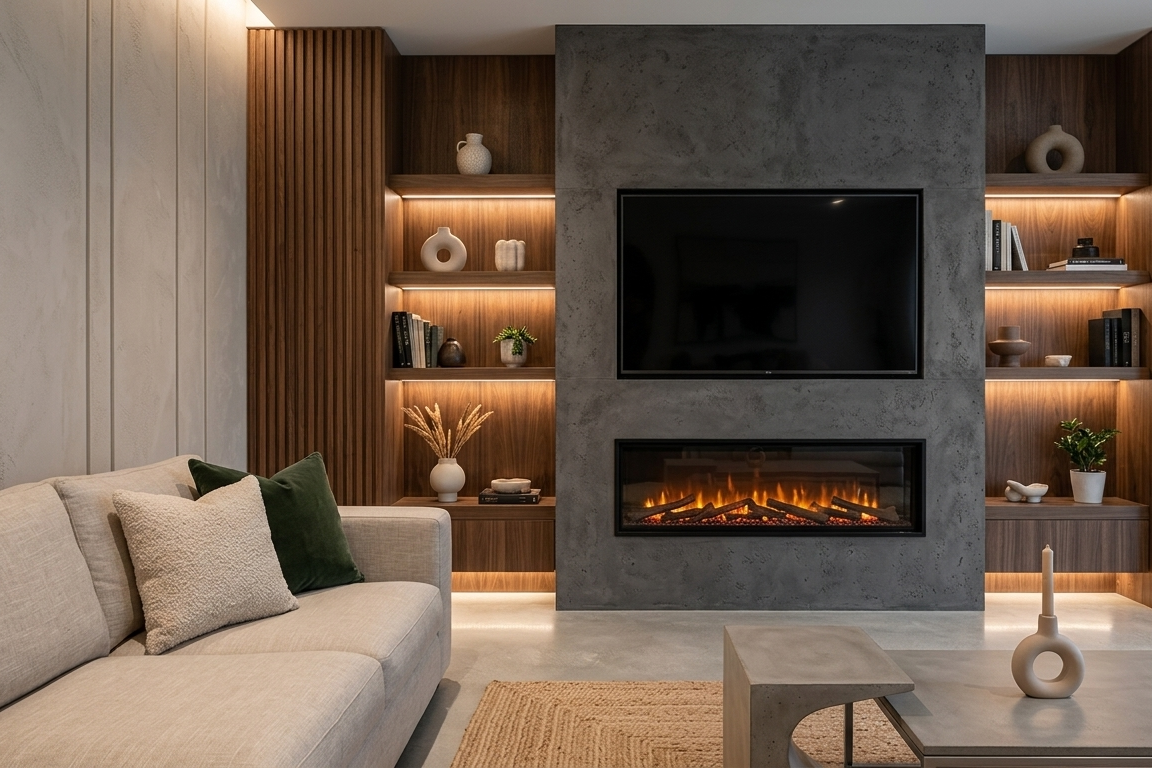
The most common location for an electric fire in a UK home. Most UK living rooms fall between 15m² and 25m². A 2kW electric fire is the right starting point. In a well-insulated modern home, a 2kW fire will comfortably maintain a pleasant temperature on all but the coldest winter evenings. In an older property, you may find the fire works best in combination with your central heating, perhaps replacing the evening boost from your boiler.
Bedroom
Bedrooms are typically smaller and better insulated than living rooms, making them ideal candidates for electric fire heating. A 1kW to 1.5kW fire is usually more than sufficient. Electric fires are also safer in bedrooms than gas fires because there is no risk of carbon monoxide and no requirement for ventilation. Many families choose an electric fire for a bedroom specifically because of this safety advantage.
Home Office
A growing number of UK homeowners are using electric fires in home offices and garden rooms. These spaces often have poor insulation compared to the main house, making an infrared model a particularly good choice here, as the direct radiant heat warms the occupant immediately regardless of how cold the air in the room is.
Conservatory
Conservatories present the biggest heating challenge of any room in a UK home. Heat loss through glass is extremely high, and standard electric fires will struggle to maintain a comfortable temperature in cold weather. A higher-output infrared model combined with secondary insulation measures, such as thermal blinds and insulated flooring, can help, but a conservatory in deep winter is genuinely difficult to heat with a single electric fire.
Open-Plan Kitchen-Diner
Open-plan spaces are where electric fire limitations are most apparent. A 2kW fire will contribute warmth to the occupied area nearest the fire, but maintaining an even temperature across a large open space requires either a very high-output model or a combination of heating sources. Many homeowners in these layouts use the electric fire for ambience and zone warmth in the seating area, relying on the kitchen appliances and central heating to manage the wider temperature.
Can You Use an Electric Fire as Your Only Heating?
For a well-insulated flat or single-room dwelling, yes. For a full-sized family home, no. Here is a practical breakdown:
Electric fire as sole heat source works well for:
- Studio flats and one-bedroom apartments with modern insulation
- Single rooms in a larger property where central heating provides background warmth elsewhere
- Garden offices, summerhouses, and outbuildings (with an appropriately matched infrared model)
- Holiday lets and single-occupancy properties
Electric fire as sole heat source is not sufficient for:
- Large family homes as the only heat source on cold winter days
- Properties with very poor insulation where heat loss outpaces a 2kW output
- Open-plan spaces of more than 25 to 30 square metres without supplemental heating
This is not a failure of the electric fire. It is simply a question of matching the appliance to the task. A 2kW hob does not replace an industrial kitchen range, but it is perfectly suited to cooking for a family. The same logic applies here.
Safety: Do Electric Fires Get Hot Enough to Be a Hazard?
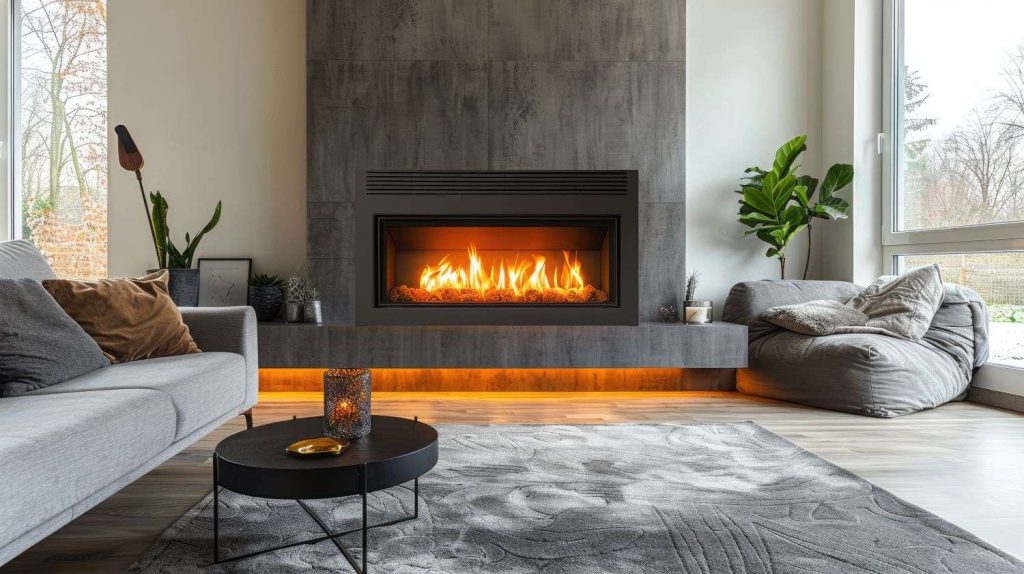
Electric fires are among the safest heating appliances available for UK homes. Key safety advantages include:
- No combustion means no carbon monoxide risk
- No requirement for ventilation or flue
- Most models have a cool-to-touch outer casing, making them far safer around children and pets than gas fires or stoves
- Automatic overheat protection cuts the heating element if the fire gets too warm internally
- No sparks, no embers, no risk of chimney fires
These safety advantages are a significant reason why electric fires are the preferred choice for rented properties, homes with young children, and households where a Gas Safe engineer visit every year is not something the occupant wishes to manage.
You can read more about general fireplace safety considerations in our fireplace safety checklist.
Choosing the Right Electric Fire for Maximum Heating Performance
If heating effectiveness is a priority alongside aesthetics, here are the key things to look for when choosing your electric fire:
Output rating matched to room size. Do not buy a 1kW fire for a 20m² room and expect it to maintain warmth on a cold January evening. Use the 100 watts per square metre rule as your starting point and adjust for your insulation level.
A quality thermostatic controller. This is non-negotiable for effective zone heating. A thermostat that accurately reads room temperature and cycles the element on and off will outperform a simple high/low switch in both comfort and running cost.
The right heating technology. Fan-forced for enclosed rooms where even air distribution matters. Infrared for open plans, cold starts, or targeted personal warmth.
Timer and smart controls. The ability to set the fire to come on before you enter the room, and switch off automatically after you leave, makes a significant difference to both comfort and energy bills.
A realistic flame effect as a bonus, not the primary decision driver. The flame effect is what makes electric fires beautiful and appealing. It should be a strong consideration in your choice. But always match the heating specification to your room first.
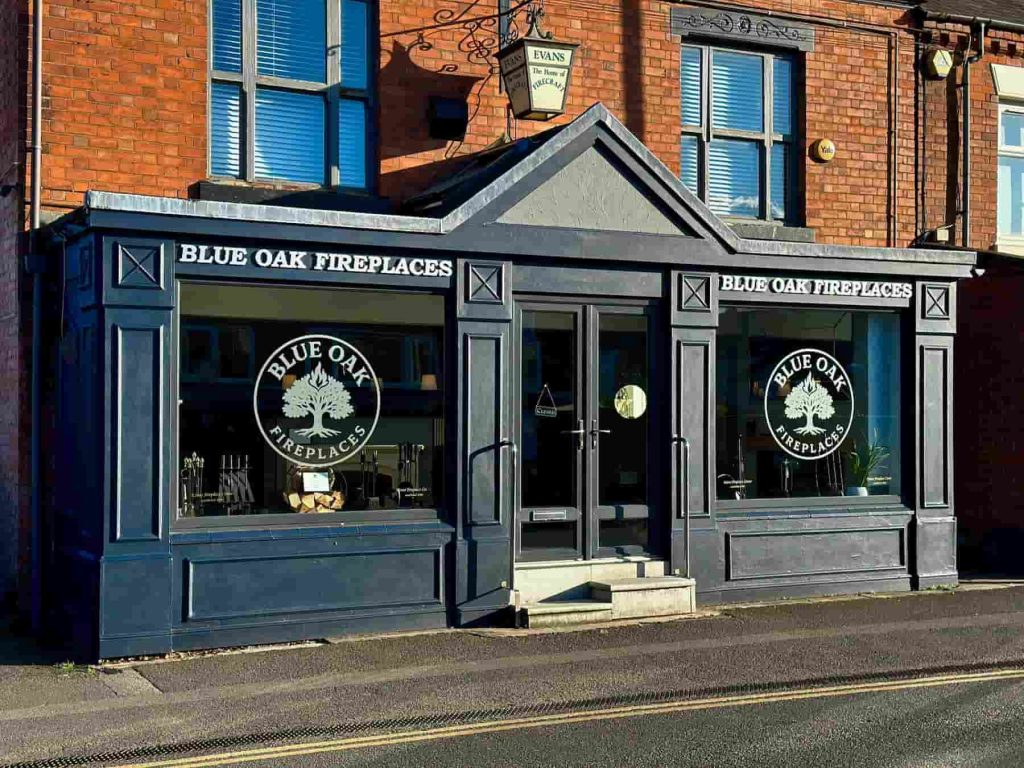
If you are considering an electric fireplace for a media wall or want to explore our full range of models across all installation types, the team at Blue Oak Fireplaces in Leicester is on hand to help you find the right fit. You can also explore the best electric fires available in the UK to shortlist the models that suit your room, style, and budget.
For homeowners curious about how the purchase and running costs compare across all fireplace types, our guide to the cheapest fireplace to run in the UK covers the full picture.
Frequently Asked Questions
Do electric fires actually produce heat?
Yes. Modern electric fires contain real heating elements, either fan-forced convection or infrared technology, that convert electricity into warmth. Every unit of electricity an electric fire draws is converted into heat in your room, making them 100% efficient at the point of use. They are genuine heating appliances, not simply decorative features.
How much heat does a 2kW electric fire produce?
A 2kW electric fire produces approximately 6,800 BTU of heat per hour. This is enough to comfortably heat a room of around 15 to 20 square metres in a well-insulated home. As a guide, 100 watts of electric heating output is required per square metre of floor space to maintain a comfortable room temperature of around 21°C.
Can an electric fire heat a whole house?
No. Electric fires are designed as zone heaters for individual rooms, not as whole-house heating systems. They work best when used to heat the single room you are occupying, either independently or in combination with central heating. For a whole-house heating solution, a boiler and radiator system, heat pump, or similar whole-home heating installation is required.
How long does it take for an electric fire to heat a room?
Fan-forced electric fires typically warm a well-insulated room of 15 to 20m² within 15 to 20 minutes. Infrared models produce noticeable warmth almost immediately, though warming the full air volume of a room still takes some time. The speed depends heavily on room insulation, ceiling height, and whether any windows or doors are open.
Is an electric fire good enough for winter in the UK?
For a well-insulated room of the right size, yes. In a modern new build or a recently renovated home with good insulation, double glazing, and draught proofing, a 2kW electric fire is genuinely sufficient to keep a living room or bedroom warm throughout a UK winter. In older properties with poorer insulation, the electric fire is better understood as a supplemental heat source alongside central heating rather than a standalone winter solution.
Do electric fires actually heat a room as well as gas fires?
Gas fires can deliver higher raw output, often 3kW to 6kW or more, which gives them an advantage in larger rooms or colder properties. However, gas fires lose a portion of their heat up the flue, whereas electric fires deliver 100% of their electrical input as heat into the room. For a correctly sized room, a 2kW electric fire will maintain a very similar level of comfort to a gas fire, at a similar ongoing cost per hour, once gas fire flue losses are factored in. The electric fire also requires no annual servicing, no gas supply, and no chimney.
Why does my electric fire not seem to be heating the room?
There are several possible reasons. The fire may be underpowered for the room size, particularly in a large or poorly insulated space. Check that the heat setting is switched on rather than flame-effect-only mode. Ensure the fire has adequate clearance in front of it for airflow. Check that the room does not have significant draughts from doors, windows, or an open chimney. If the fire has a thermostat and the room is already at the set temperature, the heating element will not activate. Try increasing the target temperature setting and check whether the element then comes on.
Can I run just the flame effect without the heat?
Yes. Almost all modern electric fires allow the flame effect to run completely independently of the heating element. The LED lights that create the flame effect typically use just 15 to 50 watts, costing a few pence per evening. This is one of the most practical advantages of electric fires over gas and solid fuel alternatives, allowing you to enjoy the visual ambience year-round without generating unwanted heat in warmer months.
Are electric fires safe to leave on overnight?
Most modern electric fires have built-in overheat protection and automatic timer functions, making them significantly safer than older heating appliances. However, as with any electrical heating appliance, it is advisable not to leave them running unattended for extended overnight periods unless they have been specifically designed and safety-rated for continuous operation. Always follow the manufacturer’s guidance for your specific model.
Is it cheaper to use an electric fire or turn on the central heating?
For a single room in the evening, an electric fire is often the more economical choice. Running a 1.5kW electric fire for 4 hours costs approximately 157p at the current Ofgem rate of 26.11p per kWh. If your gas central heating simultaneously heats multiple rooms, hallways, and spaces you are not using, the cost of achieving the same warmth in just one room will often exceed what the electric fire costs. The calculation depends on your boiler efficiency, the number of radiators on your circuit, and whether you have zone controls on your central heating system.
Blue Oak Fireplaces is a specialist fireplace showroom in Syston, Leicester, supplying and installing electric fires, gas fires, wood-burning stoves, and media wall fireplaces. Visit our showroom or explore our electric fireplaces range to find the right fire for your home and room size.