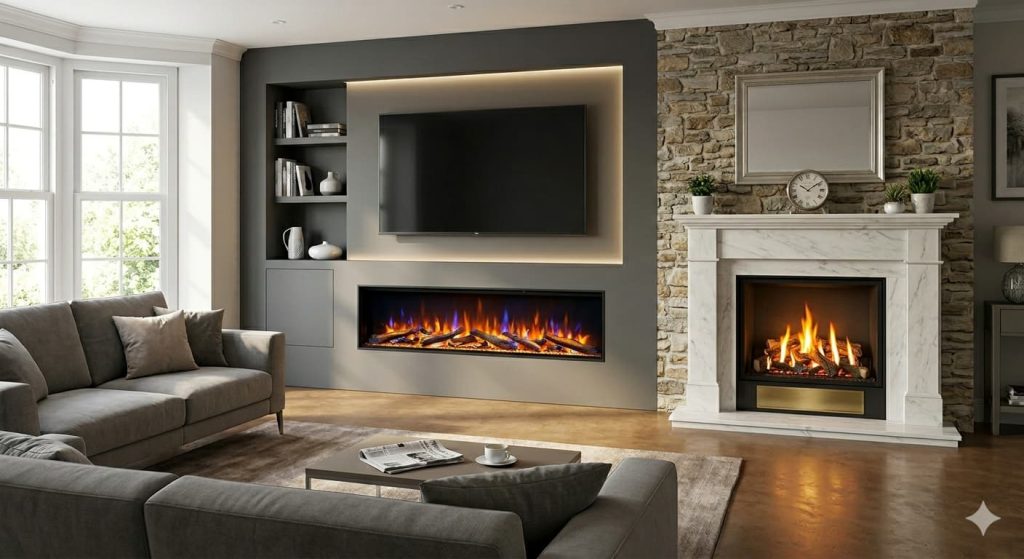
Choosing between an electric fire vs gas fire is one of the most common decisions for homeowners planning a new fireplace. Both options can add warmth, comfort and style to a living room, but the best choice depends on your home, budget, chimney setup, heat needs and design preference.
For many UK homes, especially modern properties, new builds and smaller living rooms, electric fires are becoming increasingly popular. For traditional homes, larger rooms and homeowners who want real flame heat, gas fires remain a strong option. At Blue Oak Fireplaces, we help customers compare electric fires, gas fires, stoves, fireplace surrounds and media wall fireplaces so they can choose the right solution with confidence.
This guide compares electric fire vs gas fire in simple terms, including installation, running costs, maintenance, design flexibility, safety and the best option for different UK homes.
Quick Answer: Electric Fire vs Gas Fire?
If you want a low-maintenance fireplace, a modern design, simple installation and no chimney requirement, an electric fire is usually the better choice. If you want strong heat output, a real flame and a traditional fireplace feel, a gas fire may be the better option.
The right answer depends on how you use your room. A media wall with an electric fireplace is ideal for modern living rooms, while a gas fire works beautifully in a classic fireplace surround or a property with an existing flue.
What is an Electric Fire?
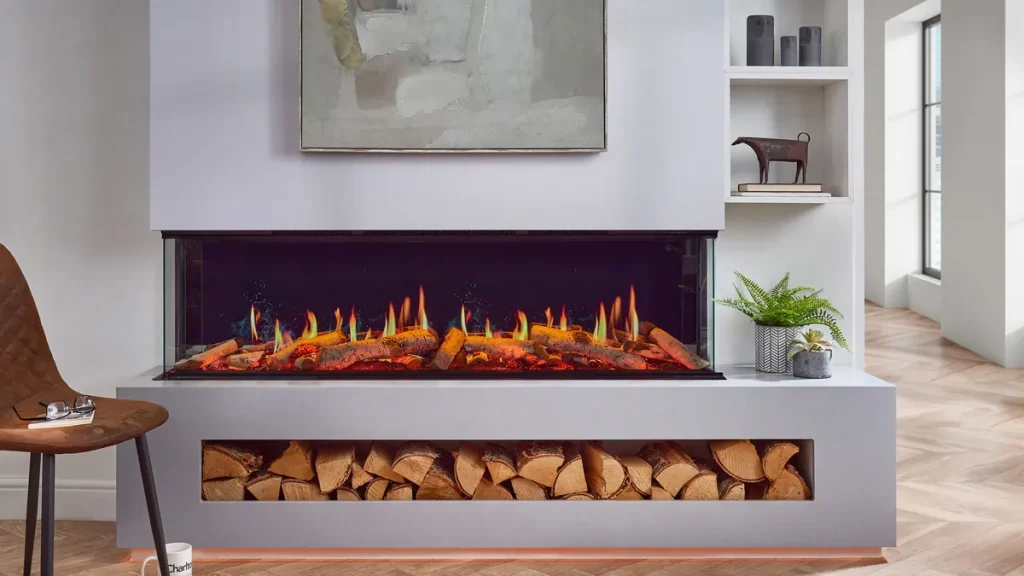
An electric fire is a fireplace that uses electricity to create heat and a flame effect. Many modern electric fires use LED flame technology, glowing fuel beds and realistic log effects to create a cosy look without needing a chimney, flue or gas supply.
Electric fires are available in many designs, including inset electric fires, wall-mounted fires, freestanding electric stoves and built-in electric media wall fires. This makes them a flexible choice for UK homeowners who want a stylish fireplace without major building work.
Best for:
· Media walls and TV fireplace features
· New build homes without a chimney
· Small living rooms and apartments
· Low maintenance heating
· Modern fireplace designs
What is a Gas Fire?
A gas fire uses gas to create real flames and direct heat. Gas fires are available in traditional and modern styles, including inset gas fires, hole in the wall gas fires, balanced flue gas fires and gas fires with fireplace surrounds.
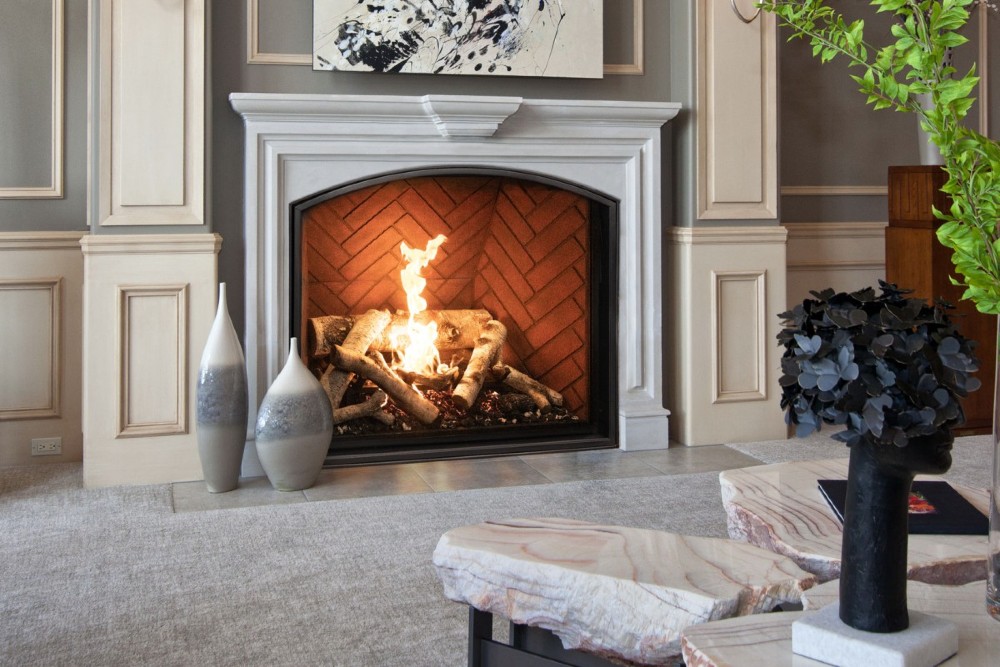
Many homeowners choose gas fires because they provide a realistic flame, fast warmth and a familiar fireplace experience. However, gas fires usually need professional installation, appropriate ventilation and regular servicing.
Best for:
· Homes with an existing chimney or flue
· Traditional fireplace surrounds
· Rooms that need stronger heat output
· Homeowners who prefer real flames
· Classic and contemporary fireplace settings
1. Installation: Which Is Easier?
Comparing electric fire vs gas fire: Electric fires are usually easier to install than gas fires. Many electric fireplace models can be fitted into a media wall, fireplace opening or wall unit without needing a chimney. This makes electric fires popular for modern UK homes, apartments and properties where a traditional chimney breast is not available.
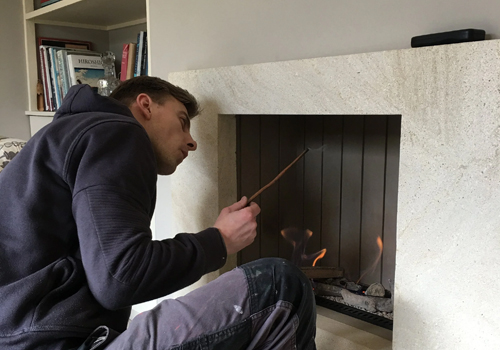
Gas fires require more planning. They need a suitable gas supply, correct ventilation and professional installation. If your home already has a chimney or flue, a gas fire can be a practical option. If not, you may need to consider a balanced flue gas fire or another suitable solution.
For homeowners searching for fireplace installation in Leicester, the best approach is to book a survey before choosing the fire. A professional survey can confirm whether your home is suitable for an electric fire, gas fire, stove, chimney liner or media wall installation.
2. Running Costs: Which Is Cheaper?
Running costs are one of the biggest questions when comparing an electric fire vs gas fire. The answer depends on how often you use the fireplace, the heat setting, your energy tariff and the size of the room.
Electric fires are often used for ambience because many models allow you to enjoy the flame effect without using the heater. This is useful if you want the look of a cosy fireplace without constant heat. When the heater is on, electric fires are typically best for supplementary warmth rather than heating a large room all day.
Gas fires can provide strong heat output and may be suitable for regular room heating. However, they also require professional servicing and must be installed correctly. The cheapest option is not always the best option. Homeowners should compare running costs, installation costs, maintenance and long-term value.
3. Design: Which Looks Better?
Both electric fires and gas fires can look excellent when matched to the right room. Electric fires are often the best choice for modern interiors, media walls, built-in TV units and minimalist living rooms. They can create a sleek focal point with clean lines, LED lighting and hidden cables.
Gas fires are ideal if you want a real flame and a more traditional fireplace feel. They work well with marble surrounds, stone fireplaces, wooden mantels and classic living room designs. Modern gas fires can also look very contemporary, especially in hole-in-the-wall or glass-fronted designs.
If your goal is a modern media wall fireplace, electric is usually the more flexible option. If your goal is a real flame inside a beautiful fire surround, gas may be the stronger choice.
4. Maintenance and Servicing
Electric fires are generally low maintenance. There is no ash, no soot, no chimney sweeping and no gas safety check. The main care usually involves keeping the fire clean, checking the remote control and following the manufacturer’s instructions.

Gas fires need more regular care. A gas fire should be serviced by a qualified professional to keep it safe, efficient and working correctly. Regular gas fire servicing can help identify issues with ventilation, flame quality, pilot lights, seals and appliance performance.
If low maintenance is your priority, electric fires have a clear advantage. If you prefer the warmth and feel of a real gas flame, the extra maintenance may be worth it.
5. Safety: What Should UK Homeowners Know?
Both electric fire vs gas fire can be safe when installed and used correctly. Electric fires should be fitted according to manufacturer guidance, with safe wiring and proper clearance around the appliance. Gas fires need correct installation, ventilation and servicing.
Any gas fire installation or service should be handled by a suitably qualified engineer. For solid fuel appliances and stoves, homeowners should also seek appropriate professional advice for the flue, chimney liner, hearth, ventilation and building requirements.
At Blue Oak Fireplaces, safety is always part of the design and installation conversation. A fireplace should look beautiful, but it also needs to be suitable for the home.
6. Which Is Better for Media Walls?
For media walls, electric fires are usually the best choice. They can be built into a plasterboard media wall, combined with a TV, paired with storage and finished with lighting or feature panels. Because most electric fires do not need a chimney, they give homeowners more freedom with layout and design.
A media wall with an electric fire is especially popular in smaller living rooms because it combines the fireplace, TV and storage into one neat feature. This reduces clutter and creates a strong focal point without needing extra furniture.
7. Which Is Better for Traditional Homes?
For traditional homes, gas fires can be a beautiful choice, especially where there is an existing chimney, fireplace opening or surround. A gas fire can give the room a real flame and a classic fireplace atmosphere.
That said, electric fires can also work in traditional homes. Inset electric fires and electric stoves can be paired with surrounds to create a timeless look with simpler maintenance.
8. Which Is Better for Homes Without a Chimney?
If your home does not have a chimney, an electric fire is usually the easiest option. It can create a realistic fireplace feature without needing a flue. This is why electric fireplaces are popular in new build homes, apartments and modern extensions.
Some gas options may still be possible, such as balanced flue gas fires, but these require more specific installation conditions. A professional survey is the best way to confirm what is suitable.
Electric Fire vs Gas Fire: Which Should You Choose?
Choose an electric fire if you want simple installation, modern design, low maintenance, no chimney requirement and strong media wall flexibility. Electric fires are ideal for homeowners who want a stylish fireplace feature without major structural work.
Choose a gas fire if you want real flames, strong heat output and a more traditional fireplace experience. Gas fires are ideal for homes with a suitable chimney or flue and for homeowners who value realistic flame performance.
The best fireplace is not just about the appliance. It is about the room, the wall, the heat requirement, the finish and the way you live. That is why visiting a fireplace showroom can make the decision much easier.
Why Visit Blue Oak Fireplaces?
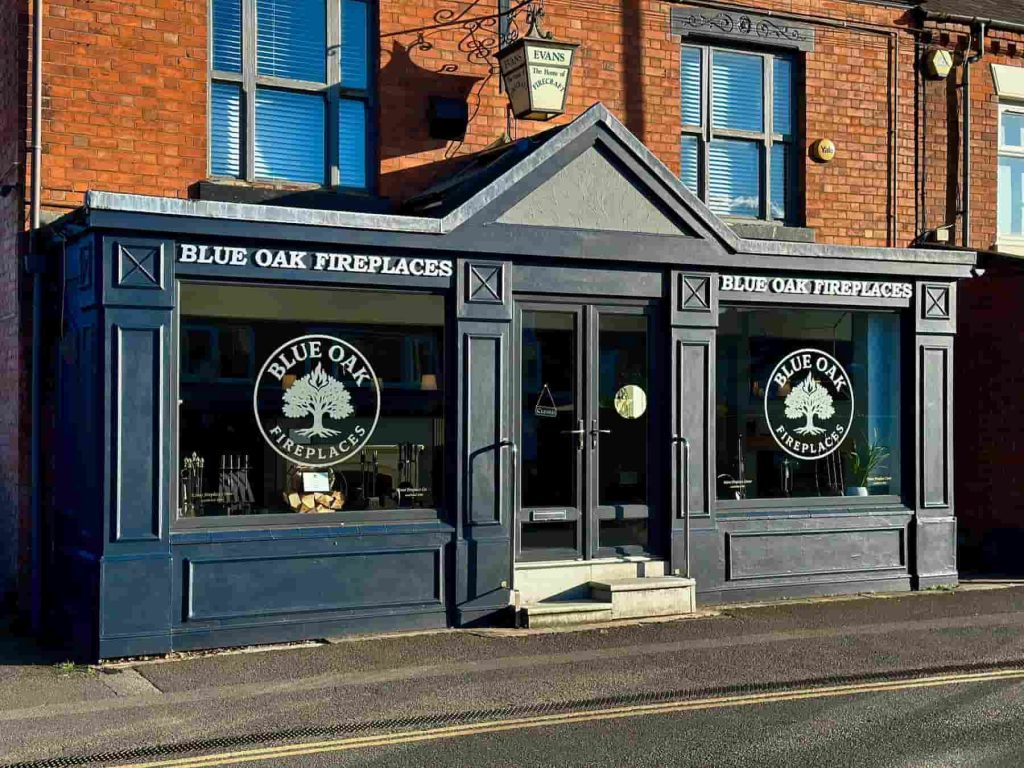
Blue Oak Fireplaces helps homeowners explore electric fires, gas fires, stoves, media walls, fireplace surrounds and professional fireplace installation. Whether you want a modern electric fireplace, media wall, or a traditional gas fire with a surround, contact us at +44 116 373 4193. The right advice can help you avoid costly mistakes.
If you are comparing electric fires vs gas fires in Leicester or across the Midlands, visiting a showroom gives you the chance to see flame effects, finishes, sizes and design options in person.
Final Verdict
For most modern UK homes, electric fires are the more flexible and low-maintenance choice, especially for media walls, small living rooms and homes without a chimney. For traditional homes and homeowners who want real flames and stronger heat output, gas fires remain a strong option.
If you are still unsure, the best next step is to speak with a fireplace specialist. Blue Oak Fireplaces can help you compare the options and choose a fireplace that suits your home, style and heating needs.
FAQs
Are electric fires better than gas fires?
Electric fires are better for low maintenance, modern media walls and homes without chimneys. Gas fires are better for real flame warmth and traditional fireplace settings.
Do electric fires need a chimney?
Most electric fires do not need a chimney or flue, which makes them a flexible choice for many UK homes.
Do gas fires need servicing?
Yes. Gas fires should be serviced regularly by a qualified professional to help keep them safe and efficient.
Which fire is best for a media wall?
An electric fire is usually the best option for a media wall because it offers flexible installation, modern styling and no chimney requirement.
Can Blue Oak Fireplaces help me choose?
Yes. Blue Oak Fireplaces can help you compare electric fires, gas fires, stoves, media wall fireplaces and installation options for your home.