With household energy bills continuing to influence heating decisions, many homeowners are asking the same question: which fireplace is cheapest to run in the UK?
The answer is not as simple as choosing the fireplace with the lowest fuel price. The overall cost depends on the type of fireplace, its heat output, efficiency, how often you use it, your energy tariff, fuel prices, installation requirements and how much heat your room actually needs.
For some homeowners, an electric fire can be the cheapest fireplace to run because it can provide visual ambience without using the heater. For regular supplementary heating, gas can have an advantage because the unit price of gas is considerably lower than electricity. Wood-burning and multi-fuel stoves can also be economical where suitable, particularly when fuel is sourced at a reasonable cost, but they come with additional fuel storage, maintenance and installation considerations.
This guide explains the running costs of electric fires, gas fires, wood-burning stoves and multi-fuel stoves in the UK, helping you decide which fireplace makes the most financial sense for your home.
Quick Answer: Which Fireplace Is Cheapest to Run?

There is no single fireplace that is cheapest for every UK home.
Electric fires can be the cheapest to run when you use them mainly for ambience or occasional supplementary heat, because many models allow you to enjoy the flame effect without switching on the heater.
Gas fires can offer lower heating costs than electric fires when used regularly, because gas is currently much cheaper per kWh than electricity on standard variable tariffs. However, the actual cost depends on the fire’s efficiency and heat output.
Wood-burning and multi-fuel stoves can be economical for regular heating, particularly where suitable fuel is affordable, and the appliance is correctly sized and operated. However, you also need to consider fuel storage, chimney sweeping, servicing, installation and local regulations.
The cheapest option for you is therefore the one that provides the amount of heat you actually need at the lowest total cost of ownership.
Current UK Energy Prices and Fireplace Running Costs
Energy prices change regularly, so any running-cost comparison should be treated as a snapshot rather than a permanent figure.
For 1 July to 30 September 2026, Ofgem’s average price cap rates for customers paying by Direct Debit are 26.11p per kWh for electricity and 7.33p per kWh for gas. These are average figures across England, Scotland and Wales, and actual rates vary according to location, tariff and payment method.
This difference is important when comparing fireplaces.
For example, a 2kW electric fire running continuously at full heat output at 26.11p per kWh would use approximately:
2kW × 26.11p = 52.22p per hour
Running the same 2kW electrical heater for five hours would therefore cost approximately £2.61, before considering any tariff differences.
However, this does not mean a gas fire will automatically cost half as much. Gas appliances have different efficiencies and heat outputs, so the better comparison is the cost of producing the useful heat your room actually requires.
Electric Fires: Are They the Cheapest to Run?

Electric fires are particularly attractive to homeowners looking for low-maintenance fireplaces, simple operation and flexible installation.
One of their biggest advantages is that many modern electric fires allow you to operate the flame effect without the heating element.
This means you could enjoy the appearance of a fireplace while using very little electricity compared with running the heater continuously.
When heating is required, the running cost depends mainly on the heater’s power rating and your electricity tariff.
For example, a 2kW electric fire using electricity at 26.11p per kWh would cost around 52p per hour at maximum heat output based on the July to September 2026 average Ofgem electricity rate.
The actual cost may be lower if the heater cycles on and off through its thermostat or if you use a lower heat setting.
When an Electric Fire Can Be the Cheapest Choice
An electric fire can make financial sense if:
- You mainly want a fireplace for ambience
- You only need occasional supplementary heating
- You live in a modern property without a chimney
- You do not want to buy or store firewood
- You want minimal maintenance
- You want to control when the heater operates
- You are installing a fireplace as part of a modern media wall
Blue Oak offers a range of electric fires in Leicester from leading manufacturers, including options designed for different room styles and installation requirements.
For homeowners considering electric fireplaces, it is also worth comparing models based on heat output, controls, thermostat functionality and flame-effect operation rather than simply choosing the lowest purchase price.
Gas Fires: Can They Be Cheaper to Run?

Gas fires can be an attractive option for homeowners who want real flames, strong heat output and convenient operation.
Gas is currently considerably cheaper per kWh than electricity under the Ofgem price cap. For July to September 2026, the average Direct Debit gas unit rate is 7.33p per kWh compared with 26.11p for electricity.
However, the cost of running a gas fire cannot be calculated simply by comparing 7.33p with 26.11p.
The appliance’s efficiency matters.
A modern gas fire that converts a high proportion of its fuel into useful room heat may provide good value. A less efficient appliance may lose more heat through the flue.
Gas fires also require appropriate installation and ongoing safety checks and servicing.
Blue Oak’s gas fires in Leicester include traditional and contemporary designs, allowing homeowners to combine real flame appeal with modern convenience.
When a Gas Fire May Be the Better Value
A gas fire may suit you if:
- You use your fireplace regularly for supplementary heating
- You already have a suitable gas supply and flue
- You want instant heat
- You prefer a real flame
- You do not want to store solid fuel
- You want convenient controls
- Your home has a suitable installation arrangement
The important point is that the cheapest fireplace to run is not necessarily the cheapest fireplace to install.
If your property needs significant work to accommodate a gas appliance, those additional costs should be included when comparing the overall investment.
Wood-Burning Stoves: Are Log Burners Cheap to Run?
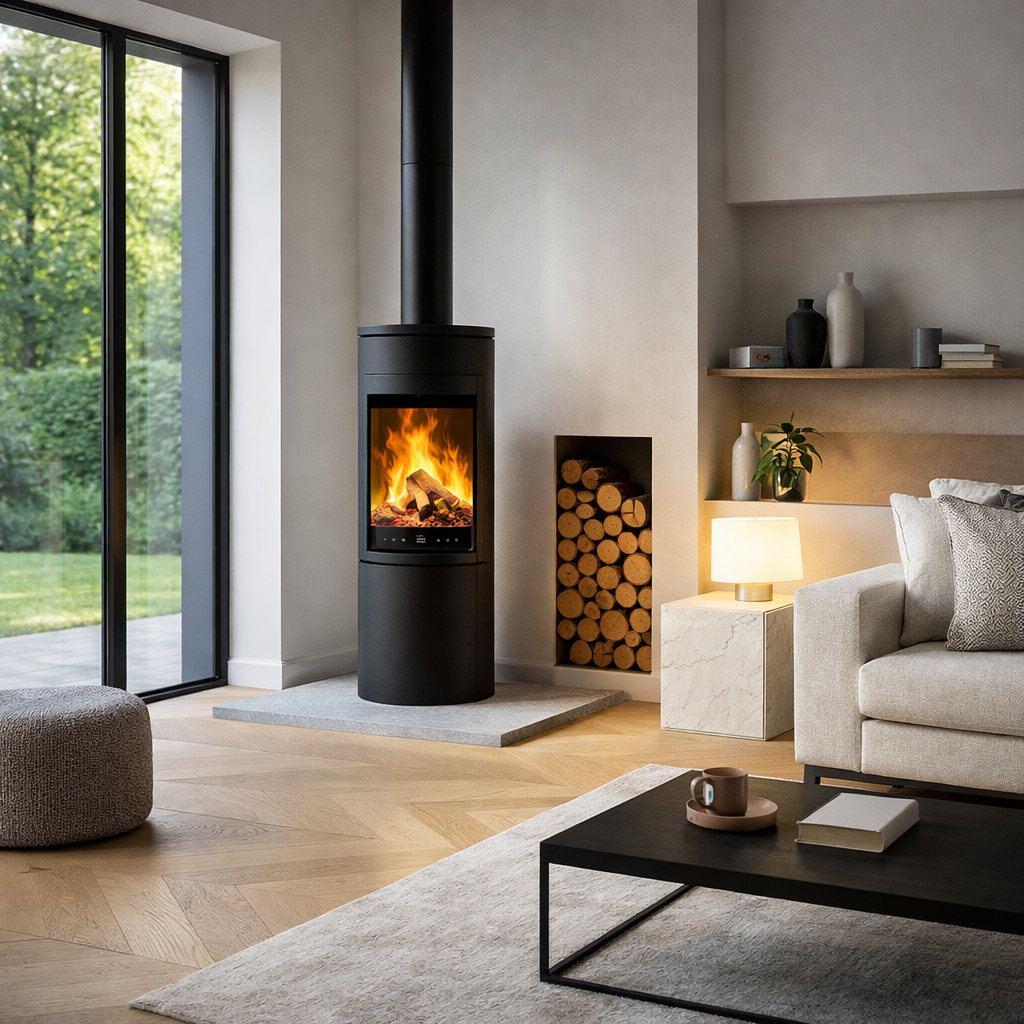
Wood-burning stoves are often associated with affordable heating because wood can be cheaper than some conventional energy sources.
However, the answer depends heavily on the price and quality of your firewood.
A wood-burning stove requires properly dried wood. Buying inexpensive but wet or unsuitable wood can reduce performance and increase smoke and deposits.
You also need to account for:
- Firewood costs
- Fuel storage
- Chimney sweeping
- Stove servicing
- Installation
- Chimney or flue requirements
- Firewood delivery
- Time spent handling and storing fuel
Blue Oak supplies wood-burning stoves in Leicester for homeowners looking for traditional stove heating combined with modern appliance design.
A wood-burning stove can provide excellent warmth, but it is not automatically the cheapest option simply because wood is used as the fuel.
Multi-Fuel Stoves: Are They Cheaper to Run?
Multi-fuel stoves give homeowners greater flexibility because they can be designed to burn different approved fuels.
This flexibility can be useful when fuel prices change because you may have more than one fuel option.
However, running costs depend on:
- The type of fuel used
- Fuel price
- Appliance efficiency
- Stove size
- How frequently the stove is used
- How efficiently the stove is operated
- Whether the fuel is appropriate for the appliance
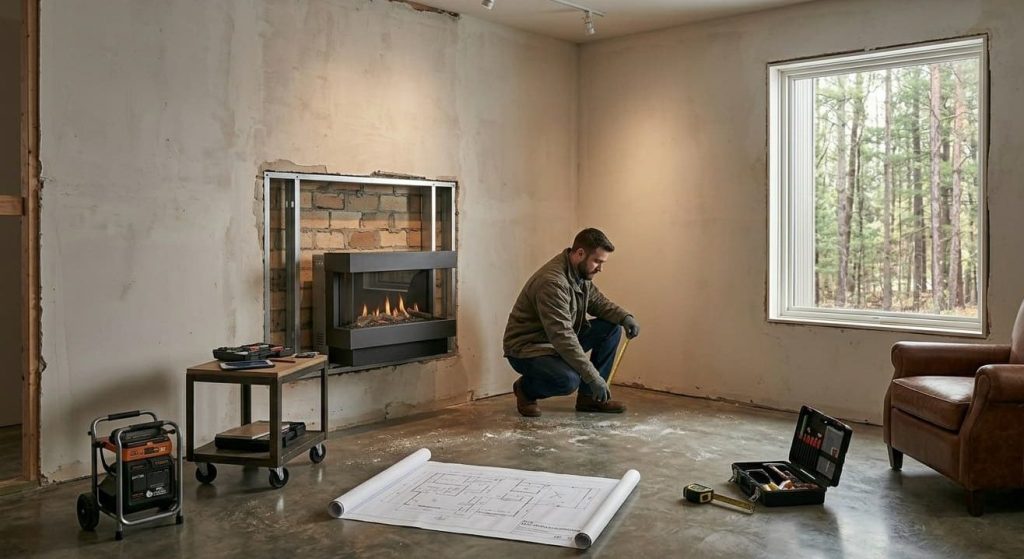
Blue Oak’s stoves range includes wood-burning and multi-fuel options. The company advises homeowners to consider room size and bring measurements and photographs when discussing stove options.
Important UK Smoke Control Rules
If you are considering a wood-burning or multi-fuel stove, you also need to check whether your property is in a smoke control area.
In smoke control areas, you generally cannot emit smoke from a chimney unless the appliance and fuel meet the relevant requirements. In England, certain appliances are exempt from the restrictions and can burn authorised fuels or other permitted fuels in accordance with the rules.
Modern wood-burning and multi-fuel stoves should also meet current Ecodesign requirements. Always check the manufacturer’s instructions and the rules that apply to your property before purchasing a stove.
What Is the Cheapest Fireplace for Occasional Use?
If you only want to use your fireplace occasionally, an electric fire can be one of the most economical and convenient choices.
The key advantage is that you do not have to generate heat every time you want the appearance of a fire.
Many electric fireplaces allow the flame effect to operate independently from the heater. This makes them useful during mild evenings when you want the atmosphere of a fire but do not need additional room heating.
This is also one reason electric fireplaces work particularly well in modern living rooms and media wall installations.
What Is the Cheapest Fireplace for Regular Heating?
For regular supplementary heating, the answer becomes more complicated.
Gas can have an advantage because its unit energy price is substantially below electricity under current Ofgem price-cap rates.
A well-chosen wood-burning or multi-fuel stove may also be economical depending on fuel prices, appliance efficiency and how frequently it is used.
The best option depends on your home.
For example:
Modern home with no chimney:
An electric fire may offer the simplest and most cost-effective overall installation.
Home with an existing suitable gas installation:
A gas fire may provide economical supplementary heating and convenient operation.
Property with a suitable chimney and access to affordable dry wood:
A wood-burning stove may be worth considering.
Homeowner wanting fuel flexibility:
A multi-fuel stove may offer greater choice.
Don’t Confuse Running Cost With Total Cost

When comparing fireplaces, homeowners often focus entirely on the cost per hour.
That can be misleading.
Imagine two fireplaces:
Fire A costs less to operate but requires substantial installation work.
Fire B costs slightly more to operate but is significantly cheaper to install and requires less maintenance.
If you only use your fireplace occasionally, Fire B could be cheaper overall.
When comparing options, consider:
1. Purchase price
How much does the fireplace or stove cost?
2. Installation
Will you need a chimney, flue, gas connection, electrical work, structural alterations or a new fireplace surround?
3. Fuel or electricity
How much does the energy source cost in your area?
4. Efficiency
How much of the energy you purchase becomes useful heat?
5. Maintenance
Does the appliance require servicing, chimney sweeping or other regular maintenance?
6. Fuel storage
Wood-burning and multi-fuel stoves require somewhere suitable to store fuel.
7. Frequency of use
A fireplace used for one hour a week has very different running costs from one used every evening throughout winter.
8. Room size
An oversized fireplace can waste energy and money, while an undersized appliance may struggle to provide sufficient heat.
How to Reduce Fireplace Running Costs

Regardless of which fireplace you choose, there are several ways to control running costs.
Choose the correct size
Do not automatically choose the largest fire available. The appliance should be appropriate for the room and intended use.
Use thermostatic controls where available
A thermostat can help prevent unnecessary heating once the room reaches the desired temperature.
Use flame-only mode when possible
With electric fires, using the flame effect without heat can provide ambience without the cost of running the heater.
Improve room insulation
A poorly insulated room loses heat quickly. Loft insulation, wall insulation, draught reduction and suitable windows can all affect how long your fireplace needs to operate.
Use the correct fuel
For stoves, use the fuel recommended by the manufacturer. Properly dried firewood is particularly important for wood-burning appliances.
Keep your appliance maintained
Regular maintenance helps ensure your fireplace continues to operate safely and efficiently.
Avoid choosing purely on hourly cost
The cheapest fireplace to run may not be the cheapest fireplace for your home once installation, maintenance and fuel storage are included.
Which Fireplace Offers the Best Value for Money?
For many homeowners, electric fireplaces offer excellent overall value when the priority is ambience, occasional heat, low maintenance and simple installation.
Gas fires can be attractive for homeowners who want more regular supplementary heat and a real flame, particularly where suitable infrastructure already exists.
Wood-burning and multi-fuel stoves can be strong options for homeowners who want substantial heat and are prepared for the additional responsibilities associated with solid-fuel heating.
Ultimately, the best fireplace is the one that matches your room, heating requirement, budget, lifestyle and property.
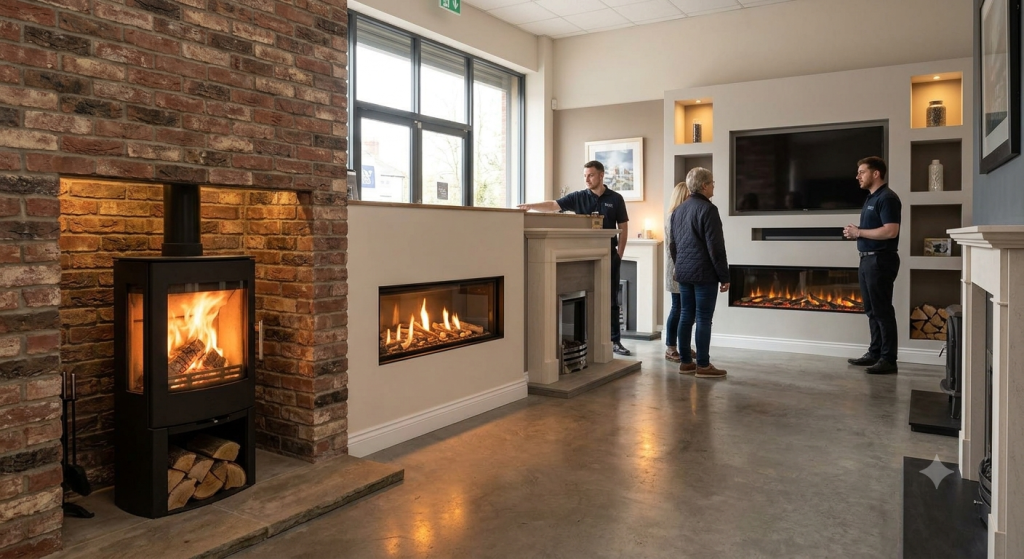
If you are unsure which option makes sense for your home, visiting a showroom allows you to compare real appliances, flame effects, finishes and sizes rather than relying entirely on photographs.
Blue Oak Fireplaces has a three-storey showroom in Syston, Leicester, where homeowners can explore electric fires, gas fires, stoves, surrounds and other fireplace options.
Find the Right Fireplace for Your Home
Choosing a fireplace is about more than finding the lowest running cost.
You need to consider how often you will use it, how much heat you need, whether your property has a chimney or suitable flue, the installation requirements, ongoing maintenance and the appearance you want to achieve.
At Blue Oak Fireplaces, homeowners can compare different fireplace types and discuss their requirements before making a decision. The company supplies and installs fireplaces across Leicester and the wider East Midlands, with options including electric fires, gas fires, wood-burning stoves, multi-fuel stoves and fireplace surrounds.
If you are comparing your options, explore Blue Oak’s electric fires, gas fires, and stoves before deciding which fireplace best suits your home.
Frequently Asked Questions
What is the cheapest fireplace to run in the UK?
There is no single cheapest fireplace for every home. Electric fires can be economical for occasional use, especially when the flame effect is used without heat. Gas fires can have lower heating costs because gas currently costs substantially less per kWh than electricity on standard variable tariffs. Wood-burning and multi-fuel stoves can also be economical depending on fuel prices, efficiency and usage.
Are electric fires expensive to run?
Electric fires can be relatively expensive per unit of heat because electricity costs more per kWh than gas under current standard variable tariffs. However, many electric fires allow you to use the flame effect without the heater, which can make them economical for ambience and occasional use. Your actual cost depends on the fire’s power rating, electricity tariff and how long you operate the heater.
Is gas cheaper than electricity for heating a room?
Gas currently has a much lower unit price than electricity under the Ofgem price cap. From July to September 2026, the average Direct Debit price is 7.33p per kWh for gas compared with 26.11p per kWh for electricity. However, appliance efficiency and heat output must also be considered when comparing the actual cost of heating a room.
How much does a 2kW electric fire cost to run?
At an electricity rate of 26.11p per kWh, a 2kW electric fire operating continuously at full power would cost approximately 52p per hour. The actual cost can be lower if the thermostat cycles the heater, a lower heat setting is selected, or the current electricity tariff is cheaper.
Are wood-burning stoves cheaper to run than electric fires?
They can be, but it depends on the cost and quality of the wood, the stove’s efficiency and how frequently it is used. You also need to consider installation, chimney sweeping, maintenance and fuel storage. A wood-burning stove should not be assumed to be cheaper simply because wood is used as the fuel.
Is a multi-fuel stove cheaper to run than a wood-burning stove?
Not necessarily. A multi-fuel stove gives you flexibility to use different appropriate fuels, but the cheapest option depends on current fuel prices, appliance efficiency and how you use the stove. Always use only fuels approved for your particular appliance.
Is an electric fire cheaper to run without heat?
Yes. When the heating element is switched off, the fire is not using the electricity required to generate room heat. Many modern electric fires allow homeowners to operate the visual flame effect separately from the heater, making this useful when you want the appearance of a fire without additional heating.
What is the cheapest fireplace for a small living room?
An electric fire can be a practical choice for a small living room because many models offer adjustable heat settings, flame-only operation and flexible installation. However, the correct choice depends on the room dimensions, required heat output, available wall space and overall design.
Does a fireplace increase electricity or gas bills?
Any fireplace that uses electricity or gas will increase your energy consumption when operated. The amount added to your bill depends on the appliance’s power or fuel consumption, your energy tariff and how long you use it. A flame-only electric fire will generally use considerably less electricity than operating its heater.
Should I choose a fireplace based only on running cost?
No. Running cost is important, but it should be considered alongside purchase price, installation, efficiency, maintenance, fuel storage, room size, heating requirements and appearance. The lowest running cost does not necessarily produce the lowest overall cost of ownership.
Are wood-burning stoves allowed everywhere in the UK?
No. Smoke control rules apply in many areas. In smoke control areas, restrictions apply to what can be burned and which appliances can be used. Some Defra-approved or exempt appliances can burn fuels that would otherwise be restricted, subject to the applicable rules. Always check the requirements for your property before purchasing a stove.
How can I make my fireplace cheaper to run?
Choose an appropriately sized appliance, avoid unnecessary heating, use thermostatic controls where available, maintain the appliance properly and use the correct fuel. Improving insulation and reducing draughts can also help retain heat so that your fireplace does not need to operate for as long.
Where can I compare fireplaces in Leicester?
Blue Oak Fireplaces has a three-storey showroom in Syston, Leicester, with displays covering electric fires, gas fires, stoves and fireplace surrounds. Homeowners can visit the showroom to compare different options and discuss their requirements with the team.