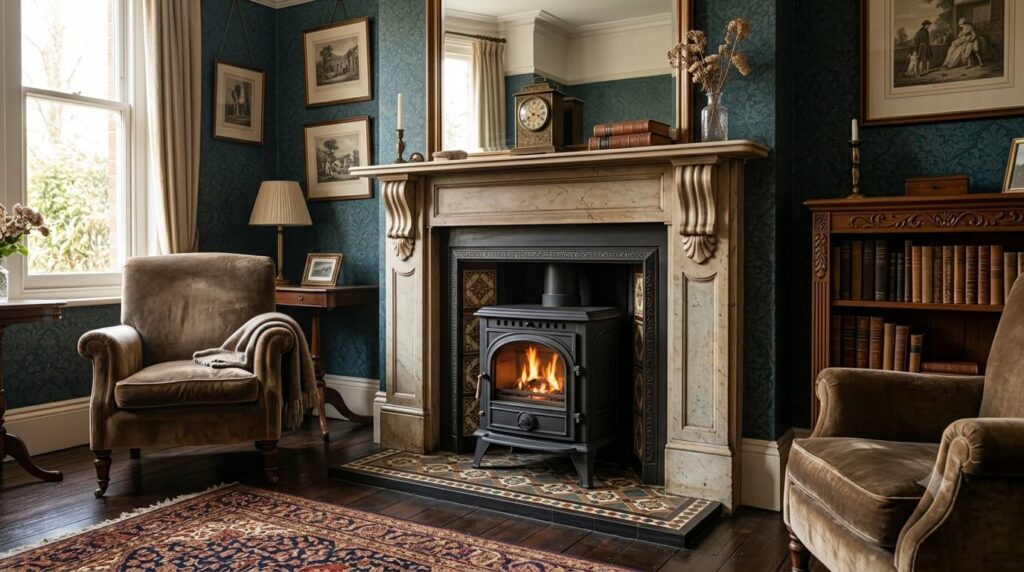
Leicester is full of beautiful Victorian homes, terraces, Edwardian semis, and older stone cottages, from Clarendon Park and Stoneygate to the villages around Syston and Melton Mowbray. These homes have bags of character, but their original fireplaces and chimneys weren’t built with modern heating in mind. If you’re wondering which stove suits your period property, how it will work with your existing chimney breast, or whether you’ll need to compromise style for safety, this guide answers all of it.
At Blue Oak Fireplaces, we’ve spent over 25 years helping homeowners across Leicester and the wider Midlands choose and install stoves that respect the character of an older home while delivering genuine, modern warmth. Here’s everything you need to know before you buy.
Why Older Homes Need a Different Approach to Stove Buying
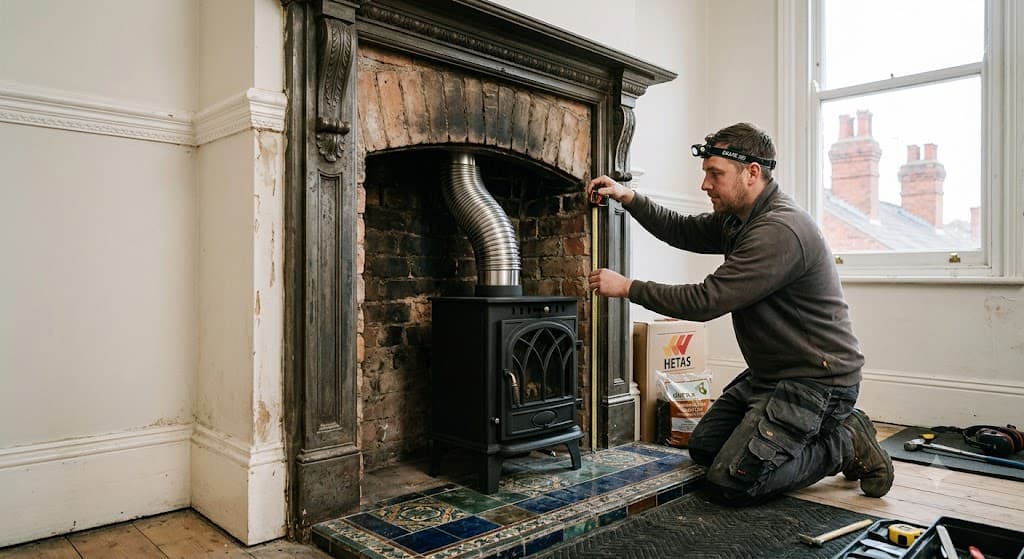
Victorian and Edwardian houses were originally built around open coal fires, tall narrow chimney flues, and generously sized fireplace openings. Over the decades, many of these have been altered, lined, blocked up, or reduced in size during previous renovations. That means a stove that works perfectly in a new-build won’t necessarily suit a period property.
Before choosing a stove, older homes typically need to consider:
- Flue condition and lining – older flues are often wider and less insulated than modern ones, which can affect draw and efficiency.
- Chimney breast dimensions – original openings are often taller and deeper than a modern hearth allows for.
- Listed building or conservation area rules – some parts of Leicester fall within conservation areas, which can affect what’s permitted externally.
- Smoke control area restrictions – much of Leicester is a designated smoke control area, so your stove and fuel choice both need to be compliant.
- Aesthetic sensitivity – a stove that looks too modern can clash with cornicing, tiled hearths, and cast iron surrounds typical of the period.
Best Types of Stoves for Victorian & Period Properties
1. Traditional Cast Iron Wood Burning Stoves
For most period homes, a classic cast iron wood burning stove is the most natural fit. Their curved lines, riveted joints, and matte black finishes echo the ironwork already found in Victorian fireplaces, and they pair beautifully with a slate, marble, or cast iron surround.
Best for: homeowners who want a strong period look and don’t mind fuel storage and regular cleaning.
2. Multi-Fuel Stoves
If your home doesn’t have easy access to a reliable log supply, or you simply want more flexibility, a multi-fuel stove is worth considering. Thanks to a raised grate and ashpan, these stoves can burn smokeless coal as well as wood, which historically suited the solid fuel habits of older Leicester homes.
Best for: homeowners who want fuel flexibility without losing the classic look.
3. Defra-Approved & Ecodesign Stoves
Since much of Leicester sits within a smoke control area, it’s worth prioritising a Defra-approved or Ecodesign Ready stove. These are engineered to burn far more cleanly than older models, which is particularly important if your period home previously had an open fire or an older, less efficient stove installed.
Best for: any Leicester property within a smoke control zone (worth checking with your local authority if you’re unsure).
4. Slimline & Tall Stoves for Narrow Fireplace Openings
Some older terraces have narrower or shallower fireplace recesses than you’d expect. Slimline and tall-bodied stove designs are built to sit comfortably in these spaces without needing structural alterations to the chimney breast.
Best for: narrow Victorian terraces and cottage-style properties.
5. Contemporary Stoves with a Period-Friendly Finish
Not every period home owner wants a strictly traditional look. Many of our Leicester customers now choose contemporary stoves with clean lines and larger glass viewing windows, but in matte black or textured finishes that still feel at home against original brickwork and coving.
Best for: homeowners blending original features with a more modern interior scheme.
What to Check Before You Buy
- Get your chimney surveyed. A HETAS-registered installer can check the condition of your flue and confirm whether it needs relining before a new stove goes in.
- Measure the fireplace opening accurately. Height, width, and depth all affect which stove models will physically fit.
- Confirm your smoke control area status. This determines whether you need a Defra-approved appliance.
- Decide on wood vs multi-fuel. Think about fuel storage space and how often you’ll want to light the stove.
- Consider the hearth. Older hearths may need to be extended or reinforced to meet current building regulations for a stove installation.
- Ask about servicing. Period chimneys benefit from more frequent sweeping, particularly in the first year after installation.
Cost Considerations for Period Home Installations
Costs for stove installations in older Leicester homes vary depending on the condition of the existing chimney, whether a flue liner is needed, and whether any hearth or brickwork repairs are required. As a general rule, older properties often need a little extra preparation work compared to newer homes, so it’s worth budgeting for a full chimney survey alongside the cost of the stove itself. Our team will always give you an honest, itemised quote before any work begins, so there are no surprises.
Why Choose Blue Oak Fireplaces for Your Period Home
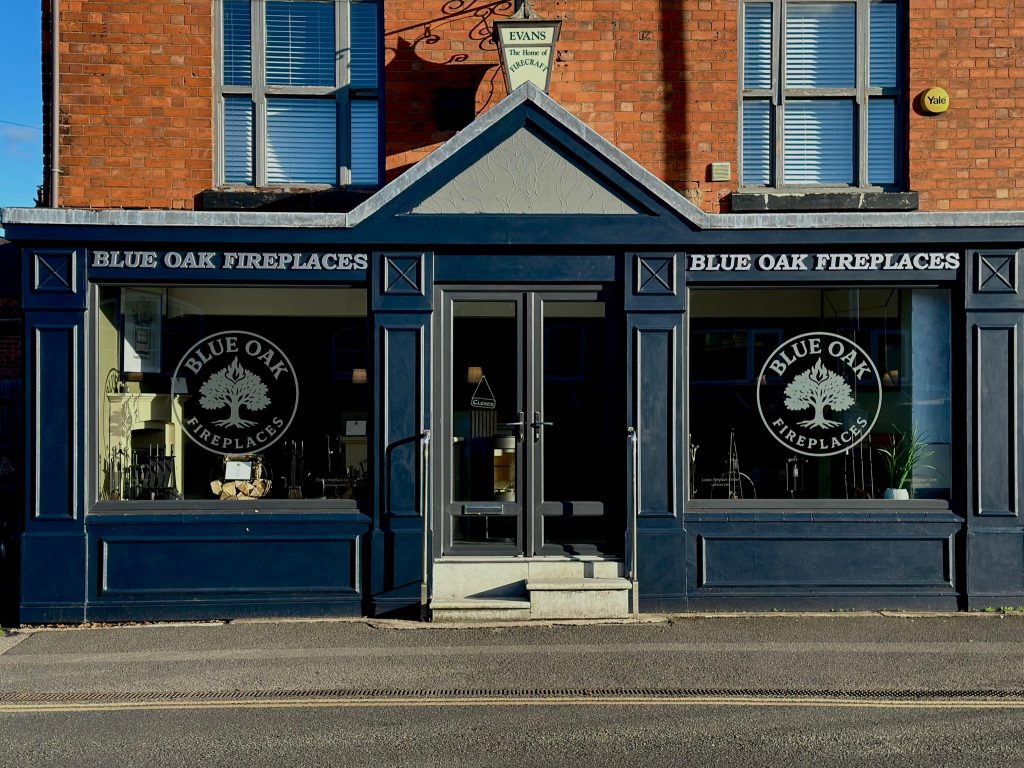
We’re a family-run business based at our showroom in Syston, Leicester, and we’ve fitted stoves into more Victorian, Edwardian, and older Leicestershire homes than we can count. As a HETAS-approved and Gas Safe registered company with over 25 years of experience, we offer:
- Honest, no-obligation advice on which stove genuinely suits your property
- A showroom with a wide range of stoves on display, from traditional cast iron to contemporary designs
- Full installation, chimney lining, and servicing carried out by our own qualified team
- Guidance on smoke control compliance and Defra-approved appliances
- A wide range of fireplace surrounds to complement your stove and period features
If you’d rather see stoves in person before deciding, pop into our Syston showroom, or get in touch with our team for a free consultation.
Seeing fireplace surrounds in person can make the decision much easier. Photos help with inspiration, but they do not always show true scale, depth, finish quality or flame effect. At Blue Oak Fireplaces, homeowners can explore fires, fireplaces, stoves, media walls and surrounds with expert advice from a team that understands both design and installation.
Blue Oak Fireplaces is based in Syston, Leicester, with a 3-storey showroom at 1159 Melton Road, Syston, Leicester, LE7 2JS. Visiting the showroom helps you compare materials, styles and fireplace types before committing to a design for your home
Frequently Asked Questions
What is the best stove for a Victorian home?
A traditional cast iron wood-burning or multi-fuel stove is usually the best match for a Victorian home, since the styling complements original fireplace surrounds, tiled hearths, and ironwork. The right choice ultimately depends on your fireplace opening size and whether your area falls within a smoke control zone.
Can I install a stove in a house with an old chimney?
In most cases, yes. Older chimneys can usually be relined and adapted to safely take a modern stove, but it’s essential to have the flue surveyed by a HETAS-registered installer first to check for damage, size, and draw.
Do I need a Defra-approved stove in Leicester?
Large parts of Leicester are designated smoke control areas, which means you’ll need a Defra-approved or Ecodesign Ready stove if you want to burn wood or house coal legally. Your installer can confirm your property’s status.
Will a wood burning stove damage my period features?
No, provided it’s installed correctly. A qualified installer will protect your hearth, surround, and surrounding brickwork throughout the process, and in most cases a stove actually helps preserve a period fireplace by giving it renewed practical use.
How much does it cost to install a stove in an older home?
Costs vary depending on the stove chosen, the condition of your existing chimney, and whether relining or hearth work is required. Older properties can sometimes need extra preparation, so it’s best to arrange a survey and get a tailored quote.
Do I need planning permission to fit a stove in a period property?
Most stove installations don’t require planning permission, but homes in conservation areas or listed buildings may have additional considerations, particularly around external flue pipes. It’s worth checking with your local authority if you’re unsure.
Ready to find the perfect stove for your Leicester period home? Visit our Syston showroom or contact Blue Oak Fireplaces today for expert, friendly advice.