
Choosing a wood-burning stove involves more decisions than just fuel type and size; one of the biggest choices you’ll face is whether to go with inset vs freestanding stoves. Both styles offer genuine warmth and character, but they suit different homes, layouts, and design preferences in quite different ways. This guide breaks down the key differences to help you decide which option is the better fit for your Leicester home.
What Is an Inset Stove?

An inset stove is built directly into an existing chimney breast or fireplace opening, sitting flush or nearly flush with the surrounding wall. This creates a neat, integrated look, since the appliance becomes part of the wall itself rather than standing apart from it. Inset stoves tend to suit homes with a traditional fireplace opening already in place, and they pair particularly well with a classic fireplace surround that frames the appliance neatly.
What Is a Freestanding Stove?
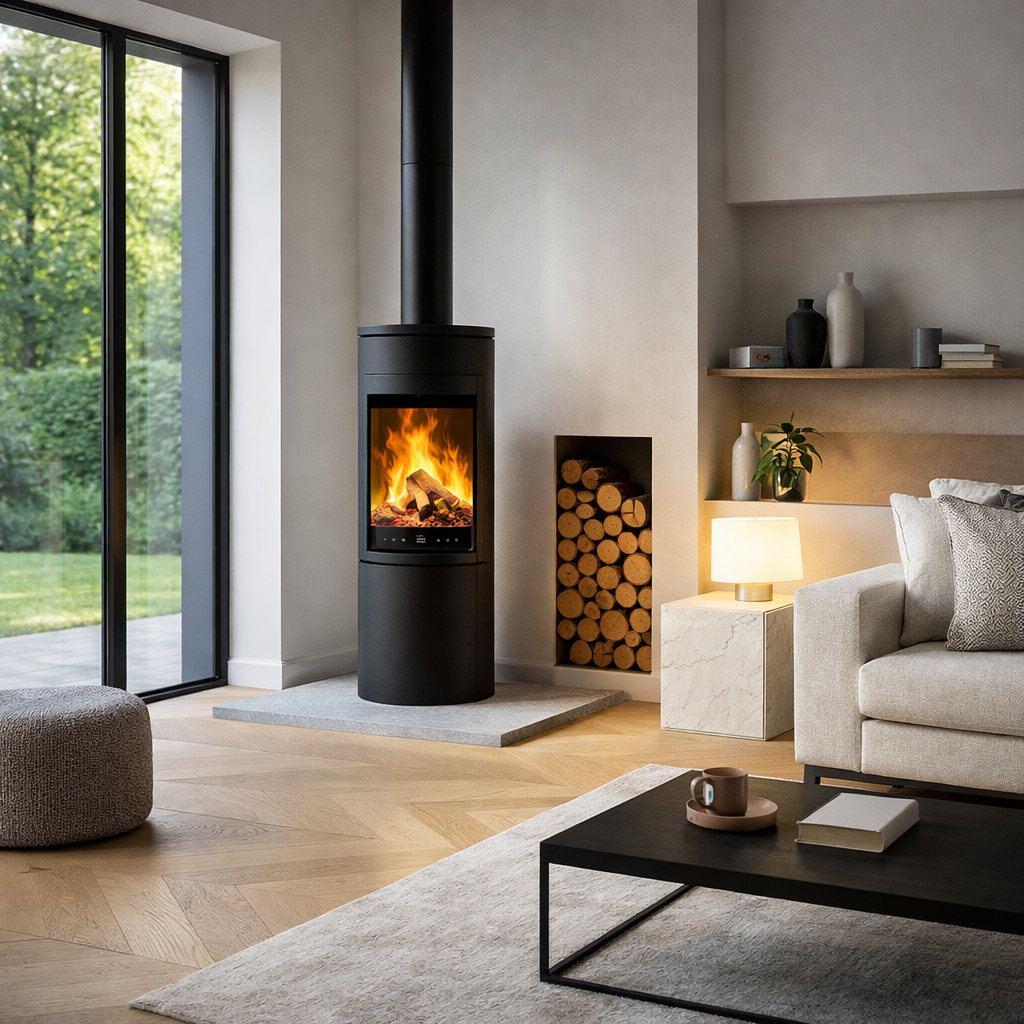
A freestanding stove sits fully out in the room, typically on a raised hearth, with the appliance visible from all sides rather than recessed into a wall. This style tends to make more of a statement, since the stove itself becomes a genuine centrepiece rather than a framed feature. Freestanding stoves are often chosen for larger, more open rooms, and our wood burning stoves guide covers several models well suited to this more prominent placement.
Visual Impact and Room Presence
One of the biggest differences between the two styles comes down to how much visual presence you want the stove to have. An inset stove creates a calmer, more understated look, blending into the wall and letting the surround do more of the visual work. A freestanding stove, on the other hand, commands attention from every angle, making it a strong choice if you want the fire itself to be the room’s clear focal point. If you’re drawn to a bolder statement piece, our luxury fireplaces in Leicester collection includes several striking freestanding options worth exploring.
Heat Distribution Differences
Freestanding stoves generally distribute heat more evenly around the room, since warmth radiates from the sides and back of the appliance as well as the front. Inset stoves, being recessed into a wall, direct most of their heat output forward into the room, which can still be highly effective but works a little differently depending on the room’s layout. If you’re comparing heat output more broadly across fuel types, our gas vs wood burning fireplaces guide is a useful additional reference point.
Which Suits an Existing Chimney Breast?
If your home already has a traditional chimney breast and fireplace opening, an inset stove is often the more natural fit, since it can be fitted directly into the existing space with fewer structural changes. This tends to make inset installations more straightforward in older or period properties. Our log burners Leicester guide explains what a typical inset installation involves, including how existing chimney condition affects the process.
Which Suits a Room Without a Chimney Breast?
Freestanding stoves offer more flexibility for rooms without an existing chimney breast, since they can often be installed using a twin wall flue system running externally or through the roof, rather than requiring an existing opening to fit into. This makes freestanding options a popular choice for newer builds, extensions, or open plan spaces without traditional fireplace features already in place.
Combining Either Style With a Media Wall
Both inset and freestanding stoves can work within a broader media wall design, though inset stoves tend to integrate more seamlessly into a flush, built in look, since the appliance sits within the wall structure itself. Freestanding stoves within a media wall design usually sit within a recessed alcove or opening built specifically to house them, offering a slightly different visual effect while still achieving a considered, cohesive look.
Cost Considerations Between the Two Styles
Costs can vary between inset and freestanding installations depending on your existing setup. An inset stove fitted into an already suitable chimney breast can sometimes be more cost effective, since less structural work is needed, while a freestanding stove in a room without an existing flue may involve additional cost for a twin wall system. Our detailed breakdown of fireplace installation cost in the UK explains where the money typically goes for different installation types.
Maintenance and Servicing for Both Styles

Ongoing maintenance is broadly similar for both inset and freestanding stoves, since both need regular chimney sweeping and occasional checks on seals, glass, and firebricks. Our full range of services covers servicing for both stove types, helping keep either option running safely and efficiently for years to come.
Choosing Based on Your Room’s Layout
Beyond personal style preference, the practical layout of your room often points fairly clearly toward one option or the other. A smaller room with a well positioned chimney breast tends to suit an inset stove, keeping the appliance neatly contained within the wall. A larger, open plan space, particularly one built around a central seating area, often makes better use of a freestanding stove’s full room presence and even heat distribution.
Getting Expert Advice Before You Decide
Since both styles come with different structural requirements, it’s worth getting a proper site survey before committing to either option. This ensures your chosen stove suits your specific chimney, room layout, and heating needs, something we cover in detail in our guide to fireplace installation in Leicester. Visiting our showroom is also a great way to see both inset and freestanding models in person before making a final decision.
Local Fireplace Ideas for Leicester, Syston and Leicestershire Homes
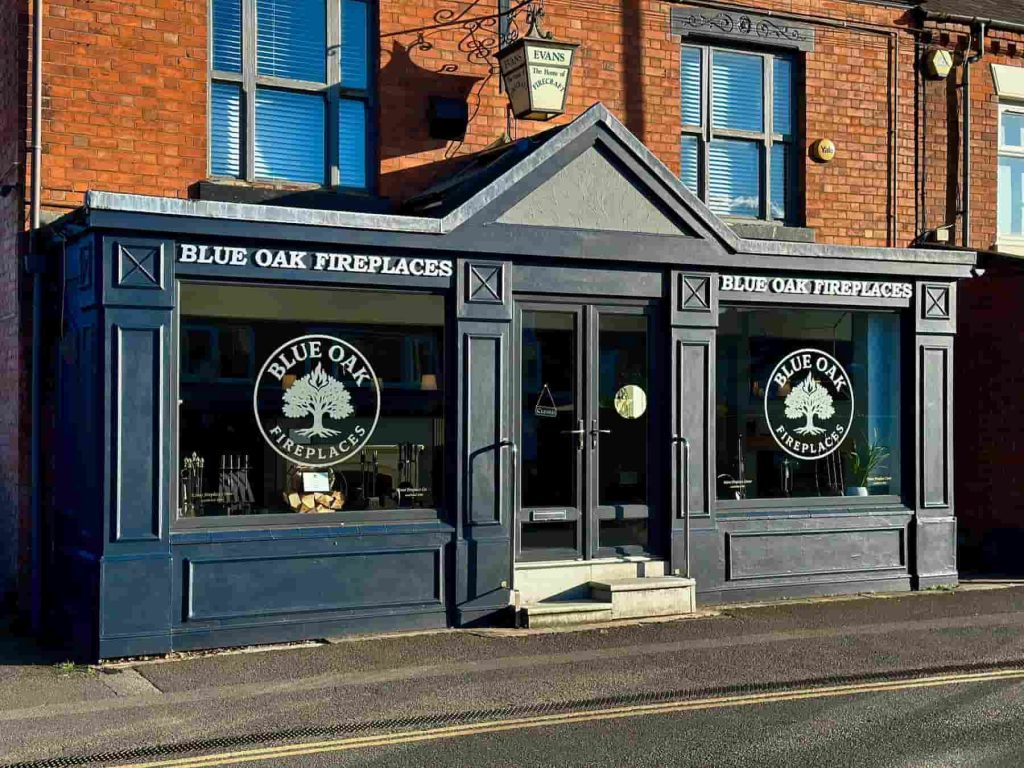
A fireplace showroom helps you see real scale, flame effect, finish quality and material choices. At Blue Oak Fireplaces in Syston, Leicester, homeowners can explore electric fires, gas fires, stoves, media walls and fireplace surrounds with guidance from an experienced team. The goal is not just to choose a good-looking fire, but to choose one that fits the room, performs well and feels right long term.
If you are unsure about size, bring measurements, room photos and any ideas you already like. This makes it easier to compare options and understand whether your room is better suited to an electric fireplace, gas fire, wood-burning stove, multi-fuel stove or bespoke media wall.
Final Thoughts
There’s no universally better option between inset and freestanding stoves, only the one that suits your home, room layout, and personal style best. Inset stoves offer a neat, integrated look well suited to existing chimney breasts, while freestanding stoves make a bolder statement and offer more flexibility for rooms without traditional fireplace features. If you’re weighing up your options for a Leicester home, get in touch with Blue Oak Fireplaces for tailored advice based on your specific space.
Frequently Asked Questions
Is an inset or freestanding stove more expensive to install?
It depends on your existing setup. An inset stove fitted into a suitable existing chimney breast can often be more cost effective, while a freestanding stove in a room without a flue may require additional work for a twin wall system, which can increase overall cost.
Can I install a freestanding stove without an existing chimney?
Yes, freestanding stoves can often be installed using a twin wall flue system, making them a flexible option for newer builds or rooms without a traditional chimney breast already in place.
Which style produces more heat?
Both styles can offer strong heat output, though freestanding stoves generally distribute warmth more evenly around a room, since heat radiates from the sides and back of the appliance as well as the front.
Do inset and freestanding stoves need different maintenance?
Not significantly. Both require regular chimney sweeping and occasional checks on seals, glass, and firebricks to keep them running safely and efficiently.
Which style is better for a period property?
Inset stoves often suit period properties particularly well, since they can be fitted into an existing chimney breast and paired with a traditional or contemporary surround for a neat, integrated look.
Can either style be incorporated into a media wall design?
Yes, both inset and freestanding stoves can work within a media wall design, though inset stoves tend to integrate more seamlessly into a flush, built-in look, while freestanding stoves typically sit within a dedicated recessed opening.
