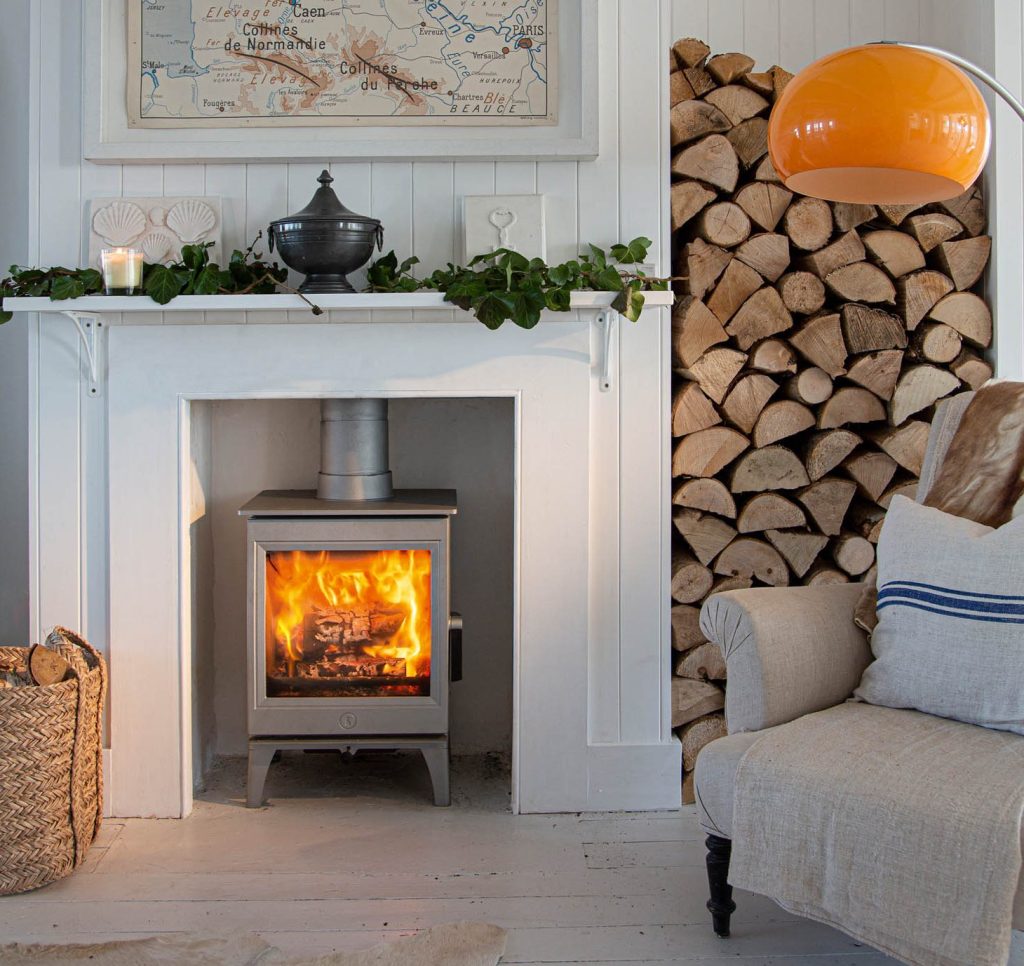
If you are thinking about installing a wood-burning stove, one of the first questions you are likely to ask is: how much wood does a wood-burning stove use?
The answer depends on several factors, including the stove’s size, heat output, efficiency, type and moisture content of your logs, how well your home is insulated, and how you operate the stove.
As a general guide, a typical modern wood-burning stove may use around 1 to 3 kg of dry wood per hour, although some smaller appliances use less and larger stoves can consume considerably more. Individual stove manufacturers specify their own recommended fuel loads, so your stove’s manual should always take priority. For example, one HETAS-approved stove specifies a maximum wood load of 1.03 kg, while another recommends a maximum load of 2.1 kg per hour.
Understanding your stove’s wood consumption can help you estimate firewood costs, storage requirements and winter heating needs before you buy.
How Much Wood Does a Wood Burning Stove Use Per Hour?

For a typical homeowner, thinking in terms of kilograms per hour is more useful than simply counting logs because logs vary considerably in size and weight.
As a rough guide:
- Small 3 to 5kW stove: around 1 to 1.5 kg of wood per hour
- Medium 5 to 8kW stove: around 1.5 to 2.5 kg per hour
- Large 8kW+ stove: around 2 to 3kg or more per hour
These figures are only estimates. A medium-sized wood burner is often described as using approximately two to three kiln-dried hardwood logs per hour, but the actual number depends on log size and the stove’s operating conditions.
A modern 5kW stove, for example, might require around 1 to 2 kg of properly dried wood during a normal burn. However, you should never simply add more logs because the fire appears to be getting weaker. Overloading a stove can increase emissions, cause excessive temperatures and potentially damage the appliance.
If you are considering a new appliance, take a look at our wood burning stoves in Leicester range to compare your options.
How Much Wood Does a Wood Burner Use Per Day?
Your daily wood consumption depends primarily on how many hours you operate the stove.
For example, if a stove uses approximately 2kg of wood per hour:
2kg × 4 hours = 8kg per day
If you operate it for six hours:
2kg × 6 hours = 12kg per day
For eight hours:
2kg × 8 hours = 16kg per day
However, this does not mean a stove will necessarily consume 16kg every day during winter. Homeowners generally adjust the burning schedule according to outdoor temperature, room temperature, and heating requirements.
You may use significantly less wood during mild autumn weather and considerably more during prolonged cold periods.
How Much Firewood Do You Need for Winter?
This is where wood consumption becomes particularly useful for budgeting.
Suppose your stove uses an average of 2kg per hour and you burn it for five hours per evening.
That gives you:
2kg × 5 hours = 10kg per day
If you use the stove for 150 days:
10kg × 150 days = 1,500kg
That is approximately 1.5 tonnes of wood over the heating season.
If your actual consumption averages 3kg per hour for the same five-hour period, the figure rises to approximately 2.25 tonnes.
This demonstrates why there is no single answer to the question “how much wood will I need for winter?” Your usage pattern matters just as much as the stove itself.
What Determines How Much Wood a Stove Uses?
1. Stove Size and Heat Output
A larger stove designed to produce more heat will generally require more fuel.
A 4kW stove does not need the same amount of wood as an 8kW appliance. Choosing the correct stove size for your room is therefore extremely important.
An oversized stove can encourage homeowners to operate it below its ideal output, while an undersized stove may need to be operated harder and more frequently.
The goal is not to buy the biggest wood burner available. It is to select an appliance that matches the heating requirements of the room.
2. Moisture Content of the Wood
The moisture content of your firewood can have a major impact on wood consumption.
In the UK, wood sold in smaller quantities for domestic heating under the Ready to Burn scheme must have a moisture content of 20% or less. Burning properly dried wood improves combustion and reduces smoke and tar deposits.
Wet or poorly seasoned logs contain water that has to be evaporated before the wood can burn efficiently. This means energy is wasted heating and evaporating moisture instead of heating your home.
You may therefore find yourself adding more logs simply because damp wood is producing less useful heat.
For homeowners buying their own logs, a moisture meter is a worthwhile investment. Measure a freshly split surface rather than relying solely on the outside of the log.
3. Type of Firewood
Different types of wood have different densities and burning characteristics.
Dense hardwoods such as oak and ash can provide long-lasting heat when properly seasoned. Softer woods can ignite quickly and may burn faster.
This does not automatically mean one species is always better than another. What matters is that the wood is suitable for your stove, properly seasoned and within the moisture level recommended by the appliance manufacturer.
Never burn painted, treated or chemically contaminated timber. Government guidance warns that inappropriate fuels can damage the appliance and chimney as well as create additional emissions.
4. How You Operate the Stove
Your air controls have a direct effect on how quickly wood burns.
Opening the air supply generally encourages combustion, while reducing airflow can slow the burn. However, deliberately running a stove too low for extended periods can result in incomplete combustion, increased smoke and deposits.
The aim should be a controlled, efficient fire rather than simply making the logs last as long as possible.
Always follow the manufacturer’s instructions for primary and secondary air controls.
5. Home Insulation
The better insulated your home is, the less heat it generally loses.
A well-insulated living room may reach a comfortable temperature with less stove operation than a poorly insulated room with draughty windows, uninsulated walls or an inefficient building envelope.
This is why two homeowners with identical 5kW wood burners can have completely different annual firewood requirements.
How Long Does One Log Last in a Wood Burning Stove?

There is no universal burn time for a single log.
A large hardwood log may burn significantly longer than a small softwood log. The stove’s air settings, operating temperature and firebox design also affect burn time.
A modern efficient stove may use approximately two to three medium logs per hour under typical conditions, although manufacturer instructions should always take priority.
Rather than asking how long one log lasts, it is more useful to monitor how much wood your stove uses to maintain a comfortable room temperature.
How to Reduce Wood Consumption Without Losing Heat
If your stove seems to be using too much firewood, try these practical steps.
Burn Dry, Ready-to-Burn Wood
This is one of the simplest ways to improve fuel efficiency. Dry wood burns more effectively and produces more useful heat than wet wood. DEFRA guidance recommends wood with moisture content of 20% or less.
Choose the Correct Log Size
Logs should fit comfortably inside the firebox without being forced against the glass or internal components.
Your stove manufacturer will normally specify a maximum log length and recommended fuel load.
Do Not Overload the Stove
More wood does not necessarily mean more useful heat.
Overloading can result in excessive temperatures and may damage internal components. Some stove manufacturers specify strict maximum fuel loads, so follow the manual rather than guessing.
Keep the Stove Properly Maintained
A dirty or poorly maintained stove may not operate as efficiently as intended.
Check the door seal, glass, baffle, firebricks and air controls regularly. A damaged door rope seal, for example, can allow uncontrolled air into the firebox and make combustion more difficult to regulate.
Regular chimney sweeping is also an important part of safe stove ownership.
If you are experiencing unusual fuel consumption, our guide to common wood burning stove problems can help you identify possible causes.
Run the Stove at Its Designed Operating Temperature
Trying to make logs last as long as possible by restricting airflow excessively can be counterproductive.
A properly operating stove should produce a lively, controlled flame rather than continuously smoulder. Efficient combustion helps extract more useful heat from each log while reducing unwanted deposits.
How Much Does It Cost to Run a Wood Burning Stove?
Your running cost depends on the price you pay for firewood.
For example, if you purchase 1kg of suitable dry wood for £0.40 and your stove uses 2kg per hour:
2kg × £0.40 = £0.80 per hour
At five hours per evening, that would be approximately:
£4 per evening
But this is only an example. Firewood prices vary according to wood species, moisture content, supplier, delivery method and whether you purchase bags, nets, crates or larger quantities.
When comparing firewood prices, do not look only at the price per bag. Compare the actual weight, moisture content and quality of the wood.
How Should You Store Firewood?
Good storage is essential if you want to maintain low moisture levels.
Keep logs:
- Off the ground
- Protected from rain
- In a well-ventilated location
- Away from excessive damp
- With sufficient airflow between the logs
If you are seasoning your own wood, government guidance recommends allowing it to air dry for around two years and checking moisture levels before burning.
Do not assume that wood is dry simply because it looks dry.
Wood Burning Stove vs Other Fireplace Options
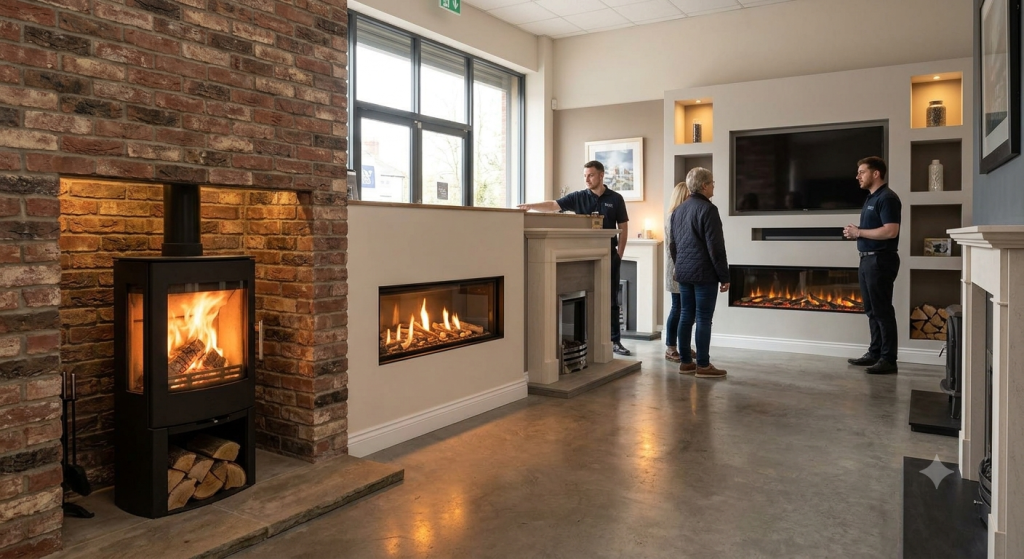
A wood burning stove is attractive to homeowners who want real flames, radiant heat and the traditional experience of burning logs. However, it does require fuel storage, regular cleaning, chimney maintenance and ongoing firewood purchases.
If convenience is your priority, an electric fire may be more suitable. Electric fires require no logs, produce no combustion gases inside the home and can be installed in many properties without a traditional chimney.
You can compare alternatives through our guides to electric fireplaces in Leicester and media wall fireplaces in Leicester.
If you want the appearance and heat of a real fire but are considering different fuel types, choosing between gas, electric and wood burning appliances should start with your home’s layout, available chimney or flue, heating requirements and lifestyle.
Is a Wood Burning Stove Worth It?
For the right home, a wood burning stove can provide excellent supplementary heating and create a strong focal point in a living room.
However, homeowners should consider more than the purchase price.
You need to account for:
- Stove and installation costs
- Flue or chimney requirements
- Firewood
- Log storage
- Chimney sweeping
- Routine maintenance
- Replacement components over time
The advantage is that you have considerable control over when and how you use the stove. With a correctly sized appliance and good-quality dry wood, you can enjoy efficient, controllable heat while creating the atmosphere of a traditional real fire.
For homeowners in Leicester considering installation, our fireplace installation Leicester guide explains some of the practical considerations before choosing a fireplace.
Final Thoughts
So, how much wood does a wood burning stove use?
For many modern domestic stoves, a practical starting estimate is around 1 to 3kg of dry wood per hour, but the actual figure can vary substantially depending on stove output, wood type, moisture content, operating temperature, insulation and usage.
The most important thing is not simply to minimise the number of logs you burn. The goal is to get maximum useful heat from every kilogram of properly dried wood.
Choose the correct stove size, burn wood with a moisture content of 20% or less, use the recommended log size, avoid overloading and maintain the appliance properly. These habits can help reduce wasted fuel, improve performance and keep your stove operating safely.
If you are considering a new wood burning stove in Leicester, Blue Oak Fireplaces can help you compare suitable options for your home, room size and heating requirements.
Frequently Asked Questions
How much wood does a wood burning stove use per hour?
A typical domestic wood burning stove may use approximately 1 to 3kg of dry wood per hour, depending on its heat output, design, fuel quality and operating conditions. Always follow the fuel load and operating instructions provided by the stove manufacturer.
How many logs does a wood burning stove use per hour?
A medium-sized wood burner may use around two to three medium kiln-dried hardwood logs per hour, but this varies significantly according to log size and stove design. Measuring wood by weight is generally more accurate than counting individual logs.
How much wood do I need for a winter?
There is no fixed amount because every household uses its stove differently. As an example, a stove consuming 2kg per hour for five hours per day over 150 days would use approximately 1,500kg, or 1.5 tonnes, of wood.
Does dry wood burn slower than wet wood?
Dry wood generally provides more useful heat because less energy is wasted evaporating water. Wet wood can produce more smoke and deposits while delivering less effective heat. UK guidance recommends burning wood with a moisture content of 20% or less.
What is the best moisture content for firewood?
For domestic wood fuel in the UK, wood with a moisture content of 20% or less is recommended. Ready to Burn certified wood sold in smaller quantities must meet this threshold in England. Some individual stove manufacturers may recommend a narrower moisture range, so check your appliance manual.
Can I burn wet or unseasoned wood in my stove?
You should not burn wet or unseasoned wood. High-moisture logs burn inefficiently, produce more smoke and can contribute to tar and soot deposits in the chimney. They can also increase maintenance requirements and potentially increase chimney fire risk.
Is hardwood better than softwood for a wood burning stove?
Hardwood is often valued for its density and longer-lasting burn, but both hardwood and softwood can be suitable when properly dried and approved for your appliance. The moisture content, log size and stove manufacturer’s fuel recommendations are more important than simply choosing one category of wood.
Why is my wood burning stove using too much wood?
High wood consumption can be caused by wet logs, an oversized room heating requirement, excessive airflow, incorrect log sizes, poor insulation, a damaged door seal or incorrect stove operation. If consumption suddenly increases, have the stove and flue checked rather than simply adding more wood.
How can I make logs last longer?
Use properly dried wood, select the correct log size, avoid excessive airflow once the fire is established and operate the stove according to the manufacturer’s instructions. Do not deliberately make the stove smoulder by restricting the air excessively, as this can increase smoke and deposits.
Should I buy kiln-dried logs?
Kiln-dried logs can be a convenient option because reputable suppliers can provide wood with controlled moisture content. When buying firewood, check the moisture level and look for the Ready to Burn certification where applicable.
How often should a wood burning stove chimney be swept?
A professional chimney sweep should be carried out regularly according to how frequently the stove is used and the advice applicable to your installation. Heavy-use wood burning stoves may require more frequent sweeping. Always follow professional advice and your stove manufacturer’s maintenance requirements.
Can a wood burning stove heat an entire house?
A wood burning stove is generally designed to heat the room in which it is installed, although heat can travel to adjoining areas depending on the home’s layout. Larger or appropriately designed systems may heat multiple spaces, but you should not assume that a single stove will heat every room evenly.
Is a wood burning stove cheaper to run than an electric fire?
It depends on the price of your firewood, electricity tariff, appliance efficiency and how much heat you need. A wood burner requires fuel storage, chimney maintenance and regular cleaning, while an electric fire is simpler to operate and requires no physical firewood. Compare the total ownership and running costs rather than looking only at the fuel price.
What should I do if my stove burns through wood very quickly?
First check that you are using dry wood with the correct moisture content and that you are not leaving the air controls excessively open. Check the door seal and confirm that the log size and fuel load match the manufacturer’s instructions. If the problem continues, arrange a professional inspection of the stove and flue.
Where can I buy a wood burning stove in Leicester?
Blue Oak Fireplaces offers wood burning stoves and fireplace solutions for homeowners in Leicester and surrounding areas. Visit the showroom to compare stove styles and discuss which appliance is appropriate for your room, property and installation requirements.