
Planning a living room with a fireplace before or after renovation involves countless decisions, but one question catches out more homeowners than you’d expect: when exactly should the fireplace go in? Getting the fireplace installation timing wrong can mean redone plastering, damaged new flooring, or a design that never quite lines up the way you pictured it. This guide walks through exactly when to schedule your fireplace within a wider renovation, and why the order matters more than most people realise.
Why Timing Matters More Than You’d Think
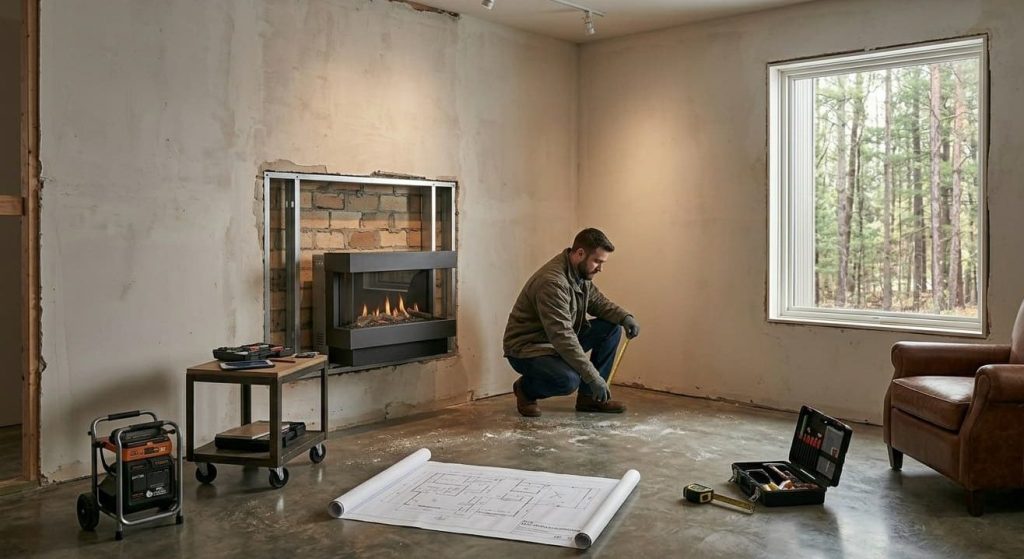
A fireplace installation isn’t just about fitting an appliance, it often involves structural checks, flue work, electrical routing, and finishing touches like plastering or a new surround. Each of these stages can affect, or be affected by, other fireplace renovation work happening in the same room. Getting the sequence wrong typically means paying for the same job twice, whether that’s replastering a wall that’s already been painted or reopening flooring that was just laid. Our guide to what actually happens during fireplace installation in Leicester covers just how many stages are typically involved, which makes it clear why timing deserves real thought.
The Case for Installing the Fireplace First
In most renovation projects, installing the fireplace before finishing touches like painting, flooring, and final furnishing is the more practical order. Structural work, flue installation, and any necessary electrical rerouting tend to be messier and more disruptive than most other fireplace renovation tasks, generating dust, requiring wall access, and sometimes needing floor protection removed entirely. Doing this early means any mess or disruption happens before your new flooring, freshly painted walls, or delicate furnishings are in place. If you’re planning a media wall alongside your fireplace renovation, this is especially important, since built in cabinetry and cable routing both benefit from being finished before final wall treatments go on.
Installing Fireplace Before or After Renovation Makes Sense
There are situations where installing a fireplace after the bulk of a renovation is complete makes more sense, particularly for appliances that require minimal structural change. A straightforward electric fire, for example, involves far less disruption than a new flue or chimney breast alteration, making it reasonable to fit later in the process without risking damage to finished surfaces. Our electric fires range is worth considering if you’re renovating a room and want the flexibility to decide on the fireplace closer to the end of the project.
Planning Structural Work Around Other Trades
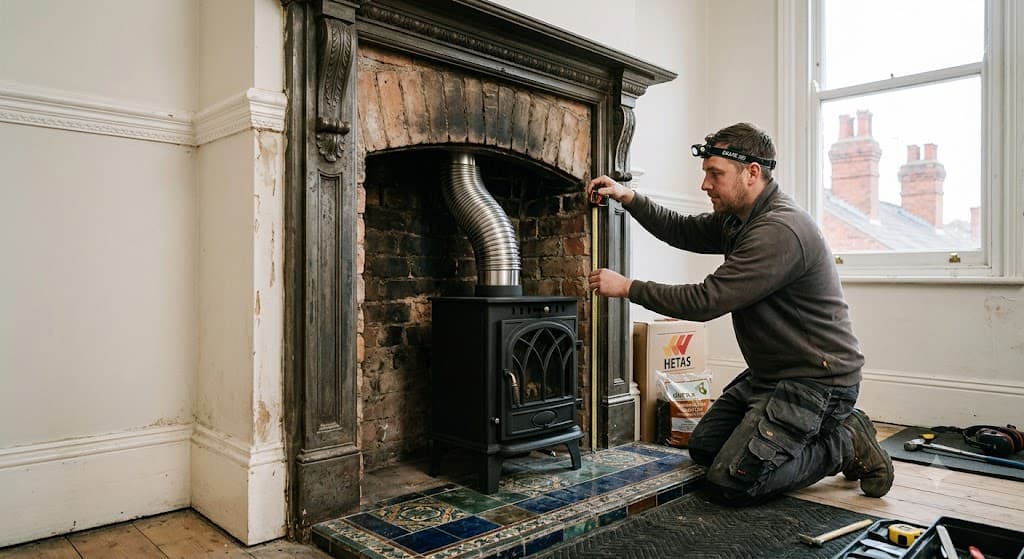
If your renovation involves knocking through walls, adding a chimney breast, or any other structural changes, this work should almost always happen before plastering, flooring, and decoration begin. Coordinating your fireplace installer with other tradespeople, builders, electricians, and decorators, avoids the frustration of one trade undoing another’s work. A proper site survey early in the planning process, covered in our guide to fireplace installation in Leicester, helps establish exactly where your fireplace renovations fits into the wider project timeline.
Considering Your Surround and Finishing Materials
The surround you choose can also influence timing. A bespoke stone or plastered surround, for instance, is often best finished after the appliance itself is fitted but before final decoration, so that paint colours and finishes can be chosen to genuinely complement the completed feature rather than guessed at in advance. Our guide to fireplace surround ideas for modern homes explains how surround material and finishing sequence often go hand in hand.
Flooring Considerations
New flooring is one of the most common casualties of poor renovation sequencing. Heavy tools, materials, and foot traffic during a fireplace installation can easily damage delicate new flooring if it’s laid too early. In most cases, it makes sense to install the fireplace and complete any related structural or plastering work before final flooring goes down, protecting your investment in new floors from unnecessary risk.
Electrical Work and Media Wall Planning
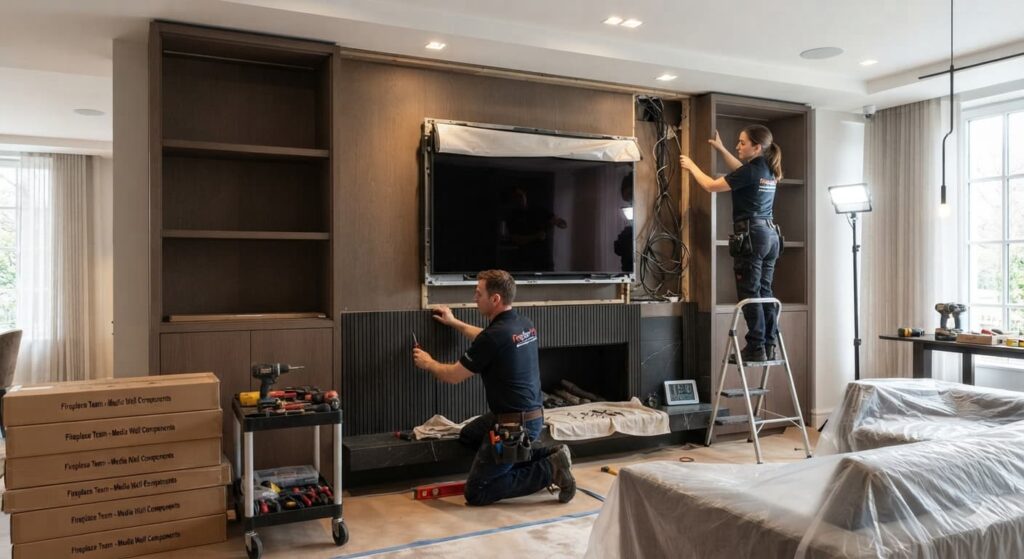
If your renovation includes a media wall or any fireplace requiring nearby power, sockets, or hidden cabling, this electrical work needs to be planned early, ideally before walls are closed up or decorated. Our guide on designing a media wall that feels built in, not added on explains why cable routing and power planning are best handled at the structural stage of a project rather than retrofitted afterward.
Choosing Your Fireplace Type Early, Even If Installation Comes Later
Even if the physical installation happens partway through your renovation, it’s worth deciding on your fireplace type, gas, electric, or wood burning, right at the start of the planning process. This decision affects flue requirements, heat clearances, and even the depth of your surround, all of which influence how the surrounding room is built out. Our comparison of gas vs wood burning fireplaces is a useful reference point to work through early, even if the appliance itself won’t be fitted until later in the project.
Avoiding Costly Rework
The most expensive renovation mistakes tend to come from sequencing errors rather than the fireplace itself. Repainting a wall that’s been damaged during later installation, replacing flooring scratched by tools, or redoing plastering around a stove that wasn’t accounted for early enough, all of these add unnecessary cost to a project that could have been avoided with better planning. Our detailed breakdown of fireplace installation cost in the UK touches on how poor planning can inflate overall project cost.
Working With One Team for a Smoother Process
One of the simplest ways to avoid sequencing problems is working with a fireplace specialist who understands how to coordinate with your wider renovation, rather than treating the fireplace as an entirely separate project. Our full range of services includes proper planning and site surveys designed to fit smoothly within a broader renovation timeline, reducing the risk of costly rework later on.
Getting Expert Advice Before You Start Fireplace Renovation
Because every renovation is different, the right sequencing genuinely depends on your specific project, whether that’s a full room strip out, a simple refresh, or a new build extension. Visiting our showroom or speaking with our team early in your planning process helps ensure your fireplace is scheduled at exactly the right point relative to your other renovation work.
Visit Blue Oak Fireplaces Before Choosing
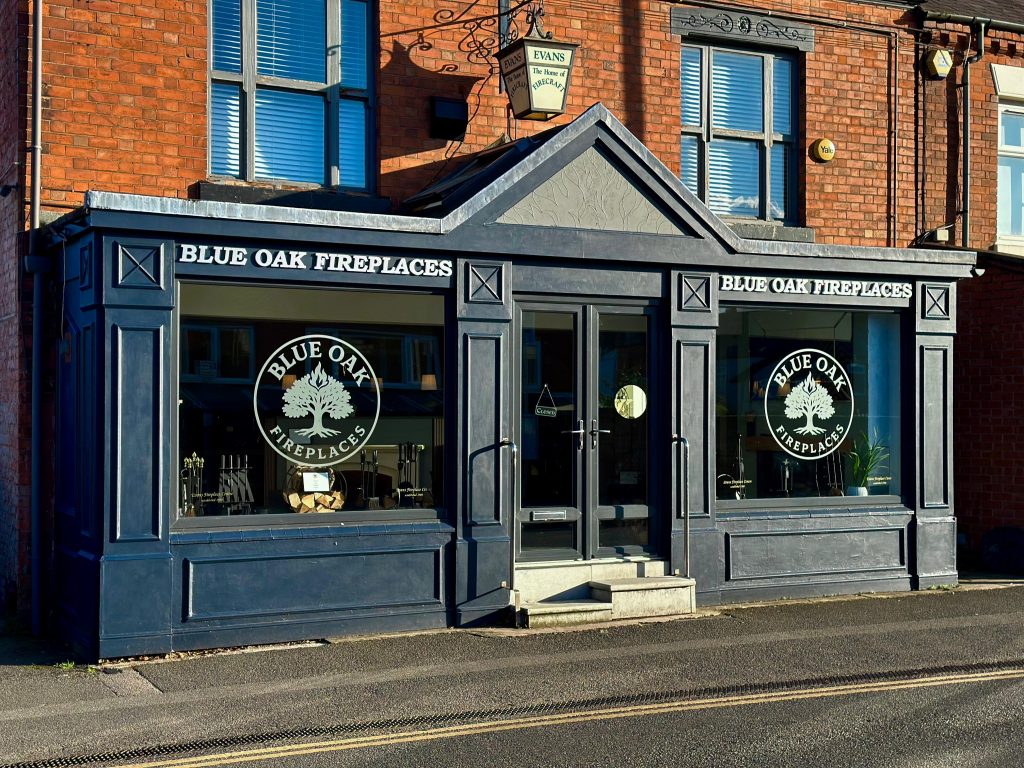
A fireplace showroom helps you see real scale, flame effect, finish quality and material choices. At Blue Oak Fireplaces in Syston, Leicester, homeowners can explore electric fires, gas fires, stoves, media walls and fireplace surrounds with guidance from an experienced team. The goal is not just to choose a good-looking fire, but to choose one that fits the room, performs well and feels right long term.
Both options can enhance the comfort and visual appeal of your home. By understanding the differences between gas and wood fireplaces, you can choose the solution that best fits your space and lifestyle.
Final Thoughts
There’s no single universal answer to whether you should go in before or after a living room fireplace renovation; it depends on the type of appliance, the extent of structural work involved, and how the rest of your project is sequenced. As a general rule, structural work and anything messy should happen early, while final finishing touches often work best once the fireplace itself is in place. If you’re planning for a fireplace renovation in Leicester and want advice on the right sequence for your project, get in touch with Blue Oak Fireplaces for guidance tailored to your specific home.
Frequently Asked Questions
Should one install a fireplace before or after renovation of new flooring?
In most cases, before. Fireplace installation often involves structural work, tools, and foot traffic that can damage delicate new flooring, so it’s generally safer to complete this stage before final flooring is laid.
Can I decide the type after starting a fireplace renovation?
It’s best to decide early, even if installation happens later, since fireplace type affects flue requirements, heat clearances, and surround depth, all of which influence how the surrounding structure and walls are built.
Does a media wall need to be planned before decorating?
Yes. Media walls typically involve electrical work and hidden cable routing that should be completed before walls are closed up or decorated, since retrofitting this afterward is far more disruptive and costly.
Is it cheaper to install a fireplace before or after renovating?
Installing structural or messy fireplace work before final finishing touches is usually more cost effective, since it avoids the expense of repairing or replacing newly finished surfaces damaged during later installation.
Are electric fires more flexible for renovation timing than wood burning stoves?
Yes. Electric fires generally involve far less structural disruption than wood burning stoves, making them easier to install later in a renovation project without risking damage to finished walls or flooring.
Who should I involve in planning fireplace installation timing?
It’s best to involve your fireplace installer alongside other tradespeople, builders, electricians, and decorators, early in the planning process, so structural work, electrics, and finishing touches are properly coordinated rather than conflicting later on.
