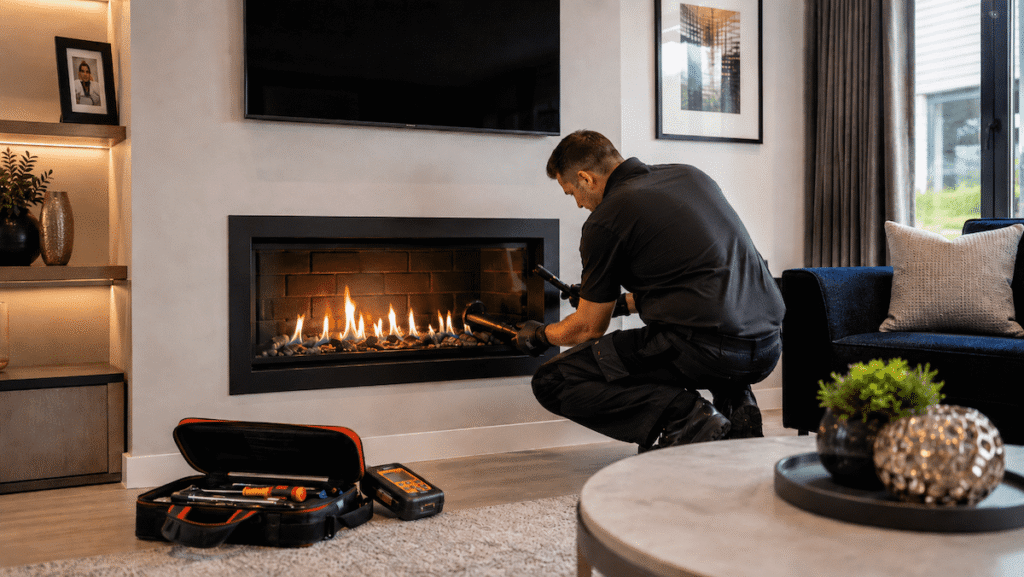
A gas fire can provide instant warmth, realistic flames and a stylish focal point without the logs, ash and daily cleaning associated with a wood burning stove. But because it is a gas appliance, regular servicing is essential for safe and reliable operation.
So, how often should a gas fire be serviced?
For most homeowners, a gas fire should be serviced every 12 months by a Gas Safe registered engineer. Annual servicing allows potential problems to be identified before they become serious, helps maintain efficient operation and gives you confidence that your fire is ready for the colder months.
If your gas fire is old, heavily used, has been unused for a long period or is showing unusual symptoms, it may need attention sooner.
For homeowners in Leicester and the surrounding Midlands, Blue Oak Fireplaces provides gas fire servicing and maintenance alongside fireplace installation and aftercare.
Why Does a Gas Fire Need Servicing Every Year?
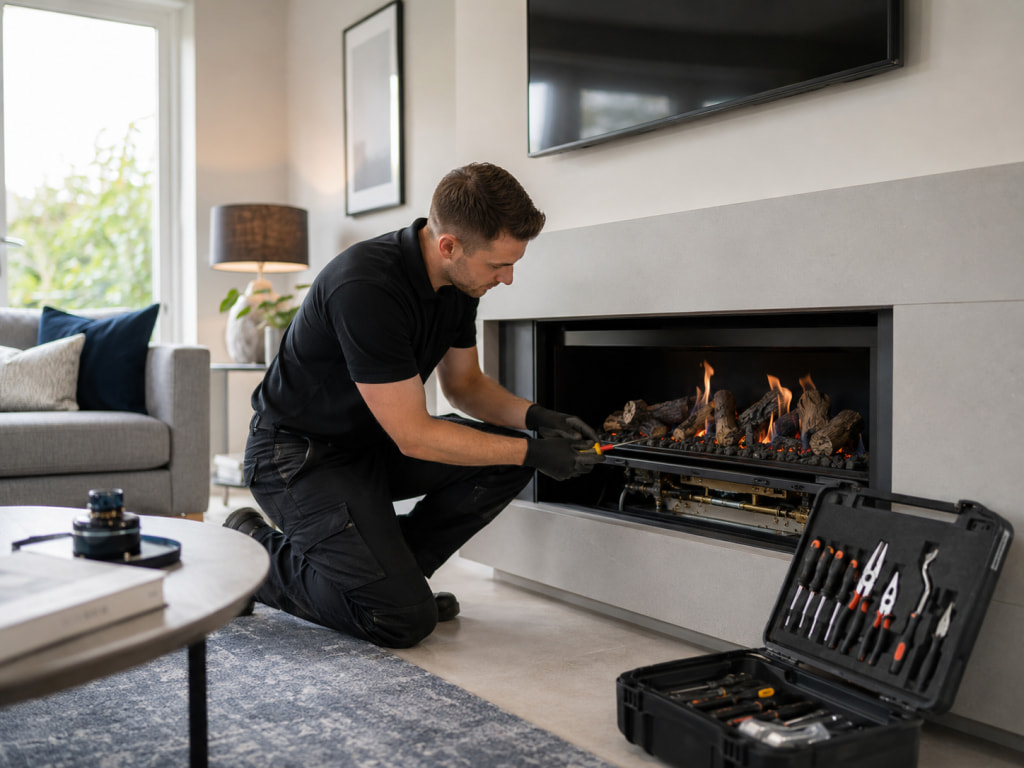
It is easy to assume that a gas fire does not need much maintenance because it does not produce piles of ash or require logs. However, it still contains burners, controls, safety components, seals and other parts that need to operate correctly.
A gas fire that appears to be working normally can still develop problems that are not immediately obvious.
An annual gas fire service can help identify:
- Incorrect combustion
- Burner problems
- Blocked or restricted flues
- Damaged seals
- Pilot or ignition issues
- Soot or staining
- Ventilation problems
- Component deterioration
- Unusual gas pressure
- Safety device faults
Regular servicing is particularly important because carbon monoxide cannot be seen, tasted or smelled. A correctly installed and maintained appliance, appropriate ventilation and a working carbon monoxide alarm are important parts of gas appliance safety.
Blue Oak Fireplaces recommends regular servicing to help keep gas fires operating safely, efficiently and reliably.
How Often Should a Gas Fire Be Serviced?
For the majority of domestic gas fires, annual servicing is the recommended schedule.
If your last service was more than 12 months ago, it is worth arranging an appointment, particularly before the autumn and winter heating season.
However, annual servicing is not necessarily the same requirement for every situation.
You should consider speaking to a qualified engineer about more frequent checks if:
- You use the gas fire every day
- The appliance is particularly old
- The fire has experienced repeated faults
- The appliance has been unused for a long time
- You have recently moved into a property and do not know its service history
- You notice changes in flame appearance or heat output
- The manufacturer specifies a different servicing schedule
Always follow the manufacturer’s instructions alongside professional advice.
When Is the Best Time to Service a Gas Fire?
Late summer or early autumn is an ideal time to service your gas fire.
This gives you an opportunity to identify and resolve problems before you rely on the appliance regularly.
It also avoids one of the most common homeowner frustrations: discovering a fault when temperatures suddenly drop and heating engineers become busy.
A simple annual reminder can make servicing much easier. If your fire was serviced in September this year, schedule the next service around September next year.
If you have recently purchased a property and cannot confirm when the gas fire was last inspected, do not simply assume it is safe because it works. Arrange a professional check before regular use.
What Happens During a Gas Fire Service?
A professional gas fire service in Leicester involves considerably more than switching the appliance on and checking whether the flame appears.
The exact procedure depends on the appliance, manufacturer and installation, but a qualified engineer may inspect and test:
Burner and Combustion
The burner should operate correctly and produce the appropriate flame pattern. Abnormal combustion can indicate an issue requiring further investigation.
Pilot and Ignition System
The engineer can check whether the pilot and ignition components are functioning correctly and whether the fire lights and remains operating as intended.
Gas Pressure and Supply
Where appropriate, the engineer may check gas pressure and appliance performance against the manufacturer’s requirements.
Flue and Ventilation
The flue needs to safely remove combustion products. Appropriate ventilation is also important for appliances that require it.
Safety Devices
Safety components should operate correctly and shut the appliance down when necessary.
Glass, Seals and Visible Components
The engineer can look for damage, deterioration, staining or other signs that could affect safe operation.
General Cleaning
Depending on the appliance, cleaning may be required around the burner and other accessible components to remove dust and debris.
The exact service should always be carried out according to the appliance manufacturer’s instructions and relevant safety requirements.
7 Warning Signs Your Gas Fire Needs Servicing
You should not wait for your annual service if your gas fire starts behaving differently.
1. The Flame Looks Different
A noticeable change in flame colour, shape or stability should be investigated.
2. The Fire Keeps Going Out
Repeatedly losing the flame may indicate a problem with the ignition, pilot, thermocouple or another component.
3. You Notice Soot or Black Staining
Unexpected soot or black staining around a gas fire can indicate a combustion or ventilation problem and should not be ignored.
4. There Is an Unusual Smell
If you smell gas, do not treat it as a routine servicing issue. Turn off the appliance and gas supply if it is safe to do so, avoid creating flames or sparks and seek appropriate emergency gas advice.
5. The Fire Produces Less Heat
A noticeable reduction in heat output could indicate a problem with combustion, the burner or another part of the appliance.
6. The Fire Makes Unusual Noises
New clicking, popping, roaring or other unusual sounds should be checked rather than ignored.
7. You Cannot Remember the Last Service
If you have no service record, especially after moving into a new home, arranging an inspection is a sensible first step.
Can You Service a Gas Fire Yourself?
Gas fire servicing should not be treated as a DIY job.
Homeowners can perform simple maintenance such as keeping the surrounding area clean, ensuring vents are not obstructed and testing their carbon monoxide alarm according to the manufacturer’s instructions.
However, gas-related work, combustion testing, internal adjustments and repairs should be performed by an appropriately qualified Gas Safe registered engineer.
Do not attempt to dismantle the burner, adjust gas pressure or repair internal gas components yourself.
When an engineer arrives, you can ask to see their Gas Safe ID card and confirm that they are qualified to work on the relevant type of gas appliance.
Does a Gas Fire Need a Chimney Sweep?
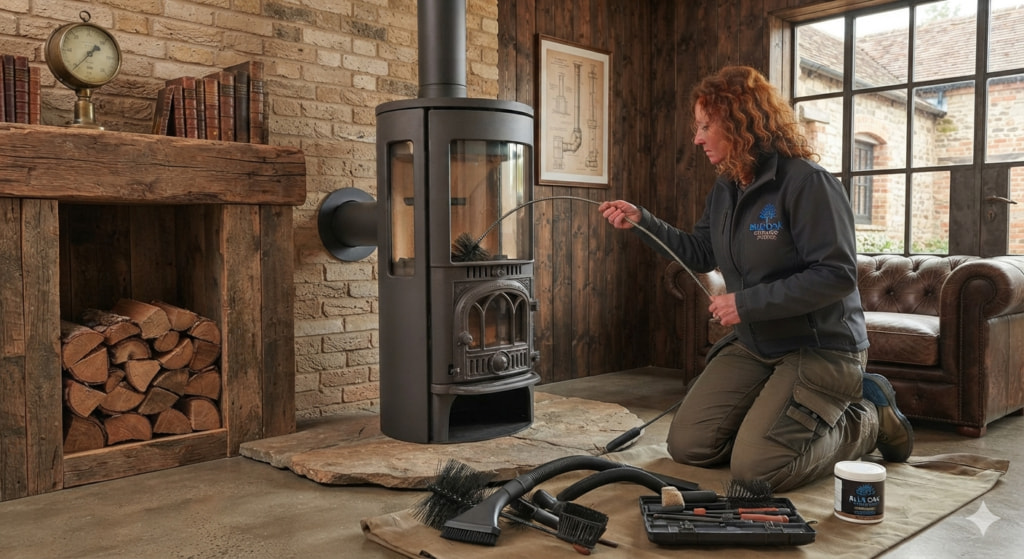
This depends on the type of installation.
A gas fire may use a chimney or flue to remove combustion gases, but gas fire servicing and chimney sweeping are not the same thing.
A chimney sweep deals primarily with the chimney or flue, while a gas fire service in Leicester focuses on the gas appliance itself and its safe operation.
If your installation has a chimney, flue or liner that requires inspection or sweeping, ask your qualified professional what maintenance is appropriate for your specific appliance.
Blue Oak Fireplaces also provides chimney care and sweeping as part of its wider fireplace services.
Does an Unused Gas Fire Still Need Servicing?
Yes.
Not using your gas fire regularly does not mean that it can be ignored indefinitely.
Components can deteriorate with age, dust can accumulate, ventilation can become obstructed and the condition of the flue can change.
If a gas fire has been unused for several years, it is particularly sensible to have it professionally inspected before putting it back into regular service.
This is especially important if you have recently moved into a property and have no reliable service history.
Gas Fire Servicing and Your Home Insurance or Warranty
Your appliance manufacturer may specify servicing requirements as part of its warranty conditions.
Check the documentation supplied with your gas fire to understand whether annual servicing is required.
Keeping service records is also sensible. Store invoices, certificates and inspection information somewhere safe so you can demonstrate the appliance’s maintenance history if needed.
If you are a landlord, separate legal obligations apply to gas safety checks and rented properties. Landlords should follow the applicable regulations and ensure required gas safety checks are completed by appropriately qualified professionals.
How Much Does Gas Fire Servicing Cost?
The cost of a gas fire service varies according to the appliance, location, condition, access and whether additional repairs are required.
A straightforward annual service will normally cost less than a visit that identifies a faulty component requiring replacement.
When comparing prices, do not choose an engineer based solely on the cheapest quote. Check that the person carrying out the gas work is appropriately qualified and that the service includes the relevant safety checks.
If repairs are needed, ask for an explanation and quotation before authorising additional work.
How to Keep Your Gas Fire Safe Between Services
Annual servicing is important, but homeowners should also take simple precautions throughout the year.
Keep the area around the fire free from furniture, decorations and objects that could interfere with ventilation or heat.
Do not cover vents or grilles.
Keep combustible items away from the appliance.
Follow the manufacturer’s cleaning instructions and never use unsuitable chemicals around the burner or internal components.
Most importantly, install a suitable carbon monoxide alarm where required and test it regularly according to the manufacturer’s instructions.
If your carbon monoxide alarm activates, take the warning seriously and seek appropriate emergency assistance.
Should You Repair or Replace an Old Gas Fire?
Sometimes servicing reveals that a gas fire has reached the point where replacement makes more sense than continued repairs.
If your appliance requires frequent repairs, has obsolete components, is inefficient or no longer suits your room, replacing it may provide a better long-term solution.
Modern gas fires are available in a wide variety of styles, including traditional inset designs, contemporary fireplaces and gas stove-style appliances.
Blue Oak Fireplaces offers a selection of gas fires in Leicester with traditional and contemporary designs to suit different interiors.
If you are unsure whether to repair your existing fire or replace it, a professional assessment can help you compare the likely repair cost with the benefits of installing a newer appliance.
Gas Fire vs Wood Burning Stove: Which Needs More Maintenance?

Gas fires are generally more convenient to maintain than wood burning stoves because they do not require logs, ash removal or the same type of solid-fuel maintenance.
Wood burning stoves require regular removal of ash and appropriate chimney sweeping, while gas fires require professional gas servicing and appropriate checks of the appliance and flue.
Your lifestyle should therefore influence your choice.
If you want instant heat, realistic flames and convenient operation, a gas fire can be an attractive option.
If you prefer the traditional experience of burning logs and the atmosphere of a real wood fire, a wood burning stove may be more appropriate.
You can compare different options through our guide to gas vs wood burning fireplaces.
Why Choose Blue Oak Fireplaces?
Choosing and maintaining a fireplace is about more than selecting a design that looks attractive in your living room.
Blue Oak Fireplaces has over 25 years of experience in the fireplace industry and provides installation, servicing, maintenance and chimney care across the Midlands.
The team provides gas fire services and maintenance, including inspections, cleaning and safety checks for different types of gas fires.
If you are considering a new appliance, you can also visit the Blue Oak Fireplaces showroom in Syston, Leicester, where a range of gas, electric, wood burning and multi-fuel options are available to view.
For homeowners planning a new fireplace, our fireplace installation Leicester guide also explains important considerations such as room size, chimney condition, ventilation, gas supply and installation requirements.
Final Thoughts
How often should a gas fire be serviced?
For most homeowners, the answer is once every 12 months by an appropriately qualified Gas Safe registered engineer.
Annual servicing is a relatively small part of owning a gas fire, but it can make a significant difference to safety, reliability and peace of mind. Do not wait for a fault to appear before arranging maintenance.
If you notice soot, unusual smells, changes in the flame, repeated ignition problems, unexpected shutdowns or reduced performance, arrange a professional inspection sooner.
And if you cannot remember when your gas fire was last serviced, now is a good time to arrange a check.
Frequently Asked Questions
How often should a gas fire be serviced?
Most domestic gas fires should be professionally serviced once every 12 months. Annual servicing helps identify potential faults, check safe operation and maintain reliable performance. Always follow the manufacturer’s servicing recommendations as well.
Is an annual gas fire service necessary?
Yes. Annual servicing is strongly recommended for domestic gas fires because problems with combustion, burners, safety components, ventilation or flues may not always be obvious to the homeowner.
Who can service a gas fire?
Gas fire servicing should be carried out by an appropriately qualified Gas Safe registered engineer. Check the engineer’s Gas Safe credentials before allowing gas-related work to begin.
What happens if I do not service my gas fire?
Skipping servicing can allow faults, component wear, combustion problems or ventilation issues to go unnoticed. It may also affect appliance reliability and, depending on the manufacturer, could have implications for warranty conditions.
Does a gas fire need servicing if I rarely use it?
Yes. Even an occasionally used gas fire can develop issues due to age, dust, component deterioration or problems with the flue and ventilation. If you have not used the appliance for a long period, have it checked before regular use.
When is the best time to service a gas fire?
Late summer or early autumn is often ideal because you can identify and resolve problems before the main heating season begins. It also helps avoid delays during periods when demand for heating services is high.
How long does a gas fire service take?
The time required depends on the type of appliance, its condition and how accessible it is. A routine service may be relatively quick, but additional inspection or repairs can make the appointment longer.
Does servicing make a gas fire more efficient?
A well-maintained appliance can operate more reliably and as intended by the manufacturer. Cleaning and identifying combustion or component problems can help prevent performance from deteriorating.
Can I clean my gas fire myself?
You can normally keep accessible exterior areas clean according to the manufacturer’s instructions, but internal gas components should not be dismantled or adjusted by homeowners. Gas-related servicing and repairs should be left to an appropriately qualified professional.
Does a gas fire need a chimney sweep every year?
Not necessarily. The maintenance requirements depend on the type of gas fire, chimney and flue arrangement. Gas fire servicing and chimney sweeping are separate services, so ask a qualified professional what is appropriate for your installation.
What are the signs that a gas fire needs servicing?
Warning signs include unusual flame appearance, soot or black staining, difficulty lighting, repeated shutdowns, unusual smells or noises and reduced heat output. If you notice any significant change in operation, arrange a professional inspection.
Can a gas fire cause carbon monoxide?
A faulty, incorrectly installed or poorly maintained gas appliance can potentially produce carbon monoxide. This is why correct installation, appropriate ventilation, professional servicing and a suitable carbon monoxide alarm are important.
Should I replace an old gas fire instead of servicing it?
Not always. Some older gas fires can continue operating safely with appropriate maintenance. However, if the appliance requires frequent repairs, parts are difficult to obtain or it no longer meets your needs, replacement may be worth considering.
How much does it cost to service a gas fire?
The price varies depending on the appliance, location, access and whether repairs are required. A routine annual service will generally cost less than a service that identifies faults requiring replacement parts or additional work.
Where can I get a gas fire serviced in Leicester?
Blue Oak Fireplaces provides gas fire servicing and maintenance in Leicester and the surrounding Midlands. The company also offers fireplace installation, chimney care and a range of gas, electric and stove options.