
When it comes to rising energy bills, many UK homeowners are asking “is a gas fire cheaper than central heating?” Understanding gas fire vs central heating costs requires more than comparing gas prices alone. The overall cost depends on your gas fire’s efficiency, your boiler’s age and efficiency, the size of the space you need to heat, how long you use your heating, and whether you are heating a single room or the entire home.
For a homeowner who wants to reduce heating bills, a gas fire can make financial sense when used for targeted heating in one room. However, if you need to heat several rooms or the entire property, a modern gas central heating system with an efficient condensing boiler is generally the more practical and efficient option. Independent guidance from Which? similarly notes that central heating is more efficient for heating multiple rooms, while a gas fire can make sense for heating a single room in certain circumstances.
At Blue Oak Fireplaces, we help homeowners compare gas fires, electric fires, stoves and fireplace designs based on their heating requirements, property and lifestyle. Our gas fires in Leicester range includes traditional and modern designs for homeowners looking for convenient, instant heat with a real flame.
Quick Answer: Is a Gas Fire Cheaper Than Central Heating?

A gas fire can be cheaper than central heating when you only need to heat one room and can avoid running the rest of your central heating system.
However, if you are heating multiple rooms, gas central heating is usually the better-value option, particularly when your home has a modern condensing boiler and effective heating controls.
The important distinction is between heating a room and heating a home.
If your family spends most evenings in one living room, using a gas fire to provide heat exactly where you need it can reduce the amount of heating required elsewhere. If everyone is using bedrooms, bathrooms, kitchen and living areas, central heating is generally more suitable.
What Is the Difference Between a Gas Fire and Central Heating?
Before comparing costs, it is important to understand how each system uses gas.
How a Gas Fire Works
A gas fire burns natural gas directly within the fireplace or appliance. The resulting heat is released primarily into the room.
Depending on the model, a gas fire may be inset, outset, hole-in-the-wall, balanced flue or another configuration. Efficiency varies significantly between designs.
Modern gas fires can provide instant heat, realistic flames and convenient controls. Blue Oak’s gas fire range includes traditional and contemporary styles, with options designed around different room layouts and fireplace designs.
How Gas Central Heating Works
A gas central heating system normally uses a boiler to heat water. The hot water is circulated around radiators throughout your home.
A modern condensing boiler can recover some heat that would otherwise escape through the flue. Energy Saving Trust explains that modern condensing boilers are more efficient than older boilers because they reuse heat that would otherwise be lost.
This makes central heating particularly effective when you need to heat several rooms.
Gas Fire Running Costs vs Central Heating

The cost of running either system depends on the amount of useful heat you actually receive for the gas you consume.
As of 1 July to 30 September 2026, Ofgem’s average capped domestic gas unit rate for Direct Debit customers in Great Britain is 7.33p per kWh, while the average electricity unit rate is 26.11p per kWh. These are average price cap figures, not guaranteed prices for every household, and actual costs depend on tariff, location and consumption.
This is important because simply saying “gas is cheap” does not tell you whether a particular gas fire is cheaper to operate.
A better calculation is:
Running cost = gas consumed × gas price
But the appliance’s efficiency determines how much of that energy becomes useful heat.
For example, a less efficient gas fire may require considerably more gas to deliver the same useful heat as a highly efficient appliance.
Why Gas Fire Efficiency Matters
Not every gas fire performs in exactly the same way.
According to Which?, flueless and balanced flue gas fires can achieve efficiencies of up to around 90%, while conventional flue gas fires can operate at significantly lower efficiency depending on the appliance and installation.
That means two gas fires with similar heat outputs can have different running costs.
When comparing cheap gas fires, therefore, do not simply look at the purchase price. Consider:
- Heat output
- Appliance efficiency
- Gas consumption
- Flue type
- Installation requirements
- Servicing requirements
- How often you expect to use the fire
- Whether you are heating one room or several
The cheapest appliance to buy is not necessarily the cheapest gas fire to run.
Is It Cheaper to Heat One Room With a Gas Fire?
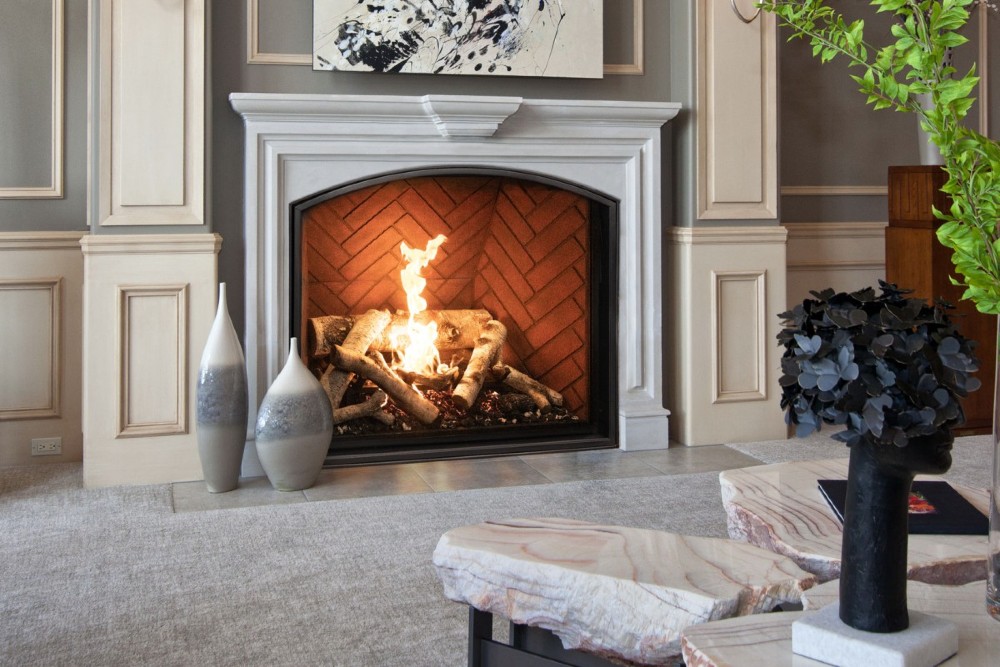
Often, yes.
This is where a gas fire can have an important advantage over whole-house central heating.
Imagine that your family spends most of the evening in the living room. Turning on central heating may warm several rooms that are not being used.
A gas fire allows you to concentrate heat directly in the room where you are spending your time.
This is known as zone or targeted heating.
For example, instead of heating:
- Living room
- Dining room
- Hallway
- Bedrooms
- Spare room
you may only need to heat the living room for several hours.
That can make a gas fire an attractive option for homeowners who have a suitable installation and want to reduce unnecessary heating elsewhere.
Is Central Heating Cheaper for the Whole House?
Generally, yes.
If you need to heat multiple rooms, central heating is usually more appropriate because one boiler can distribute heat throughout the property.
Modern heating controls make this even more useful. Thermostats, programmers and thermostatic radiator valves allow homeowners to control when and where heating is required.
Energy Saving Trust recommends using heating controls to heat your home only when necessary and setting the thermostat to the lowest comfortable temperature, generally around 18°C to 21°C.
So, if you already have a modern boiler and a well-controlled central heating system, replacing it with gas fires throughout the house is unlikely to be a sensible way to reduce heating costs.
What About Gas Fire Installation Costs?
Running costs are only one part of the calculation.
Before deciding whether a gas fire is cheaper, consider the initial installation.
The final price can depend on:
- Gas supply availability
- Existing chimney or flue
- Type of gas fire
- Whether a chimney needs preparation
- Fireplace opening
- Hearth requirements
- Surround
- Ventilation
- Flue requirements
- Installation labour
- Any remedial building work
There is therefore no universal installation price.
Blue Oak’s fireplace installation guide for Leicester explains why room dimensions, chimney condition, ventilation, gas supply and the existing structure can all affect the project and final cost.
If you are starting from scratch, you should compare the total installed cost, rather than simply comparing the price of the appliance.
Gas Fire Maintenance Costs
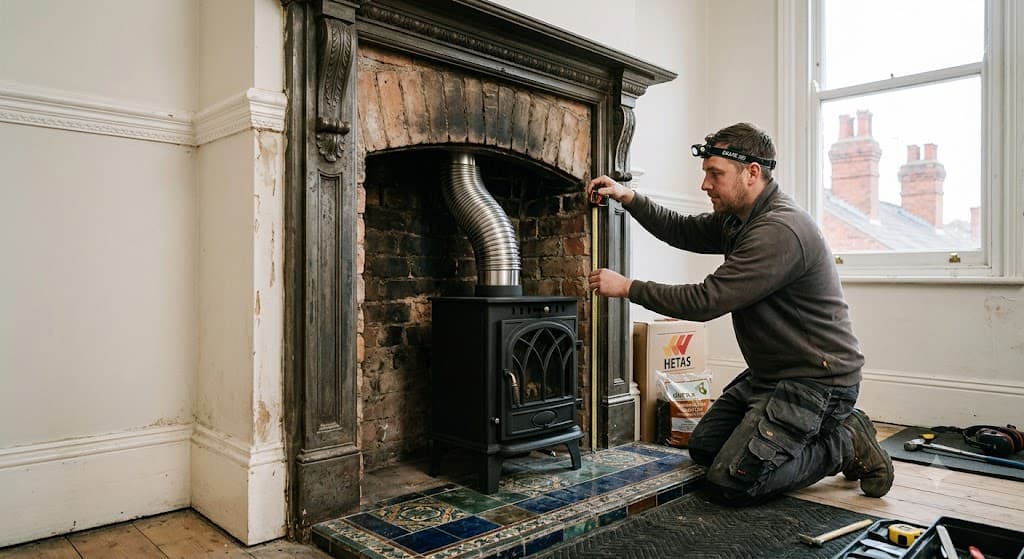
A gas fire is relatively convenient compared with a wood-burning stove, but it is not maintenance-free.
Blue Oak recommends regular servicing to keep gas fires safe, efficient and operating correctly. Most gas fires should be serviced at least annually by a Gas Safe registered engineer.
During servicing, an engineer may check aspects such as:
- Burner operation
- Flame quality
- Ventilation
- Flue performance
- Seals
- Safety devices
- Appliance condition
This should be included when calculating the long-term cost of owning a gas fire.
Central Heating Maintenance Costs
Central heating also has ongoing maintenance requirements.
A gas boiler should be serviced regularly to ensure it operates safely and efficiently. Energy Saving Trust recommends annual servicing for boilers and heat pumps.
You should also consider:
- Boiler servicing
- Radiator maintenance
- Heating controls
- Pump performance
- System pressure
- Occasional repairs
- Boiler replacement over the long term
Therefore, neither option is completely maintenance-free.
Which Is Better for a Small Living Room?
For a small living room, a gas fire can be particularly attractive because it provides direct heat without requiring the entire home to be heated.
However, the appliance must be correctly sized.
A gas fire that is too powerful for the room can make the space uncomfortable and encourage you to open windows or turn the appliance down.
A correctly sized fire can provide comfortable heat while also creating an attractive focal point.
Which Is Better for a Large House?

For a large property, central heating is generally more practical for whole-home heating.
A single gas fire cannot efficiently distribute heat to bedrooms, bathrooms and other distant rooms.
Central heating allows different rooms to receive heat through radiators, while modern controls can help reduce heating in rooms that are not being used.
If you want a fireplace in the main living space, however, you can still use a gas fire as a supplementary heating source.
This creates a hybrid approach:
Central heating for the home + gas fire for the main living room.
For many homeowners, this can provide a good balance between whole-home comfort and targeted heating.
Can a Gas Fire Replace Central Heating?
Usually, no.
A gas fire is primarily a room-heating appliance. Central heating is designed to provide heat across multiple areas of the property.
A gas fire can replace central heating for a particular room in some circumstances, but it is generally not a practical replacement for a whole-house heating system.
If your objective is to reduce energy bills, it may be more effective to use the two systems intelligently rather than choosing one exclusively.
Gas Fire vs Central Heating: Which Is Better for Your Home?

The right choice depends on your priorities.
Choose a Gas Fire If You:
- Mainly want to heat one living room
- Want a real flame
- Want instant heat
- Like the appearance of a fireplace
- Want independent room heating
- Have a suitable installation
- Prefer low day-to-day maintenance
- Want to create a focal point in your living room
Choose Central Heating If You:
- Need to heat multiple rooms
- Want whole-house heating
- Already have a modern efficient boiler
- Want room-by-room temperature control
- Need heating throughout the property
- Want one system to provide heating across the home
Consider Both If You:
- Have central heating but spend most evenings in one room
- Want to reduce unnecessary whole-house heating
- Want a fireplace as a design feature
- Want additional direct heat in your main living area
What Is the Cheapest Way to Heat a Room?
There is no universal answer because the cheapest option depends on the appliance, energy tariff, room, insulation and required temperature.
For a homeowner with gas central heating, using an efficient boiler with effective controls may be the cheapest way to maintain a comfortable temperature.
However, if you only need to heat one occupied room, a suitable gas fire can potentially reduce energy use by avoiding the need to heat the rest of the house.
The most cost-effective approach is usually to reduce the amount of energy you need first, then choose the most suitable heating appliance and the best fireplace experts near you.
What Should You Consider Before Buying a Gas Fire?
Don’t make the decision based solely on the advertised price.
Ask:
- What heat output does my room need?
- What is the appliance efficiency?
- What type of flue does it require?
- Do I have an existing chimney?
- Is additional ventilation required?
- What will installation cost?
- How much will annual servicing cost?
- How frequently will I use it?
- Do I need whole-house heating or just one room?
- Does the design suit my fireplace and interior?
These questions can prevent an inexpensive-looking fireplace from becoming an expensive installation later.
If you are planning a new fireplace project, Blue Oak’s fireplace installation cost guide explains why installation prices vary according to the appliance, existing fireplace, structural work and finishing requirements.
Gas Fire vs Central Heating: The Final Verdict
So, which is cheaper, a gas fire or central heating?
For heating one room, a gas fire can be cheaper in practical terms because you can heat the space you are actually using without necessarily heating the entire home.
For heating several rooms or the whole house, modern gas central heating is generally the more efficient and practical solution.
The biggest mistake is to compare the two systems simply by looking at the price of gas. You need to consider appliance efficiency, heat output, the number of rooms being heated, installation costs, maintenance, insulation and how you use your home.
For many UK homeowners, the best solution is not a gas fire or central heating. It can be central heating for whole-home comfort combined with a well-chosen gas fire for targeted living-room heating and ambience.
If you are considering a new gas fire in Leicester, visit Blue Oak Fireplaces to explore gas fires, fireplace surrounds and installation options. The showroom in Syston provides an opportunity to compare fireplace styles and discuss the right solution for your room.
Frequently Asked Questions
Is a gas fire cheaper to run than central heating?
A gas fire can be cheaper when you only need to heat one room because it provides targeted heat without necessarily heating the rest of the property. For whole-house heating, a modern gas central heating system with an efficient condensing boiler is generally more practical and efficient.
Is it cheaper to heat one room with a gas fire?
It can be. If you spend most of your time in one room, using a gas fire can avoid the energy required to heat unused rooms. The actual saving depends on the gas fire’s efficiency, heat output, boiler efficiency and your energy tariff.
Is a gas fire more efficient than central heating?
Not necessarily. Modern condensing boilers are highly efficient and central heating is generally more effective for heating multiple rooms. Some modern gas fires can have high efficiency, particularly certain balanced flue and flueless models, but efficiency varies by appliance.
Can a gas fire replace central heating?
A gas fire can replace central heating for a single room in some situations, but it is generally not suitable as a complete replacement for whole-house heating. Central heating is designed to distribute heat throughout multiple rooms.
How much does it cost to run a gas fire?
The cost depends on the fire’s gas consumption, efficiency, heat output, usage time and your gas tariff. As a simple calculation, multiply the appliance’s gas consumption in kWh by your gas unit rate. Ofgem’s average capped gas rate for Direct Debit customers is 7.33p per kWh from July to September 2026, although individual tariffs can differ.
Are modern gas fires expensive to run?
They do not have to be. Choosing an appropriately sized, efficient gas fire and using it for targeted heating can help control running costs. However, homeowners should consider the appliance’s efficiency and gas consumption rather than judging running costs from the purchase price alone.
Does a gas fire need a chimney?
Not every gas fire requires a traditional chimney. Requirements depend on the type of appliance and its flue arrangement. Some models can use balanced flue systems or other approved configurations. Installation should always comply with the appliance manufacturer’s requirements and applicable safety regulations.
How often should a gas fire be serviced?
Most gas fires should be serviced at least once a year by a Gas Safe registered engineer. More frequent inspection may be appropriate for older, heavily used or problematic appliances. Regular servicing helps check safety, performance and appliance condition.
Is central heating cheaper for a large house?
Central heating is generally more practical and cost-effective for heating a large house because one boiler can distribute heat to multiple rooms. Using thermostatic radiator valves, programmers and suitable temperature controls can further reduce unnecessary heating.
Should I use a gas fire and central heating together?
Yes. Using central heating for the rooms you need and a gas fire for targeted heating in the main living space can be a practical combination. It allows you to enjoy direct warmth and a real flame without relying entirely on whole-house heating.
What is the cheapest way to heat a living room?
The cheapest option depends on the appliance, tariff, room size, insulation and usage. For a gas-heated home, an efficient gas fire can be a sensible option for targeted living-room heating, while central heating may be preferable if several rooms need to remain warm.
Is a gas fire worth it if I already have central heating?
It can be worth it if you value a real flame, fireplace aesthetics and targeted heating. A gas fire can provide direct warmth in the living room while allowing you to reduce or avoid heating other parts of the house when they are not being used.
What is better for a UK home, a gas fire or central heating?
Neither is universally better. Central heating is usually better for whole-house heating, while a gas fire can be better for targeted heating in a living room. The right choice depends on your property, heating requirements, existing system, budget and lifestyle.
