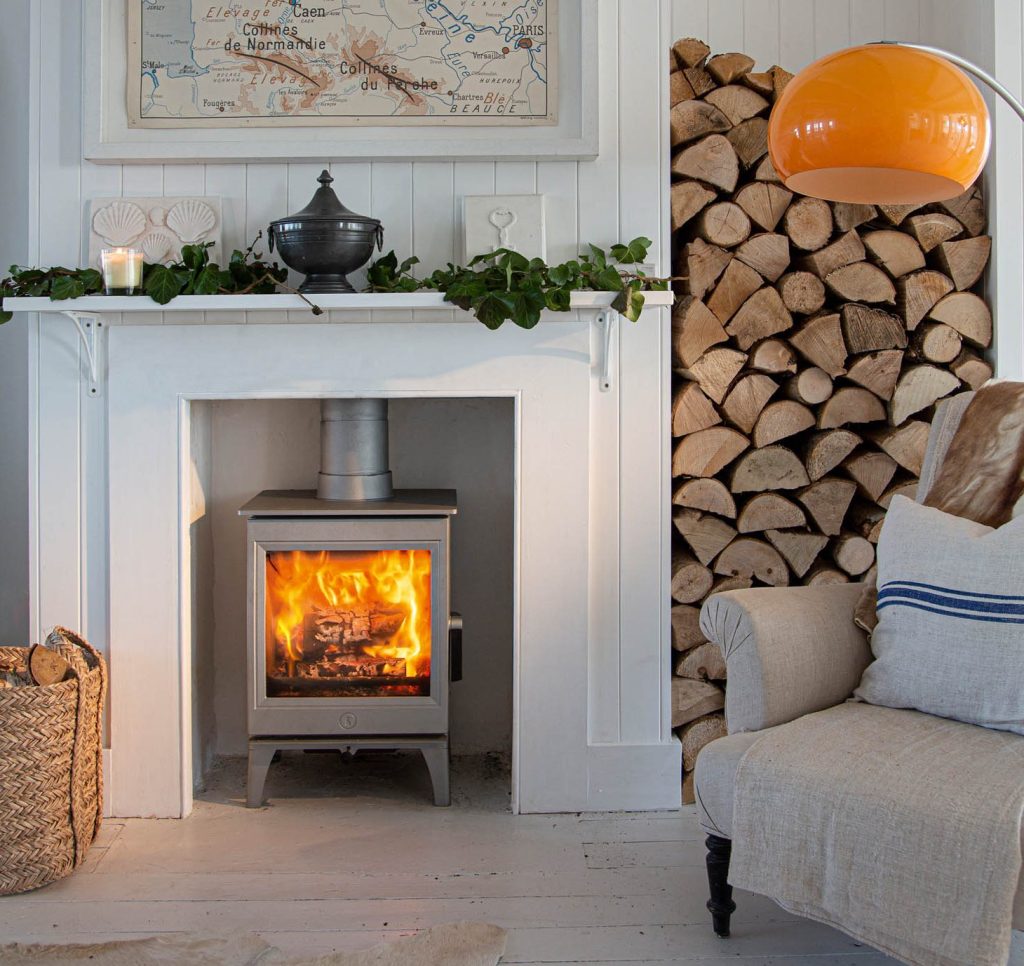
When it comes to the wood burning stove vs multi-fuel stove debate, most homeowners reach this question the moment they decide a stove is the right heating solution for their home. It is one of the most searched and most discussed decisions in the UK stove market, and the answer is rarely black and white. Both a wood burning stove and a multi-fuel stove deliver the same core benefits: real warmth, stunning ambience, and the kind of fuel efficiency that central heating simply cannot replicate.
However, the wood burning stove vs multi-fuel stove choice comes down to some important differences, including how each appliance is engineered to burn fuel, how the internal grate design affects performance, what your long-term running costs will look like, and which UK regulations apply to your property. Getting this decision right from the start means you will enjoy years of efficient, trouble-free heating rather than discovering limitations after installation.
This guide covers everything a homeowner in Leicester, the Midlands, or anywhere across the UK needs to know before making this decision. Whether you are renovating a Victorian terrace, installing a stove in a new-build, or replacing an older appliance, the information below will help you choose with confidence.
What Is a Wood Burning Stove?
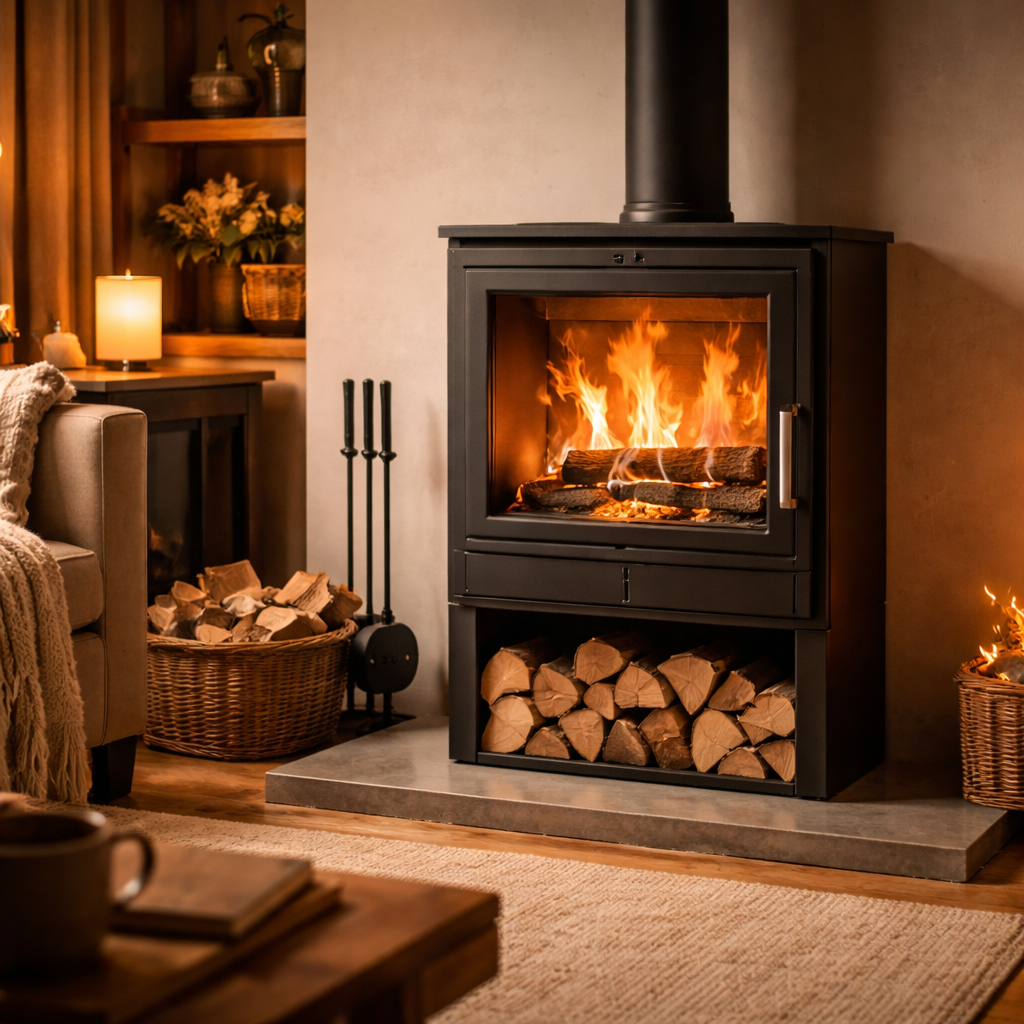
A wood burning stove, often called a log burner or wood burner, is a heating appliance designed exclusively to burn wood fuel. The firebox sits on a flat, solid base with no raised grate and no ashpan underneath. This design is intentional. Wood burns most effectively when it sits on a shallow bed of accumulated ash, which insulates the base and maintains high combustion temperatures.
Modern wood burning stoves are typically constructed from cast iron or steel, with a glass-fronted door so you can watch the fire. Advanced airwash systems keep the glass clean, and primary and secondary air controls allow you to manage the burn rate and temperature.
Because a wood burner is engineered specifically around one fuel type, it tends to be optimised for clean, efficient combustion of logs. Most modern Ecodesign-compliant wood burners achieve efficiencies between 80% and 87%, producing more heat per kilogram of wood than older open fireplaces ever could.
At Blue Oak Fireplaces, we stock a wide selection of wood burning stoves across a range of kW outputs, styles, and finishes, from classic cast iron designs to sleek contemporary models. You can explore the full range by visiting our stoves page.
What Is a Multi-Fuel Stove?
A multi-fuel stove is designed to burn more than one type of fuel. Typically, this means both wood logs and authorised smokeless solid fuels such as smokeless coal, anthracite, or manufactured briquettes. A few multi-fuel models can also burn other approved fuels depending on the appliance.
The key structural difference is internal. A multi-fuel stove has a raised grate with a removable ashpan below it. When burning smokeless fuels, air needs to flow from underneath the fire to support combustion. The raised grate enables this. When burning wood, the grate bars can often be closed or adjusted so that the wood rests on a more suitable flat base.
This dual-fuel capability makes a multi-fuel stove a more flexible appliance, particularly for homeowners who want to switch between fuels depending on cost, availability, or season. Multi-fuel stoves typically achieve efficiencies around 78% to 82% when burning both wood and smokeless fuels.
The Core Structural Difference: Grate Design

Understanding the grate is the single most important technical distinction between these two stove types.
Wood-burning stoves have a flat, solid base. Wood rests directly in the firebox and burns on top of a thin layer of ash. This is the ideal condition for log combustion. If you were to burn coal on a flat base, the fuel would choke itself because coal needs air flowing from beneath to ignite and burn properly.
Multi-fuel stoves have a raised grate with gaps or bars, and an ashpan that sits directly underneath. Air is drawn in from below the grate, passes through the bars, and feeds the fire from the bottom upward. This is exactly what smokeless solid fuels require. When burning wood in a multi-fuel stove, the grate bars can usually be closed so the logs sit closer to a flat surface, though the base is still not as perfectly optimised for wood as in a dedicated wood burner.
This structural difference explains why burning coal in a wood-burning stove is not just inefficient but potentially damaging and against regulations.
Fuel Comparison: Wood vs Smokeless Fuel
Wood (Logs)
Seasoned hardwood and kiln-dried logs are the primary fuel for both stove types. Wood is a renewable, carbon-neutral fuel when sourced responsibly. When burned in a modern Ecodesign-compliant stove, it produces very low particulate emissions. According to the Stove Industry Alliance, wood logs are around 74% cheaper per kilowatt hour than electric heating and approximately 21% cheaper than gas heating.
To burn legally and efficiently, wood must have a moisture content below 20%. Wet or unseasoned wood produces more smoke, deposits more creosote in the flue, and generates significantly less heat. Look for the Woodsure Ready to Burn certification when purchasing logs.
Smokeless Coal and Solid Fuels
Smokeless fuels such as anthracite, Phurnacite, and manufactured briquettes produce a longer, more sustained burn than wood. They also generate more heat per kilogram. The trade-off is that they are generally more expensive per tonne than locally sourced seasoned wood, and they produce more ash than logs do.
In areas covered by a Smoke Control Area, open coal burning is prohibited. However, DEFRA-approved multi-fuel stoves can burn authorised smokeless fuels legally within these zones. This is one of the most important reasons some homeowners choose a multi-fuel stove over a dedicated wood burner.
Efficiency: Which Stove Burns Better?
Both stove types can achieve excellent efficiency when used with the right fuel and correct air settings. However, there are differences worth understanding.
A dedicated wood-burning stove is often slightly more efficient when burning logs specifically, because its entire design is optimised for that single fuel. Modern wood burners from reputable manufacturers achieve efficiencies from 80% to 87%.
A multi-fuel stove performs very well with smokeless fuels and is typically efficient at 78% to 82% across both fuel types. When burning wood in a multi-fuel stove, efficiency may be marginally lower than in a dedicated wood burner because the grate design is a compromise between both fuel requirements.
In practice, the efficiency gap between modern wood burning and multi-fuel stoves is small. The bigger factor affecting real-world efficiency is not which type of stove you choose, but how you operate it. Burning dry, quality fuel, managing the air controls correctly, and keeping the stove and flue clean all have a far greater impact on how much heat you get from your fuel than the grate design alone.
Running Costs: Which Is Cheaper to Operate?
The answer depends largely on your fuel source and how you access it.
Homeowners who have reliable, affordable access to seasoned or kiln-dried logs will typically find a wood burning stove the most cost-effective option in the long run. Wood is widely available across Leicestershire and the wider Midlands, and buying in bulk can bring the cost per load down significantly.
Homeowners who live in a Smoke Control Area, who find wood difficult to source or store, or who prefer not to rely on a single fuel type will often find a multi-fuel stove more economical over time. The ability to switch to smokeless fuels when wood prices rise, or to top up with briquettes for an overnight burn, adds a level of flexibility that can help manage heating costs across the winter.
Annual fuel costs vary widely depending on usage, but a typical household using a stove as a primary or secondary heat source might expect to spend between £350 and £1,000 per year on logs, or a comparable amount on smokeless fuels if using a multi-fuel stove regularly.
UK Regulations: What You Must Know Before Buying
Both wood burning stoves and multi-fuel stoves are subject to the same core regulations in the UK. Knowing the rules before you buy will protect you from purchasing a stove that cannot be legally used in your home.
Ecodesign 2022
All new stoves sold in the UK since January 2022 must comply with Ecodesign 2022 standards. These require a minimum efficiency of 75% and set limits on particulate emissions, carbon monoxide output, and organic gaseous compound levels. Any reputable retailer will only sell compliant models. When you browse our stoves range at Blue Oak Fireplaces, every model we stock meets these standards.
DEFRA Approval
If your property falls within a designated Smoke Control Area, which covers most UK cities and many larger towns, you are legally required to use a DEFRA-exempt appliance. Most modern Ecodesign-compliant stoves are also DEFRA-approved, but always confirm the specific model before purchasing. Our team checks this as a standard part of any consultation and survey.
In Smoke Control Areas, burning ordinary house coal on any appliance is prohibited. DEFRA-exempt multi-fuel stoves can burn authorised smokeless fuels. DEFRA-exempt wood burning stoves can burn dry, low-moisture wood.
Carbon Monoxide Alarm
Since October 2022, Building Regulations in England require a carbon monoxide alarm to be installed in any room containing a fixed combustion appliance, including a stove. This is a legal requirement, not a recommendation. Our fireplace accessories guide covers this and other essential safety items every stove owner needs.
HETAS-Registered Installation
All stove installations must be carried out by a HETAS-registered installer or notified to your local building control authority. Using a registered installer allows the installation to be self-certified, which is the standard route for most homeowners. At Blue Oak Fireplaces, our installation team handles the compliance paperwork as part of the process, so you have full peace of mind from day one.
Installation: What to Expect for Both Stove Types
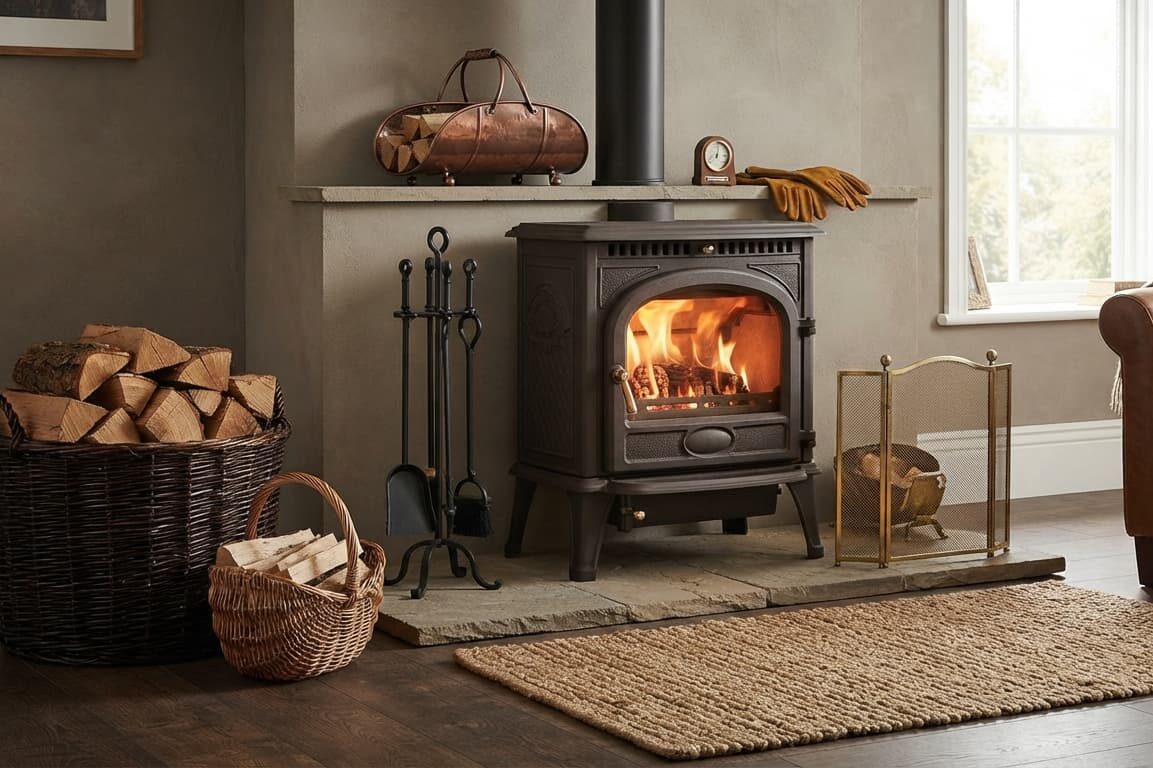
The installation process for a wood-burning stove and a multi-fuel stove is largely identical. Both require:
A suitable flue or chimney. An existing chimney can often be used after a HETAS survey, though it may need to be lined with a stainless steel flue liner to meet current Building Regulations. Homes without a chimney can use a twin-wall flue system installed through the wall or roof.
A compliant hearth. Both stove types require a non-combustible hearth that meets minimum size and thickness requirements under Building Regulations Document J. The hearth must extend to the front and sides of the stove.
Adequate ventilation. Rooms must have sufficient air supply for combustion. Modern, well-sealed homes may need additional permanent ventilation to be installed.
A chimney survey and sweep. Before any installation, a chimney inspection is recommended. An existing chimney may need sweeping, re-pointing, or lining. Our team can advise on this as part of your initial consultation.
Installation costs for a stove in an existing chimney typically start from around £600 to £1,500 for labour, with additional costs for a flue liner, hearth, register plate, and any structural work required. More complex installations, such as those requiring a new twin-wall flue system, will cost more. We provide transparent quotes after an initial survey so there are no surprises.
You can read more about choosing the right stove for an older property in our guide to the best stoves for Victorian homes in Leicester.
Maintenance and Servicing
Both stove types require regular maintenance to operate safely and efficiently. The routine is broadly similar, though multi-fuel stoves have a slightly greater number of components to clean due to the grate and ashpan system.
Daily or per-use tasks include removing excess ash from the ashpan (multi-fuel stoves), checking and clearing glass with an airwash wipe, and checking air controls are functioning correctly.
Weekly tasks during the burning season include emptying the ash or ashpan, wiping down the exterior, and checking the door rope seal for any signs of wear.
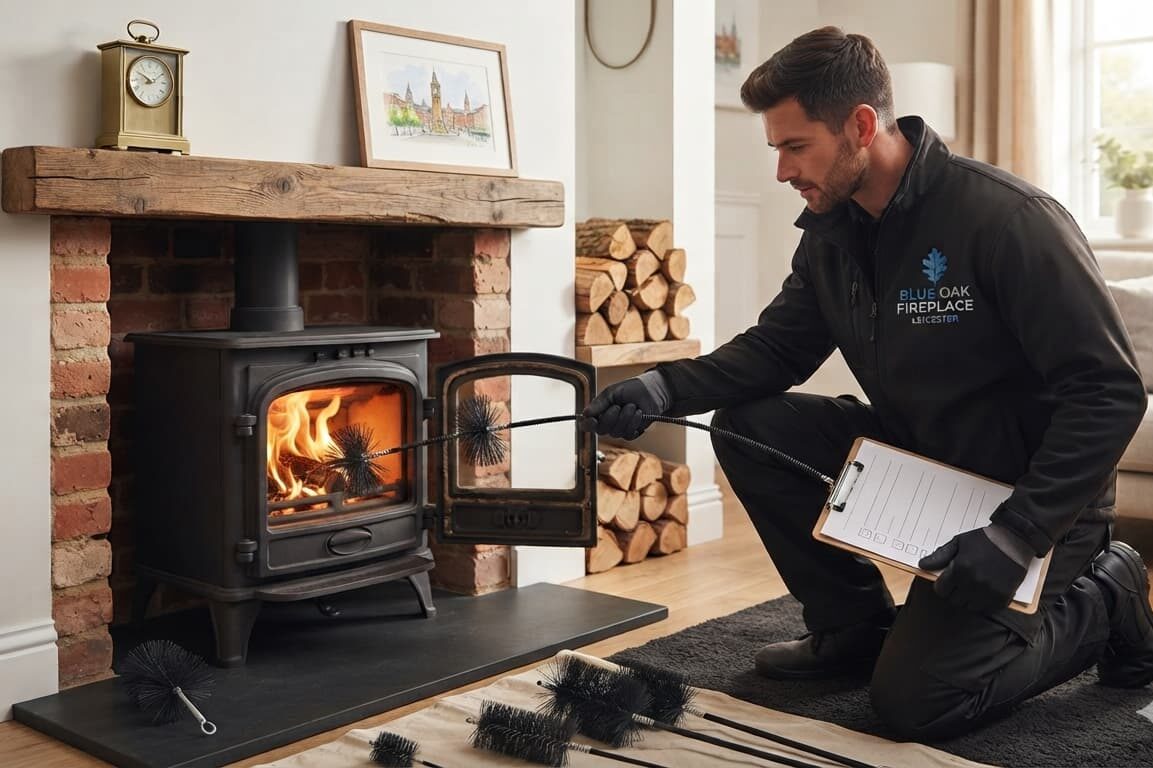
Annual tasks include a professional chimney sweep (recommended at least once a year, twice for heavy users) and a full stove service to inspect the baffle plate, glass, rope seals, grate bars (multi-fuel), and internal components. Annual chimney sweeping is also important for keeping your home insurance valid, as some policies require a certificate of sweep.
The difference in maintenance between the two stove types comes mainly at the grate level. Multi-fuel stoves have more moving or removable parts, including ashpans and grate riddling bars, which need periodic inspection and replacement. Wood burning stoves are simpler internally, which can make routine cleaning slightly more straightforward.
Aesthetics and Design: Does the Type Affect the Look?
From the outside, wood burning stoves and multi-fuel stoves look virtually identical. The grate design is internal, so both types are available in the same range of styles, from traditional cast iron with decorative legs through to minimalist contemporary models with large glass viewing windows.
At Blue Oak Fireplaces, we carry stoves in a wide range of finishes, kW outputs, and profiles. Whether you want a compact 5kW model for a medium-sized living room or a larger output stove for an open-plan space, the choice of wood burning or multi-fuel does not limit your design options in any meaningful way.
The surround you choose for your stove is an entirely separate consideration. Oak, stone, marble, and cast iron surrounds all work equally well with either stove type. For inspiration, visit our fireplace surround ideas guide.
Wood Burning Stove vs Multi-Fuel Stove: Side-by-Side Comparison
| Feature | Wood Burning Stove | Multi-Fuel Stove |
|---|---|---|
| Fuels accepted | Wood only | Wood, smokeless coal, briquettes |
| Internal grate | Flat solid base | Raised grate with ashpan |
| Typical efficiency | 80% to 87% | 78% to 82% |
| Running costs | Lower if wood is available | Flexible; adapt to fuel prices |
| Smoke Control Area use | Yes (DEFRA-approved models) | Yes (DEFRA-approved models, smokeless fuels) |
| Maintenance complexity | Simpler | Slightly more components |
| Installation process | Identical | Identical |
| Average purchase price | £500 to £2,500 | £800 to £4,000 |
| Best for | Wood-only households | Households wanting fuel flexibility |
Which Is Better: Wood Burning or Multi-Fuel?
There is no single answer that applies to every home, because the better choice depends on your specific situation.
Choose a wood burning stove if:
- You have reliable, affordable access to seasoned or kiln-dried firewood
- You want the simplest possible operation with fewer components to maintain
- You live in an area where wood is the primary or preferred fuel
- Your home is not in a Smoke Control Area, or you are happy to burn only dry wood
- You value the most optimised wood combustion efficiency
Choose a multi-fuel stove if:
- You live in a Smoke Control Area and want the option to use authorised smokeless fuels
- You want the flexibility to switch between wood and solid fuels depending on cost or availability
- You find wood difficult to source or store in sufficient quantities
- You prefer longer burn times and are willing to use smokeless fuels overnight or in cold periods
- Your fuel supply situation may change and you want to future-proof your choice
For most homeowners across Leicester and the Midlands, a multi-fuel stove offers a reassuring level of flexibility. That said, if you have a consistent, quality supply of wood and no Smoke Control Area restrictions, a dedicated wood burning stove will deliver excellent efficiency and slightly simpler day-to-day use.
The best way to make a final decision is to speak with an expert who can look at your home, your chimney situation, your local regulations, and your heating habits together. That is exactly the kind of personalised advice you will get when you visit our showroom or get in touch with our team.
Why Buy Your Stove from Blue Oak Fireplaces?
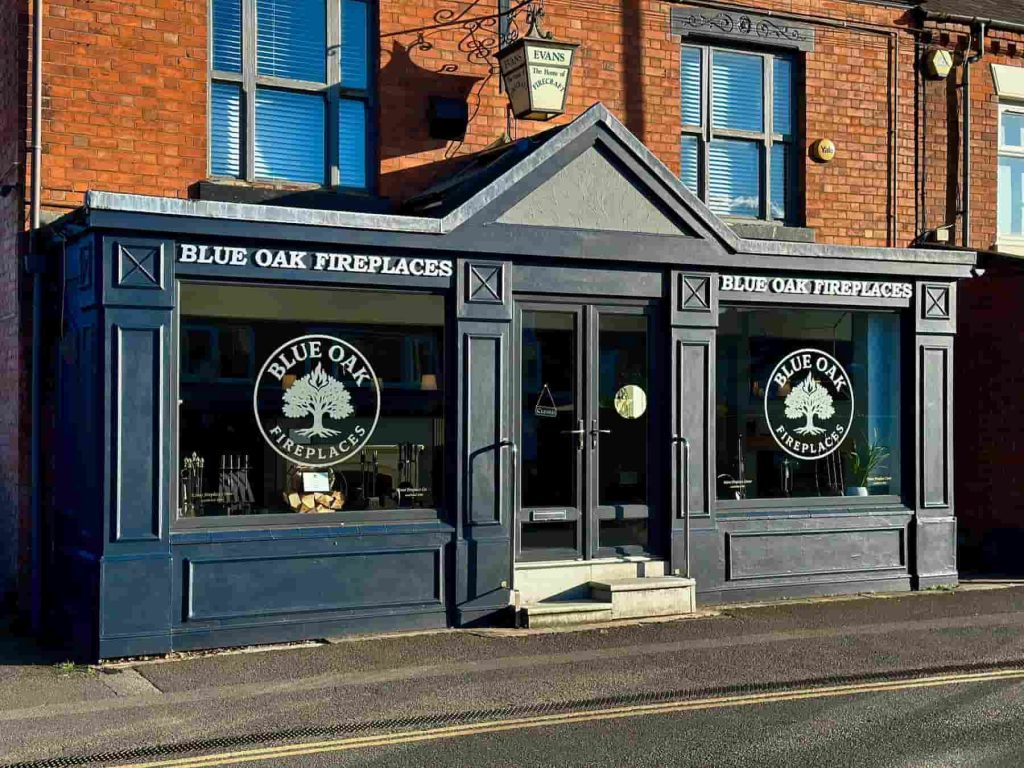
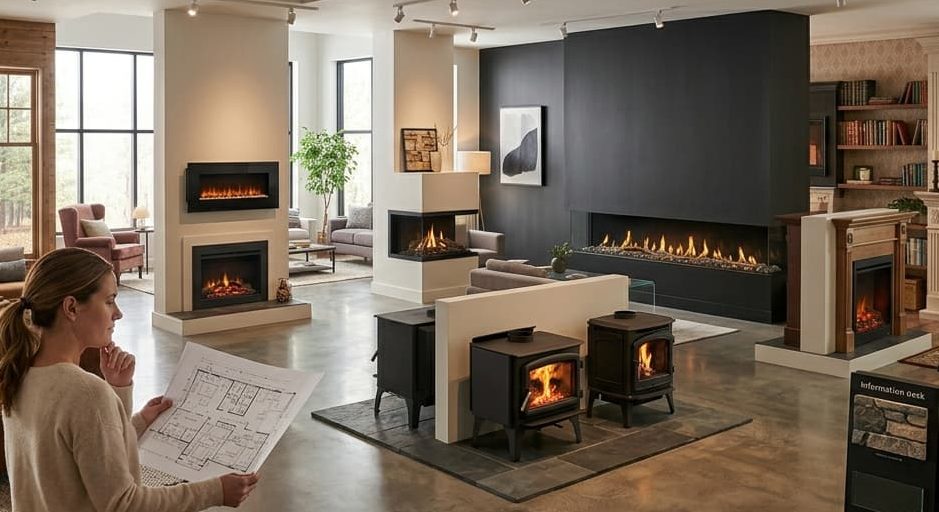
Blue Oak Fireplaces has over 25 years of experience helping homeowners across Leicester and the Midlands choose, supply, and install stoves. Our three-storey showroom in Syston is one of the largest fireplace and stove showrooms in the region, with live displays of wood-burning and multi-fuel stoves that you can see in person before you commit.
We handle everything from the initial survey and stove selection through to HETAS-compliant installation, commissioning, and aftercare. Our team understands local Smoke Control Area rules, Ecodesign compliance, and the practical realities of fitting stoves into period properties as well as modern homes.
Whether you are choosing between a wood burning stove and a multi-fuel stove, or comparing stoves against gas or electric alternatives, you can read more in our complete guide to the best fireplaces in Leicester and our modern fireplace ideas guide.
Visit us at 1159 Melton Road, Syston, Leicester, LE7 2JS, call us on +44 116 373 4193, or browse our full range of stoves online to start your search today.
Frequently Asked Questions
What is the main difference between a wood burning stove and a multi-fuel stove?
The main difference is the internal grate design. A wood burning stove has a flat, solid base that allows wood to rest on a shallow bed of ash, which is the ideal condition for log combustion. A multi-fuel stove has a raised grate with an ashpan below it, allowing air to flow underneath the fire. This makes it suitable for both wood and smokeless solid fuels such as anthracite and smokeless coal. In short, a wood burning stove burns wood only, while a multi-fuel stove gives you the option to burn a range of approved fuels.
Can you burn coal in a wood burning stove?
No. You should never burn coal in a wood burning stove. Coal requires air to flow from beneath the fuel in order to ignite and burn correctly. A wood-burning stove’s flat base does not allow for this airflow, meaning coal will burn poorly, produce excessive smoke, and can cause damage to the firebox and flue. Burning coal in a wood-only stove may also void your warranty and put you in breach of air quality regulations. If you want to burn coal or smokeless solid fuels, you need a multi-fuel stove with a raised grate and ashpan.
Which is more efficient: a wood burning stove or a multi-fuel stove?
When burning wood specifically, a dedicated wood burning stove is generally slightly more efficient because the appliance is engineered solely for log combustion. Modern wood burners typically achieve 80% to 87% efficiency. A multi-fuel stove is designed as a compromise between two fuel types, so it achieves around 78% to 82% efficiency with wood and similar figures with smokeless fuels. The difference is not dramatic, and in real-world use, factors such as the moisture content of your fuel, how well you manage the air controls, and how regularly the flue is swept will have a greater influence on efficiency than the grate design alone.
Are multi-fuel stoves more expensive than wood burning stoves?
Multi-fuel stoves tend to be slightly more expensive to purchase upfront than comparable wood burning stoves because they include additional components such as the raised grate, riddling bars, and removable ashpan. In terms of running costs, the answer depends on your fuel source. Wood is generally the cheaper fuel per kilowatt hour if you can source seasoned logs locally. However, smokeless fuels provide longer burn times and higher heat output per kilogram, which can offset the higher price per tonne in some situations. Multi-fuel stoves also offer the flexibility to switch to whichever fuel is most cost-effective at any given time, which many homeowners value highly.
Do I need a DEFRA-approved stove if I live in a Smoke Control Area?
Yes. If your property is located within a designated Smoke Control Area, which covers most UK cities and many larger towns, you are legally required to use a DEFRA-exempt appliance. Burning standard house coal is prohibited in these areas. DEFRA-exempt stoves have been independently tested and certified to burn fuel cleanly enough to meet the legal exemption criteria. Most Ecodesign 2022-compliant stoves are also DEFRA-exempt, but you should always confirm the specific model before purchasing. Our team at Blue Oak Fireplaces checks Smoke Control Area status as a standard part of every survey and quotation.
Can I use a multi-fuel stove to burn wood as well?
Yes, most multi-fuel stoves are designed to burn both wood and smokeless solid fuels. When burning wood, the grate bars can often be adjusted or closed so that the logs rest on a surface closer to a flat base, approximating the conditions of a dedicated wood burner. However, wood burns best when it sits directly on ash rather than a raised metal grate, so a multi-fuel stove is a functional but slightly less optimised option for wood-only burning compared to a dedicated wood burning stove. If you plan to burn wood most of the time but want the option to use other fuels occasionally, a quality multi-fuel stove is an excellent all-round choice.
What fuel should I use in my stove?
For a wood-burning stove, always use seasoned hardwood or kiln-dried logs with a moisture content below 20%. Look for the Woodsure Ready to Burn certification on bagged products. For a multi-fuel stove, you can use the same dry wood alongside authorised smokeless fuels such as Phurnacite, anthracite, or approved manufactured briquettes. In Smoke Control Areas, only use fuels listed on the DEFRA-approved fuels list. Never burn household waste, painted or treated wood, wet wood, or standard house coal in any stove, as these can damage the appliance, produce harmful emissions, and put you in breach of regulations.
How often does a wood burning or multi-fuel stove need to be serviced?
Both stove types should be professionally serviced and have the chimney swept at least once per year, and ideally twice a year if the stove is used heavily. An annual service typically includes inspecting the baffle plate, door rope seal, glass, internal components, and the condition of the flue liner. Regular sweeping removes creosote and soot deposits that can restrict airflow and create a chimney fire risk. Keeping up with servicing also helps maintain the validity of your home insurance, as some policies require evidence of annual chimney sweeping. Our team at Blue Oak Fireplaces can advise you on a suitable servicing schedule for your stove and usage patterns.
How do I know what kW output I need?
A general rule for well-insulated UK homes is that you need roughly 1kW of heat output for every 14 cubic metres of room volume. For an average-sized living room, a 5kW stove is usually sufficient. Larger or older, less well-insulated rooms may require 7kW to 12kW or more. Choosing a stove that is too powerful for your room will result in overheating and wasting fuel by running the air controls down low, which reduces efficiency and increases the risk of tar deposits in the flue. Our team can calculate the right output for your specific room dimensions during a consultation visit.
Is a wood burning stove or multi-fuel stove better for the environment?
Both stove types, when used with quality dry fuel in a modern Ecodesign-compliant appliance, are considered relatively low-emission heating options compared to older models. Wood is classified as a carbon-neutral fuel because the carbon released during burning is equivalent to the carbon the tree absorbed during its growth. Burning seasoned or kiln-dried wood in an efficient modern stove produces far fewer particulate emissions than an open fire or an older stove. Smokeless fuels used in a multi-fuel stove also produce lower emissions than raw house coal. If environmental impact is your primary concern, a DEFRA-approved, Ecodesign-compliant wood burning stove used exclusively with certified Ready to Burn logs is generally considered the cleaner option.
Ready to choose your perfect stove? Visit Blue Oak Fireplaces at 1159 Melton Road, Syston, Leicester, LE7 2JS, or call our team on +44 116 373 4193. You can also browse our full range of wood burning and multi-fuel stoves online today.