
Three-sided electric fires show the flame effect through a front window and two side windows. A two-sided configuration adds one corner view, while a single-sided design frames the display from the front. The right choice depends on where you sit and how the fireplace fits the room, as well as its appearance.
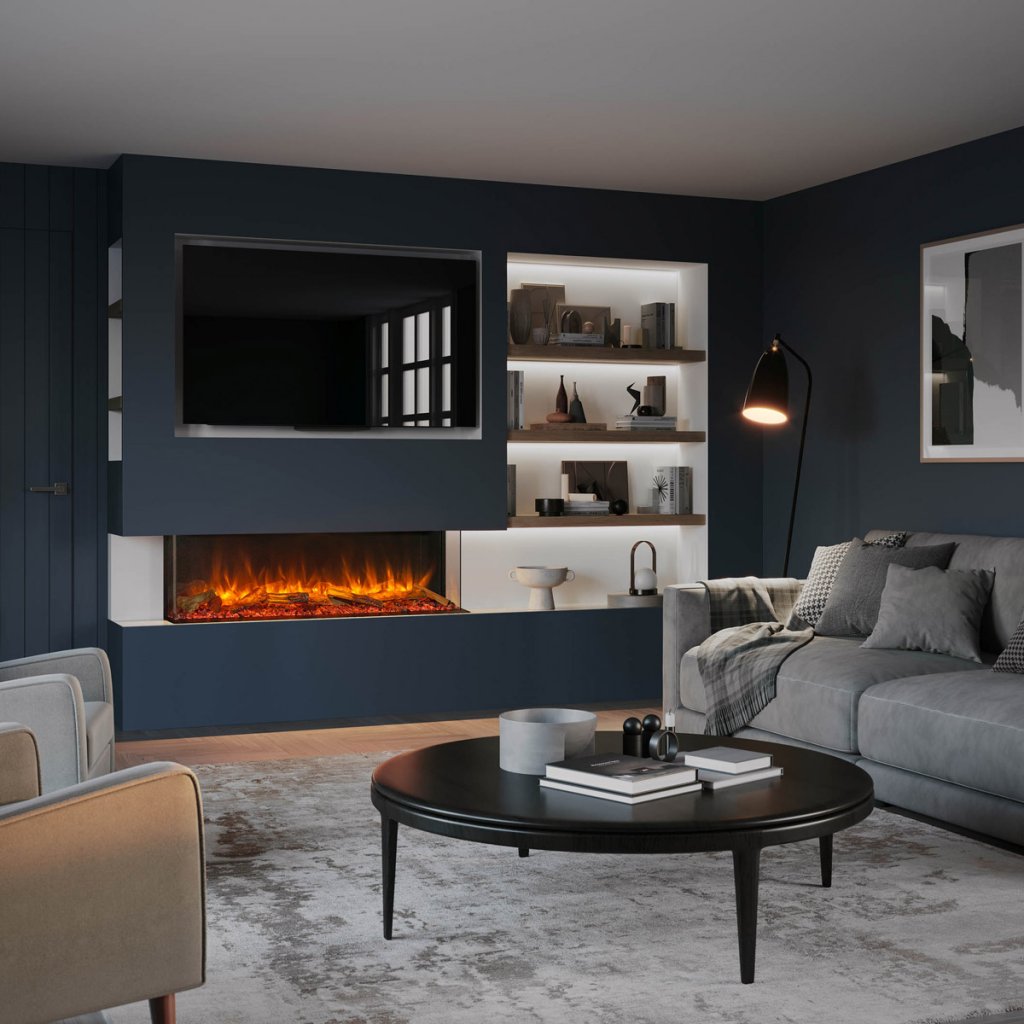
Before choosing a panoramic model for a media wall, compare the viewing positions you will actually use. A side window that faces a cupboard or a narrow return may add little to your everyday experience.
Three-sided electric fires: practical checklist
When comparing three-sided electric fires, check which faces will remain visible from the sofa and doorway. The same appliance can produce a different effect in a corner or a projecting wall. Shortlist three-sided electric fires by the permitted installation configuration, then confirm the viewing arrangement in the manufacturer’s instructions.
What the number of sides means
In this context, “sides” describes visible glass faces, rather than separate heaters or independent rooms. Some appliance ranges can be configured in more than one arrangement; others are designed for a particular installation. Never assume a side panel can be removed or covered without checking the exact manual.
The manufacturer’s Onyx Avanti range information, for example, describes single, corner and three-sided configurations. This illustrates why the full model and its permitted arrangement need to be selected before the surrounding structure is designed.
Single-sided: a clearly framed focal point
A front-only view can work well where the main seating faces one wall. It creates a contained visual feature and may suit an existing chimney-breast shape or a design with cabinetry close to either side.
Compare the visible flame width with the total outside dimensions. A fire described by its overall width can appear different once a frame, trim or construction return surrounds it. Ask to see the proposed finished opening marked on a drawing, rather than judging from the product name alone.
Two-sided: useful at a genuine corner
A corner arrangement can make the fire visible from a second seating position or adjoining part of a room. Decide which side should be open before ordering. The useful question is whether the added view serves the layout, not whether two sides must always look more expensive.
Walk through the planned room on a sketch. Mark the sofa, dining area, doorway and everyday route through the space. An open corner is most rewarding when those positions let you see into the display without crowding the fireplace.
Three-sided: compare all the sightlines
A panoramic arrangement can give a projecting feature a more open appearance. It also makes the design around the sides more important. A deep return, oversized shelf or nearby furniture can conceal the very window you paid to expose.
- Check the view from the main sofa and secondary chair.
- Look from the room entrance, not only directly in front.
- Consider daylight and reflections at the time you use the room.
- Confirm whether cabinetry or a side passage changes the available space.
Use these observations to discuss the structure with your designer. They are aesthetic planning checks; the appliance instructions still determine installation requirements.
Keep viewing choice separate from heating choice
The number of visible sides does not tell you how much heat a fire provides or whether it suits your heating needs. Compare the model’s stated output, control options and intended use independently of the glass arrangement.
At a demonstration, ask to see the flame effect and the heater operating separately if the model allows this. Also check how the controls are reached, which settings are remembered and how routine access will work once the wall is complete.
Agree the appliance before building the wall
Ask for the exact model, configuration, installation drawing and a written explanation of the proposed finishes. Discuss the depth of the structure, power access and future servicing before plastering or cabinetry begins. An inspiration photograph cannot confirm any of these details for a different appliance.
Where a television is part of the scheme, its position and requirements need their own check. The best visual layout is one that also leaves the fire, screen and any equipment installed according to their respective instructions.
Can any electric fire become three-sided?
No. Only use configurations permitted for the exact appliance. Ask the retailer to confirm the arrangement in writing.
Is a panoramic fire always better for a small room?
No. Compare the complete feature’s depth and its relationship with furniture. A well-proportioned single-sided design can be the more useful choice.
Explore Blue Oak’s electric fires and bring a room sketch to the Syston showroom. The team can help you compare the views before you settle the surrounding design.