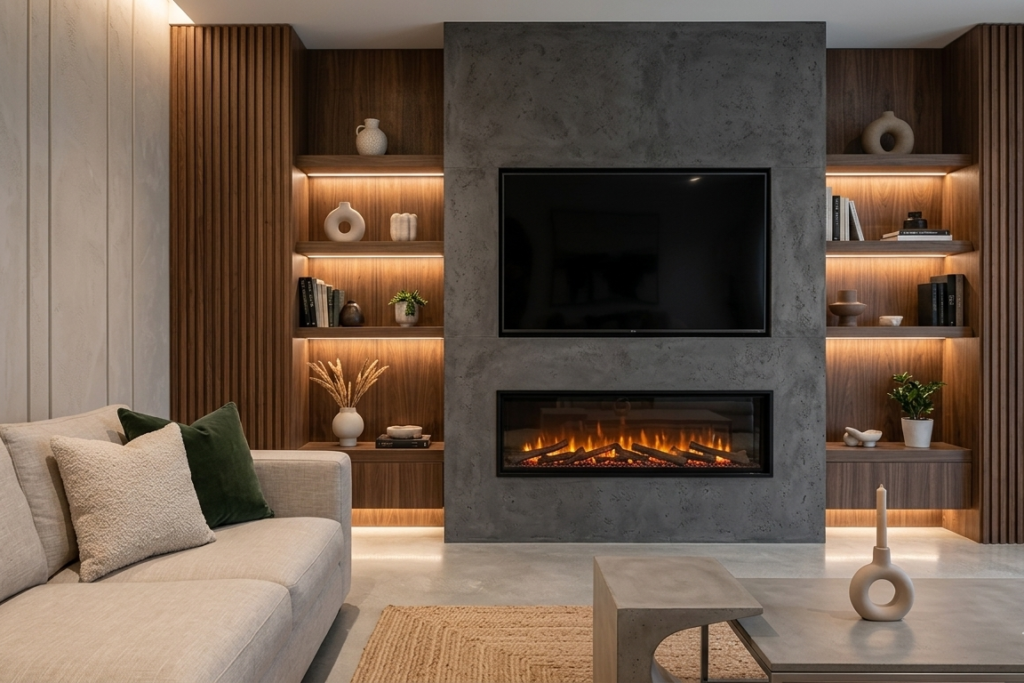
A media wall has become one of the most sought-after features in modern UK homes. It tidies away cables, creates a clean focal point for your living room, and — when done well — transforms the entire feel of the space. The problem is that when most people begin researching the idea, they are immediately met with images of floor-to-ceiling luxury builds covered in marble-effect panels, wide-format electric fires, bespoke joinery, and integrated LED lighting systems that appear to belong in a design magazine rather than an everyday home.
The truth is that you do not need to spend a fortune to achieve a media wall that looks genuinely stylish. If you are searching for simple media wall designs that deliver real impact without stretching your budget to its limit, this guide is written specifically for you.
At Blue Oak Fireplaces, we design and install media walls across Leicester and the East Midlands, and we have helped homeowners at every budget level achieve results they are genuinely proud of. In this guide, we share the design principles, material choices, and practical decisions that allow you to create a beautiful media wall without overspending.
Why Simple Media Wall Designs Often Look Better
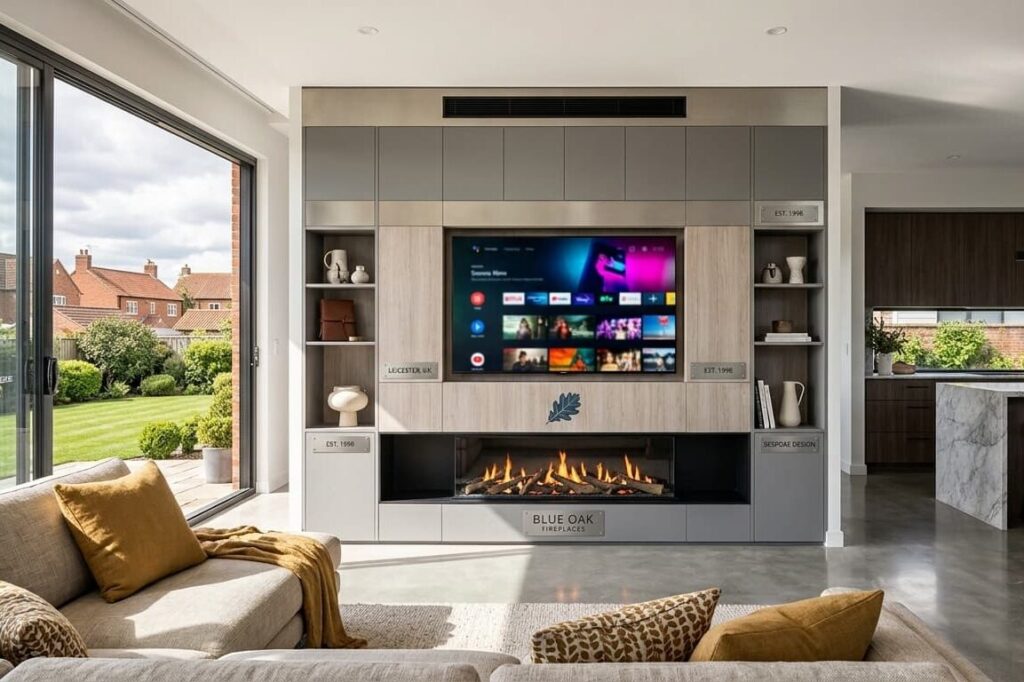
Before diving into specific ideas, it is worth making a point that often surprises homeowners: simple media walls frequently look better than complex ones.
The most common mistake people make when planning a media wall on a limited budget is trying to replicate a premium design at a lower cost. They add too many elements, mix too many textures, try to incorporate every feature they have seen online, and end up with a build that looks busy, disjointed, and cluttered rather than considered and intentional.
The design principle that underpins almost every successful media wall is restraint. A clean, flat plastered wall with a well-chosen electric fire, a TV at the right height, and concealed cabling can look just as striking as a complex multi-material build — sometimes more so, because every element has room to breathe.
Sometimes less really is more. A flat TV mount, hidden cabling, and one or two shelves can be enough. Keeping the lines clean and avoiding clutter is often all it takes. The most important investment in any media wall is not the materials — it is the planning. A well-thought-out simple design always outperforms a poorly planned expensive one.
Setting Your Budget Realistically
Before choosing a design, it helps to understand what different budget levels realistically deliver in the UK market.
The average media wall cost typically ranges from £2,000 to £4,000, depending on how complex your project is. Materials, design complexity, labour costs, geographical location, and additional features such as lighting or sound systems all influence the final price.
For homeowners in Leicester and the Midlands, here is a practical guide to what different budgets typically deliver with a professional installation:
| Budget Range | What It Typically Includes |
|---|---|
| £1,500 to £2,500 | Simple plastered stud wall, TV mounting, concealed cabling, entry-level electric fire, basic electrical work |
| £2,500 to £4,000 | Stud wall with decorative finish (paint, slat panels or tiles), mid-range electric fire, LED strip lighting, integrated power sockets |
| £4,000 to £6,000 | Premium finish materials, wider or higher-spec electric fire, bespoke shelving or alcoves, integrated AV setup |
| £6,000 and above | Full bespoke build, premium fire, luxury cladding, built-in cabinetry, smart lighting and AV integration |
The good news for budget-conscious homeowners is that the £1,500 to £2,500 bracket, when designed thoughtfully, can produce a result that looks like it cost significantly more. The key is in the decisions you make about what to include and what to leave out.
8 Simple Media Wall Design Ideas That Look Stylish Without Overspending
1. The Clean Plaster and Paint Wall
The simplest and most cost-effective media wall design is also one of the most timeless. A flat plasterboard stud wall, skimmed smooth, painted in a bold or contrasting colour, with a recessed electric fire and TV mounted above with concealed cabling.
This design works because it relies on proportion and contrast rather than material complexity. A deep charcoal, forest green, slate blue, or warm terracotta wall immediately creates a sense of architectural intention. The fire and TV sit within the wall as considered insertions rather than afterthoughts.
The paint colour does the work that expensive cladding would otherwise do. A well-chosen dark or deeply saturated paint on the media wall while the surrounding walls remain lighter creates a focal point effect that feels deliberate and designed, at a fraction of the cost of decorative panels or tiles.
A minimalist media wall uses clean lines and neutral colours, keeping the focus on the TV and avoiding clutter. This style creates a strong focal point without requiring expensive materials.
Money-saving tip: Use a specialist paint with a slightly elevated sheen level — eggshell rather than matt — on the feature wall. It is more durable, easier to clean around the fire area, and adds a subtle depth to the finish that flat emulsion cannot achieve.
2. Vertical or Horizontal Timber Slat Panels
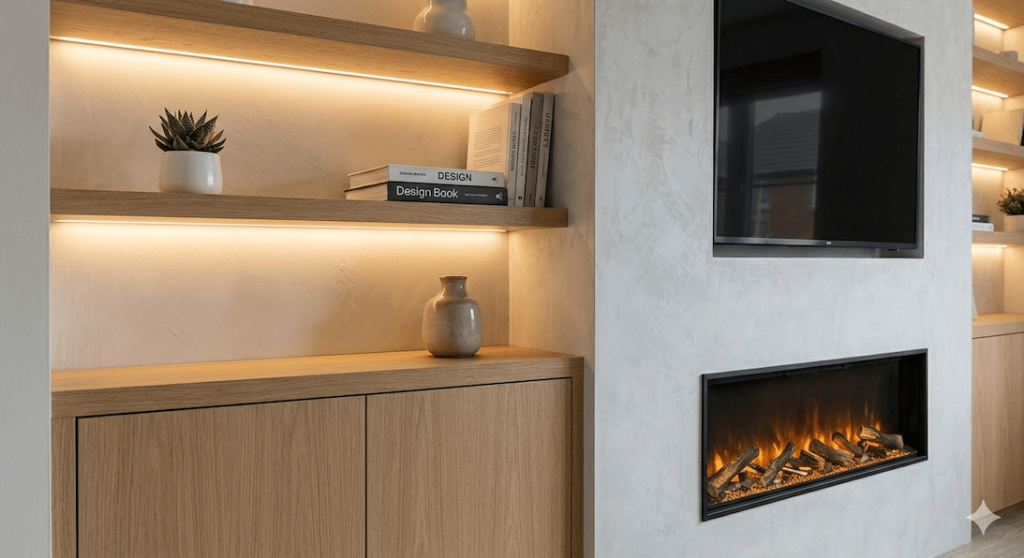
Timber slat panelling is one of the most popular media wall finishes in the UK right now, and the reason it appears in so many living rooms is simple: it adds genuine warmth, texture, and depth to a wall at a relatively modest cost.
Wall panelling transforms a flat plasterboard surface into something with depth and texture. It is also one of the most budget-friendly ways to make a media wall look deliberately designed. Timber or MDF slats, typically 20 to 40mm wide and spaced 15 to 20mm apart, run floor to ceiling. The gaps between slats create shadow lines that change throughout the day as light shifts.
Slat panels are available in real wood veneer, MDF with a painted or stained finish, and engineered wood options at a range of price points. For a budget-conscious media wall, MDF slats painted in a dark tone — or finished in a wood-effect wrap — deliver a look that reads as premium without carrying a premium price.
Horizontal slats feel more modern than vertical ones, making them the stronger choice for a contemporary living room. Either direction works well, but horizontal lines tend to make a wall feel wider, while vertical lines add visual height — a useful distinction depending on your room’s proportions.
The slat panel approach works particularly well when the panels run the full height of the wall from floor to ceiling rather than stopping at the TV zone. The continuity of the material makes the wall feel architectural rather than decorative.
Money-saving tip: Slat panels in MDF or engineered wood can be purchased as pre-made panels from a range of UK suppliers and fitted over the finished stud wall, which reduces both material cost and the time required for installation. They do not need to be custom milled on site to look impressive.
3. A Single Recessed Electric Fire with Minimal Surrounding Detail
One of the most effective ways to keep a media wall looking stylish while controlling costs is to let the electric fire carry the visual weight of the wall without surrounding it with expensive decorative materials.
A well-chosen electric fire in a cleanly finished recess — with the rest of the wall painted or plastered in a complementary tone — is genuinely striking. The 3D flame effect visible through the glass front provides all the visual interest the wall needs. Surrounding it with expensive marble-effect tiles or stone cladding when the budget is tight does not necessarily improve the result; in some cases it competes with the fire rather than framing it.
This approach is particularly effective with wider landscape electric fires, where the proportion of the fire itself creates a sense of scale and generosity that carries the wall design. A 1000mm to 1500mm wide fire with a slim or frameless surround set into a smooth, boldly painted wall needs nothing else to command attention.
Money-saving tip: Visit our showroom in Syston to see a range of electric fires running live. In person, you will quickly develop a feel for which flame effects genuinely impress and which are underwhelming — a judgement that is difficult to make from website photography alone. Choosing a fire whose flame technology justifies its position as the centrepiece of the wall means you do not need to compensate with expensive surrounding materials.
4. Alcove Integration on Either Side of the Fire
If your media wall sits across a chimney breast or has a natural alcove on one or both sides, incorporating those alcoves into the design is one of the best value-for-money moves available in a media wall project.
Rather than building out a full-width stud wall across the entire chimney breast and both alcoves — which increases cost significantly — the fireplace recess and TV zone can be built within the chimney breast itself, with the flanking alcoves used for shelving, cabinetry, or simply painted in a complementary colour to extend the visual width of the feature.
Floating shelves in the alcoves are inexpensive to install, provide practical storage and display space, and create a sense of symmetry that makes the overall composition feel more designed and considered. Painting the inside of the alcoves in the same colour as the media wall ties the elements together cohesively without the need for additional cladding materials.
This approach uses the existing architecture of the room to do much of the design work, which reduces both the material required and the cost of the build.
5. LED Strip Lighting Used Strategically
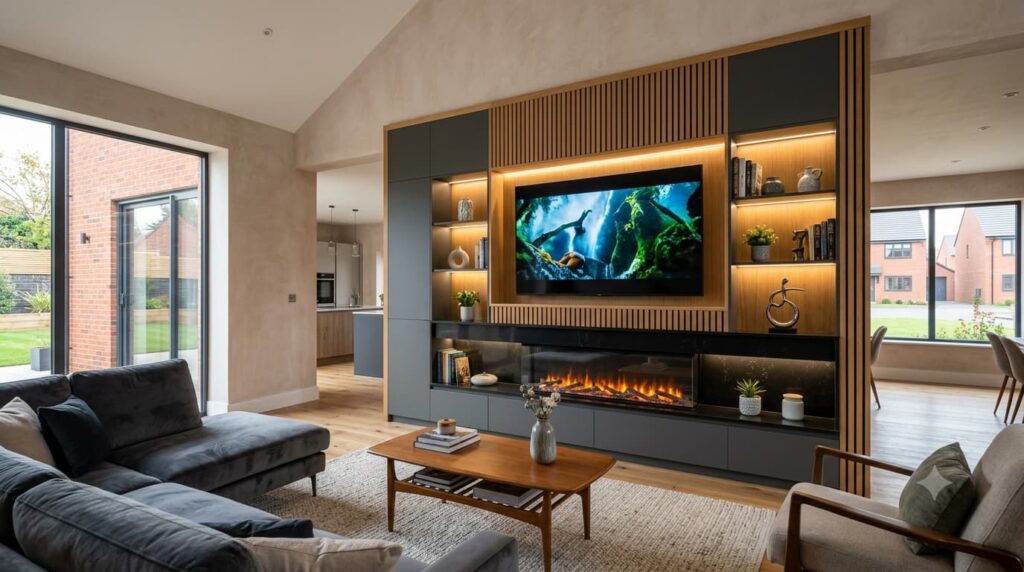
LED strips behind the TV do wonders for creating a futuristic yet budget-friendly upgrade. They add warmth and depth to the wall without significant cost.
LED strip lighting is one of the best-value additions to any media wall design. Fitted behind the TV (creating a bias lighting effect that reduces eye strain during viewing), along the underside of a shelf above the fire, or within the fire recess itself, LED strips add a layer of atmosphere and visual depth that transforms a simple wall into something that feels considered and complete.
The cost of LED strip lighting is modest — far more so than any decorative cladding material — and the visual impact during evening use is significant. Colour-changing strips that can be adjusted through a smartphone app or remote control allow you to shift the mood of the room from warm amber to cooler white tones depending on the occasion.
The key to LED lighting on a budget media wall is restraint. One well-placed run of LED strip behind the television, or along a single shelf, is more effective than multiple strips applied everywhere. Over-lit media walls look cluttered and cheap regardless of what they cost to build. A single, cleanly executed lighting feature is always more impressive.
Money-saving tip: Smart LED strips from reputable brands are available at modest prices and can be fitted as part of the electrical first-fix during the build, which avoids the more expensive option of having them retrofitted into a finished wall later.
6. Porcelain or Ceramic Tiles Around the Fire Recess Only
If you want the look of a tiled or stone media wall but cannot justify the cost of cladding the entire wall surface, tiling only the immediate zone around the fire recess is an effective and significantly less expensive approach.
A section of large-format porcelain tile or stone-effect tile in the fire recess and on the hearth, with the surrounding wall finished in paint or plaster, creates a clear material hierarchy that feels intentional rather than like a compromise. The tile frames the fire and gives it a distinct visual setting, while the simpler surrounding finish keeps costs contained.
This approach also avoids one of the common pitfalls of budget media wall tiling: using cheaper tiles across a large area in a way that draws attention to their quality. Concentrating better-quality tile in a smaller, more focused area always looks more impressive than spreading a lower-quality material thinly across a large surface.
Paired with a well-chosen fireplace surround that frames the fire opening within the tiled zone, this design approach creates a genuine focal point at a controlled cost.
7. A Simple Floating Shelf Between the Fire and TV
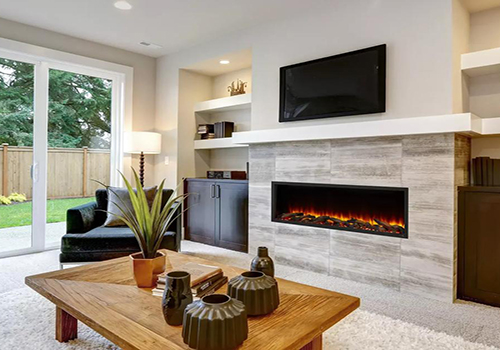
A single floating shelf positioned between the top of the fire recess and the base of the TV is one of the most practical and visually effective additions to a simple media wall design.
Functionally, the shelf provides a home for a soundbar, which dramatically improves audio quality from the TV without requiring a complex integrated audio system. It also acts as a subtle visual break between the fire and the TV, which improves the overall composition of the wall.
From a safety perspective, a shelf between the fire and the TV can act as a partial heat break, helping to ensure any residual warm air from the electric fire disperses before reaching the TV above — though it should not be relied upon as a substitute for maintaining the manufacturer’s minimum clearance distance.
A shelf in a contrasting material to the surrounding wall — raw timber against a dark painted surface, for example — adds a natural texture element to the design without the cost of full-scale timber cladding.
8. A Media Wall Built Around an Existing Chimney Breast
For homes with an existing chimney breast, building a media wall that uses the chimney breast as its structural and visual anchor is the most cost-effective approach of all. The chimney breast already provides the wall’s focal depth, so the build involves surfacing and finishing rather than constructing an entirely new stud wall from scratch.
An electric fire or gas fire installed into the existing chimney opening — or into a new recess created within the chimney breast — sits naturally within the architecture of the room. The TV mounts above on the chimney breast face, which is typically deep enough to accommodate a flush or slightly proud mounting bracket.
If the existing chimney is functional and you prefer a real flame, a gas fire or wood-burning stove installed into the original opening is a natural fit. If real flames are not a priority, an electric fire inset into the opening delivers all the visual impact with none of the flue requirements.
Using an existing chimney breast significantly reduces the cost of the media wall build because the structural work is minimised. The investment can be directed toward the finish quality and the fire itself rather than toward new structural construction.
Materials That Look Expensive Without the Price Tag
Choosing the right materials is where a budget media wall is won or lost. Here is a straightforward guide to which materials offer the best value for their visual impact:
MDF (Medium-Density Fibreboard)
MDF is a cost-effective, versatile option that can be painted or laminated for various finishes. With prices ranging from £10 to £25 per sheet, it is budget-friendly and easy to work with. Painted in a premium colour with a quality finish, MDF components — shelves, frames, and panelling — are indistinguishable from solid wood to the casual eye.
Plasterboard with a Smooth Skim Finish
Plasterboard is essential for achieving a smooth, polished finish and is often used in constructing the main stud wall structure. A full false wall build including plaster and electrics typically costs around £55 to £65 per square metre. A well-skimmed plasterboard wall with a quality paint finish is the foundation of every successful simple media wall design and remains the most cost-effective base finish available.
Pre-Made Slat Panels
Pre-made timber or MDF slat panels, available from a growing range of UK suppliers, can be applied over a finished stud wall without the need for bespoke joinery. They deliver the full visual impact of a custom slatted wall at a significantly reduced cost and installation time.
Large-Format Porcelain Tiles
Used selectively around the fire recess rather than across the full wall, large-format porcelain tiles in a stone or concrete effect deliver a genuinely premium-looking finish at a moderate cost. Their large format means fewer grout lines, which gives a cleaner, more expensive appearance than smaller format tiles.
Paint
Never underestimate what a well-chosen paint colour can do for a media wall. Incorporating lighting such as LED strips, spotlights, or backlighting creates ambiance and improves viewing comfort— but even without lighting, a deeply saturated or boldly contrasting paint colour transforms a simple flat wall into a considered design feature.
What to Leave Out When You Are Working to a Budget

Knowing what to exclude is as important as knowing what to include. These are the features most commonly added to media walls that increase cost without proportionately increasing visual impact:
Integrated cabinetry with doors. Closed storage units with hinged or push-to-open doors add significant joinery cost. Open shelving delivers a similar visual effect at a fraction of the price.
Stone or marble cladding across the full wall. Real stone or marble-effect panels across the entire media wall surface are expensive and, unless the fire and other elements are of a matching quality level, can look incongruous. Tiling selectively around the fire recess delivers most of the visual benefit at a fraction of the cost.
Integrated AV systems with multi-room audio. A quality soundbar placed on the shelf between the fire and TV delivers excellent audio for a typical living room at a modest cost. A full integrated speaker system built into the media wall structure is a luxury feature that adds substantially to the project cost without improving audio quality proportionately for most listening environments.
Premium electric fires when a mid-range model would perform equally well. The flame technology in mid-range electric fires from reputable brands has improved dramatically in recent years. You do not need to buy at the very top of the market to achieve a flame effect that genuinely impresses. Our team can help you identify which models offer the best flame quality per pound within your specific budget.
The Biggest Money-Saving Decision of All: Professional Planning from the Start
It might seem counterintuitive, but investing in professional planning and installation from the outset is one of the most effective ways to avoid overspending on a media wall project.
The most expensive media wall builds are often those that were not properly planned at the start and required significant remedial work — rebuilt sections of stud wall that were the wrong depth, electrical work that had to be redone, fire recesses that were incorrectly sized. These are all costs that a thorough design consultation and professional installation avoid.
If you are unsure, price the project in phases. Start with a clean TV wall and wiring plan, then add shelves, LED lighting, and a fireplace later. Building with future upgrades in mind keeps the initial cost controlled while leaving room for the design to develop over time.
This phased approach is something our team at Blue Oak can plan for specifically. A media wall built today to accommodate a fire that will be added in twelve months, with the cabling and recess already in place, costs significantly less overall than retrofitting a fire into a completed wall.
How a Media Wall Adds Value to Your Home
Beyond the immediate aesthetic benefit, a well-designed media wall is a genuine home improvement that is viewed positively by estate agents and prospective buyers.
Well-designed media walls add £2,000 to £5,000 to property value. They appeal to buyers seeking modern, move-in-ready homes. Quality materials and professional installation provide better returns than budget DIY approaches. Media walls create desirable focal points that make rooms appear larger and more organised.
This means that a thoughtfully designed and professionally installed media wall in the £2,000 to £3,500 range has the potential to return its cost in full when the property is eventually sold — making it a more commercially sound investment than many purely cosmetic home improvements.
Getting Started: See Real Examples Before You Commit
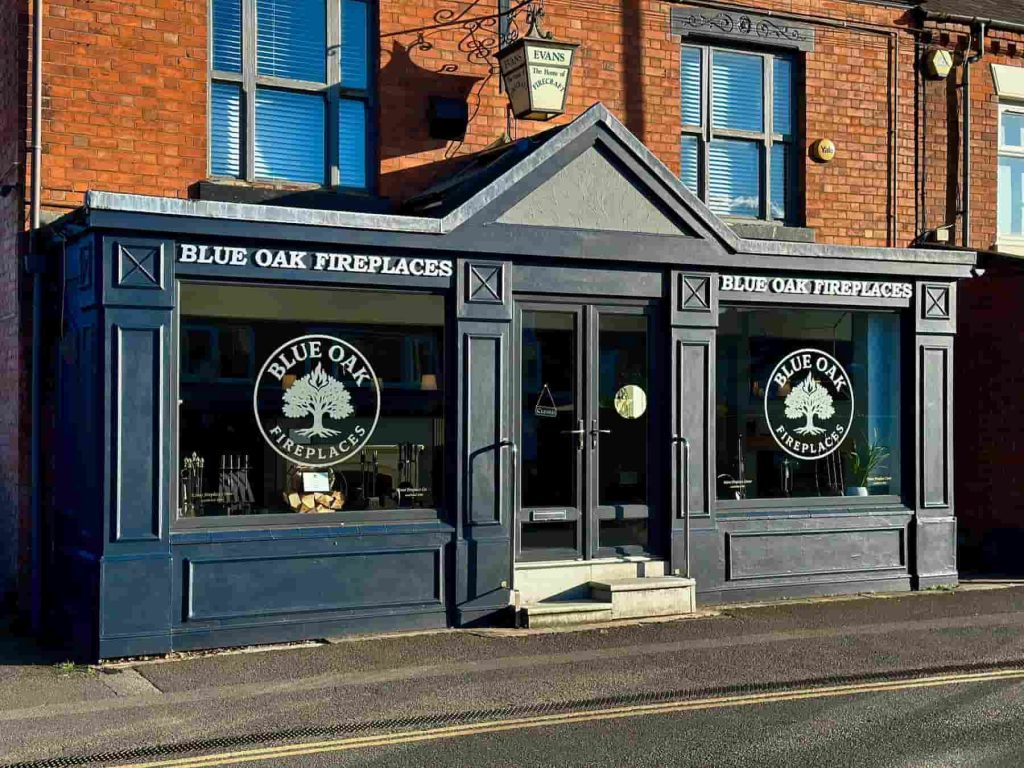
The single best thing you can do before committing to a media wall design is to see examples of completed builds in person and speak to people who have designed and installed them at every price point.
Our showroom in Syston, Leicester displays a range of electric fires and media wall design options that give you a realistic sense of what different budgets and design choices look like in practice. Our case studies showcase real completed projects across a range of budgets and home styles, and our gallery provides further visual inspiration.
Our team offers a free design consultation and home survey, during which we will assess your room, discuss your design goals and budget honestly, and produce a detailed written quotation before any work begins.
Contact us today to book your consultation, or simply call into the showroom to have a conversation with no obligation.
Frequently Asked Questions
What is the cheapest way to build a stylish media wall?
The most cost-effective approach to a stylish media wall is a smooth plastered stud wall painted in a bold or deeply saturated colour, with a mid-range electric fire set into a clean recess and concealed cabling routing the TV connection out of sight. This approach eliminates the cost of decorative cladding materials while relying on design fundamentals — proportion, contrast, and a quality flame effect — to create visual impact. Adding a single run of LED strip lighting behind the TV and a floating shelf between the fire and the TV can enhance the result meaningfully at very modest additional cost. Professional installation ensures the build meets safety requirements and looks as clean as possible.
How much does a simple media wall cost in the UK?
A professionally installed simple media wall in the UK typically costs between £1,500 and £2,500 for a straightforward design including a stud wall, smooth plastered finish, concealed cabling, TV mounting, electrical work, and an entry-level to mid-range electric fire. More decorative finishes such as timber slat panels, porcelain tiles around the fire recess, or LED strip lighting add to this figure but generally remain within a total budget of £2,500 to £3,500. Costs vary by region, with Leicester and the Midlands typically sitting in a sensible middle range compared to London and the South East.
What type of electric fire is best for a budget media wall?
For a budget media wall, a mid-range electric fire from a reputable brand with a good quality 3D LED flame system offers the best balance of visual impact and value. The flame technology in mid-range models from established manufacturers has improved significantly and delivers a convincing, atmospheric effect that does not require spending at the very top of the market. Key features to prioritise within a mid-range budget include 3D flame projection, adjustable flame height and colour, a realistic fuel bed, and a flame-only mode for year-round use without heat. Visiting a showroom to see fires running live is the most reliable way to assess flame quality before purchasing.
Do I need planning permission for a media wall?
No, planning permission is not required for a standard internal media wall. A media wall is an internal feature that does not affect the external appearance of the property. However, any new electrical work associated with the build — including new power sockets, first-fix wiring, or dedicated circuits — must comply with UK Building Regulations Part P for domestic electrical installations and should be carried out by a qualified electrician who can certify the work. For media walls incorporating gas fires, a Gas Safe registered engineer must carry out and certify the gas connection.
Can I add a fireplace to a simple media wall without increasing the cost too much?
Yes. An electric fire is the most straightforward and cost-controlled way to add a fireplace to a media wall. The fire recess is incorporated into the stud wall build from the outset, and the only additional cost over a TV-only wall is the fire unit itself and the electrical connection within the recess. Entry-level to mid-range electric fires suitable for media wall installation are available at a range of price points, and choosing a fire that suits your budget does not require compromising on safety or core functionality. The recess and cabling can also be built in advance with the fire added later if budget needs to be phased.
What wall finish looks most expensive on a budget media wall?
Timber slat panelling and deeply saturated paint colours consistently deliver the highest visual impact relative to their cost on a budget media wall. Timber slat panels in MDF or engineered wood, particularly when finished in a dark stain or paint, create genuine texture and depth at a moderate material cost. A bold, saturated wall colour — deep charcoal, forest green, slate blue, or warm terracotta — transforms a simple flat wall into a deliberate design feature without any additional material cost beyond the paint itself. Both approaches work extremely well when combined with a quality electric fire and clean concealed cabling, creating a result that reads as considered and premium regardless of the total spend.
How do I keep my media wall looking neat and uncluttered?
The most important step in keeping a media wall looking neat is thorough cable management planned and executed during the build stage. All TV, audio, and power cables should be routed through the stud wall during construction, with sockets and connections positioned within concealed compartments or behind the TV mounting position. Once the wall is complete, avoid overcrowding shelves with too many objects. A media wall with clear, open surfaces and a small number of well-chosen decorative items will always look more considered than one that has been used as general storage. If practical storage is a priority, closed cabinetry units below the TV keep items out of sight and maintain the clean, uncluttered aesthetic.
Should I build the media wall myself or hire a professional?
For a media wall that incorporates an electric fire, professional installation is strongly recommended even if the structural build elements feel manageable as a DIY project. The fire recess must be built to the manufacturer’s exact specifications for depth, clearance, and ventilation. Any new electrical work including power sockets within the recess must comply with UK Building Regulations Part P and be certified by a qualified electrician. Mistakes in either of these areas can create safety risks and are expensive to rectify in a completed wall. A professional installation also produces a cleaner finish — particularly in the plastering and the fire recess detailing — that is difficult to replicate without experience. The cost saving of a DIY approach rarely justifies the risk when a fire is involved.
What colour should I paint a media wall?
The most effective media wall paint colours are those that create a clear contrast with the surrounding walls and give the feature wall a sense of depth and intentionality. Deep, saturated tones consistently work well: charcoal grey, anthracite, forest green, navy blue, slate, and warm terracotta are all popular choices in contemporary UK interiors. The surrounding walls are typically left in a lighter complementary tone — off-white, warm stone, or pale grey — which allows the feature wall to stand out clearly without the room feeling oppressive. For a more subtle approach, a tone-on-tone effect using the same colour family in different shades on the media wall and surrounding walls creates a cohesive, layered look that feels quietly sophisticated.
How long does a media wall take to install?
A simple media wall without complex joinery or bespoke cabinetry typically takes one to three days to build and install professionally. This includes the stud wall construction, boarding, plastering, electrical first fix and second fix, fire installation, and TV mounting. More complex builds incorporating timber slat cladding, tiling, bespoke shelving, or wider feature walls may take three to five days. The planning and design stage — including the home survey, design consultation, and ordering of the fire and any materials — typically takes place in the weeks prior to the installation date. Our team will give you a clear timeline at the quotation stage so you know exactly what to expect.
Can a simple media wall add value to my home?
Yes. A well-designed and professionally installed media wall consistently adds appeal and perceived value to a home. It creates a clean, modern focal point in the primary living space that is increasingly expected by buyers in the current UK property market. A simple but well-executed media wall at a modest build cost has the potential to return its full investment or more when the property is sold, particularly in the current market where modern, move-in-ready presentation is a significant advantage. The key is ensuring the design is clean and well-proportioned, the installation is professional and properly certified, and the fire — if one is included — is from a reputable brand with appropriate safety documentation.
Blue Oak Fireplaces serves homeowners across Leicester, Syston, and the wider East Midlands. Visit our showroom at 1159 Melton Road, Syston, LE7 2JS, or call us on 0116 373 4193 to arrange your free design consultation.