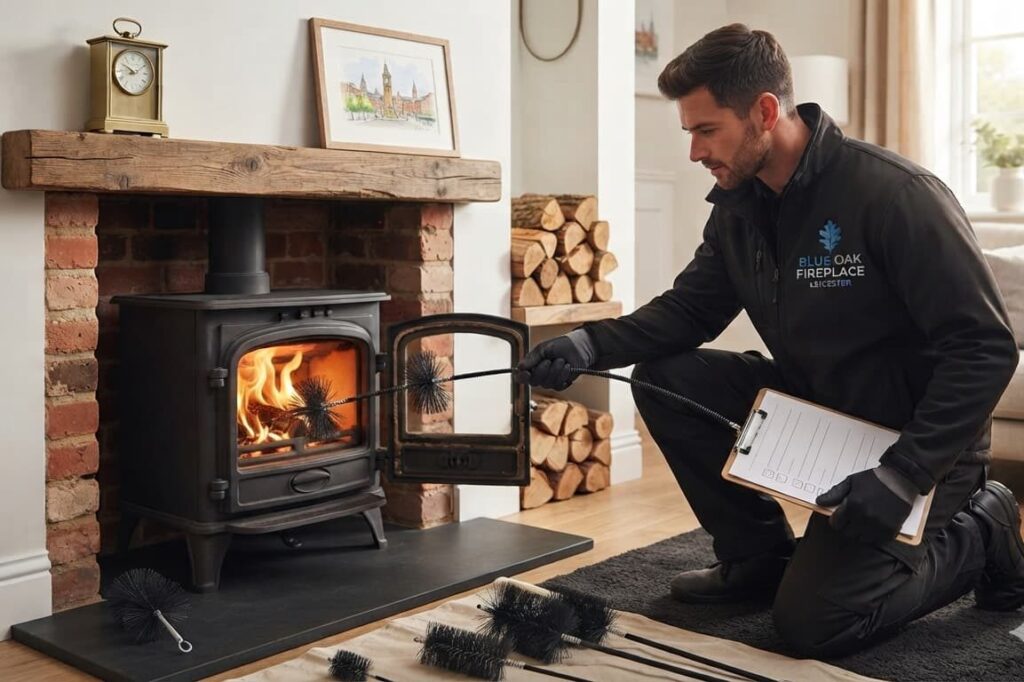
A good new stove handover should leave you knowing what has been installed, how to use it as instructed and whom to contact with questions. The paperwork is useful long after installation day, particularly when arranging care, identifying parts or checking warranty conditions.
Set aside time for the demonstration rather than treating handover as the moment to collect keys and clear packaging. This checklist helps you organise the conversation around your exact appliance.
New stove handover: practical checklist
Use your new stove handover to understand the exact appliance, its controls and the documents that belong with the installation. Set aside time for a demonstration and record who to contact with follow-up questions. Keep the new stove handover paperwork together so that operating instructions, servicing information and warranty details are easy to find.
Confirm the appliance identity
Keep the manufacturer, full model name, serial information and purchase reference together. If the installer points out an accessible identification label, note its location without removing panels or reaching into the appliance.
Store the quotation and final specification alongside these details. Accessories, finishes and control options can differ within a range, so the generic product name alone may not identify what you own.
Keep the correct operating manual
Ask which instructions apply to the installed version and make sure you can find them later. Save a digital copy where available, but retain any supplied paperwork and commissioning record as well.
Manufacturer manuals available through HETAS’s document library illustrate how warranty and service records can be linked to the particular product. Do not assume that another model’s conditions or operating routine apply to yours.
Ask for the relevant installation records
Ask the installer to explain which completion, notification or compliance documents apply to your work, who issues them and when you should receive them. The route can depend on how the installation was arranged, so obtain the answer for your actual project.
If something is due to arrive later, record who will send it and how to follow up. Do not confuse a sales receipt with an installation record, and do not assume a routine service document replaces the original completion information.
Watch the appliance demonstration
Ask to be shown the normal controls and the instructions you should follow before first use. Check whether any initial curing or commissioning instructions affect when and how the appliance may be used. Let the installer explain these for the model rather than applying a general timetable.
- Which fuels are suitable for this appliance?
- How are the controls identified in the manual?
- What should be checked before normal use?
- What care tasks are intended for the owner?
- Which tasks should be left to a competent professional?
Make brief notes in your own words and ask for anything unclear to be demonstrated again. If another household member will use the stove, include them in the conversation.
Discuss the room around the stove
Ask the installer to identify the arrangement you must preserve around the appliance, including ventilation and the space that needs to remain clear. Explain where you planned to put furniture, log baskets and accessories before treating the room as finished.
Have the relevant alarms and their instructions explained, including the appropriate action if they operate. Follow the supplied guidance; a handover checklist should not replace emergency or manufacturer instructions.
Organise ongoing care and support
Ask about the care schedule for the stove and chimney system and keep the recommended contacts. Check what records you should retain after maintenance, sweeping or servicing. Book the next appropriate appointment or create a reminder while the details are fresh.
Clarify warranty registration, any deadline and who completes it. Read exclusions and maintenance conditions for the actual product. Keep receipts and service notes in the same folder rather than trying to reconstruct them later.
Use a simple handover folder
Create a paper or digital folder with sections for appliance identity, instructions, installation records, warranty and ongoing care. Add the installer’s contact details and a short list of any outstanding documents. A clear record makes future questions quicker to resolve.
What if a document is missing?
Ask the installer which document is expected and who is responsible for issuing it. Follow up using the project reference and keep the correspondence.
Can I use instructions from a similar stove?
Use the manual for the exact installed appliance and version. Similar appearance does not establish identical operation or care requirements.
Should I keep records after the warranty ends?
They remain useful for identifying the installation, arranging professional care and explaining the history of the appliance.
Planning a new stove? Contact Blue Oak Fireplaces to discuss the installation process, handover and ongoing ownership before you choose.