
Good firewood storage at home makes the routine of owning a stove easier. Think about the journey from delivery to the outdoor store and then to the appliance, as well as how the logs will be protected from weather.
The best arrangement is one you can use consistently through winter. This guide focuses on planning storage and handling. Always follow your stove’s instructions for suitable fuel and operation.
Firewood storage at home: practical checklist
Plan firewood storage at home around the full route from delivery to the stove. Check the space for the main store, the carrying route and a modest indoor supply, with combustible materials kept at the distances required for your appliance. Review firewood storage at home when your delivery size or everyday heating routine changes.
Start with the delivery you actually buy
Ask the supplier how logs are delivered and where they can be left. A bulk bag, a crate and smaller bags need different access and unloading space. Make sure you understand the delivery quantity before choosing a store by appearance alone.
Draw the route from the delivery point to storage. Note steps, gates, uneven surfaces and narrow turns. Plan manageable transfers rather than relying on carrying an awkward load through the house. Keep the route usable when the weather is wet.
Choose protection that still allows airflow
Look for an arrangement that shelters the fuel from rain while allowing air to move around it. A space that stays visibly wet or traps moisture deserves a different solution. Avoid treating a decorative indoor basket as the main storage plan for a winter supply.
Consider how the store will be checked and maintained. If its roof, back or base cannot be reached, small maintenance tasks become harder. Keep the store’s dimensions and position compatible with the surrounding garden and access route.
Keep different batches identifiable
Label new deliveries with the supplier and date. If you have fuel at different stages of readiness, keep it clearly separated rather than topping up one indistinguishable pile. Retain delivery information in case you need to ask the supplier a question.
Do not decide that wood is ready solely because it looks dry on the outside. Ask your supplier about the fuel specification and follow the appliance instructions. If you test moisture, use a suitable method and meter rather than guessing from colour or weight.
Use indoor storage for a limited working supply
An indoor log basket can be convenient, but it needs a carefully chosen position. HETAS consumer guidance says to keep combustible items, including logs, away from the stove and hearth area. Follow the exact appliance’s clearances and do not use the hearth as a drying shelf.
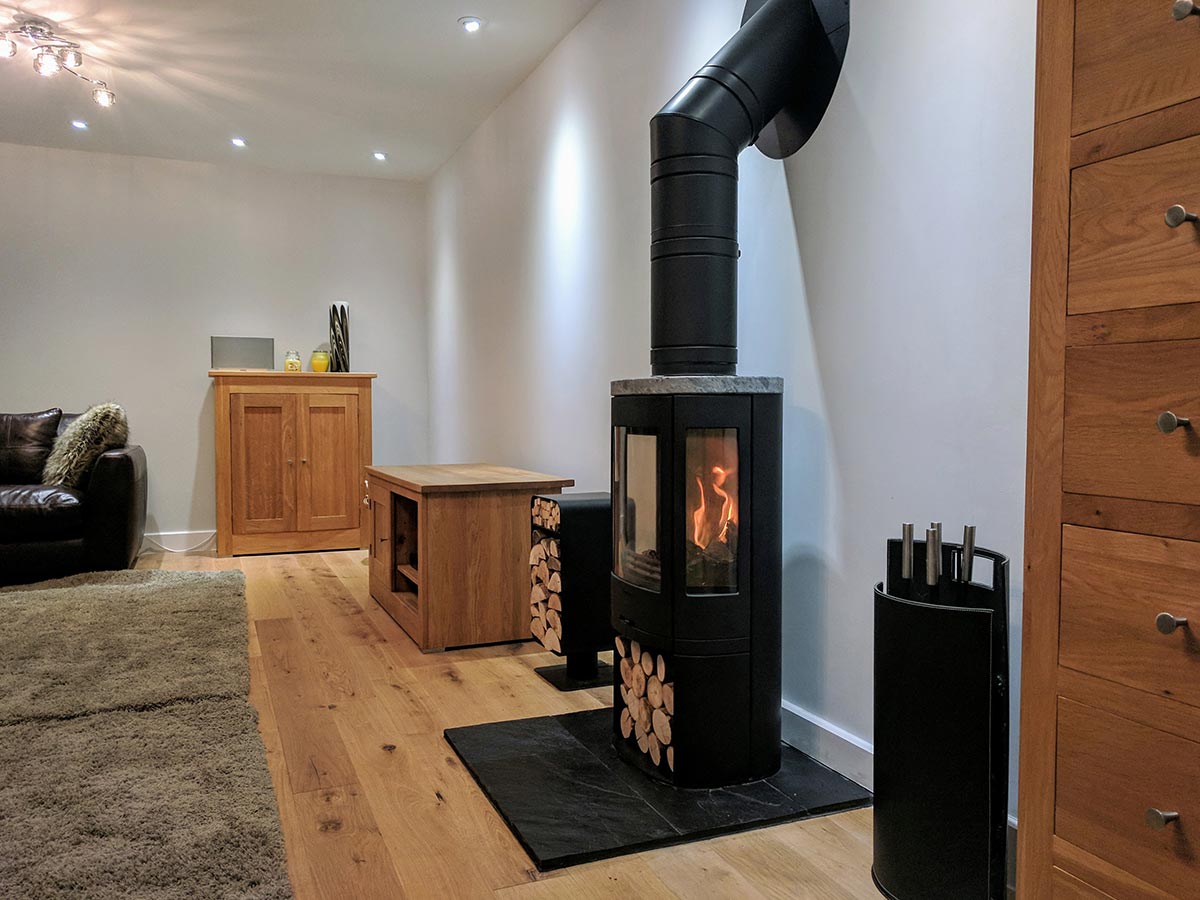
If a photograph shows logs arranged close to a fire, do not assume the arrangement is appropriate for your appliance. Ask the installer about any integrated log compartment and use it only as permitted by the manufacturer.
Plan a routine that keeps the room tidy
Choose a container you can lift comfortably and a route that does not cross the busiest part of the room. A small brush and an agreed place for bark and packaging can make the daily routine simpler.
- Keep the route clear of cables and loose rugs.
- Avoid stacking logs where they obstruct controls or cleaning access.
- Keep the delivery paperwork with your fuel information.
- Check storage after wet or windy weather.
- Reassess the arrangement if your household’s needs change.
Store firelighters and other products according to their own labels. A general log-store plan does not override the handling instructions for anything kept nearby.
Do not confuse storage capacity with fuel demand
The amount you use depends on the appliance, fuel, weather and operating pattern. Ask about your model and build a record of actual use rather than accepting a universal number of logs per evening.
For the first season, note delivery dates and how quickly each batch is used. This creates a practical basis for deciding whether you need a larger store or simply a different ordering routine. Do not over-order fuel that you cannot store appropriately.
Include storage in the fireplace conversation
When visiting a showroom, explain where you can keep the main supply and how you expect to bring logs inside. Storage is part of living with a stove, so it is useful to consider it before choosing the appliance and room layout.
Can I store logs against the stove?
Do not place combustible fuel within the appliance’s required clearances or on the hearth. Use only storage arrangements permitted for the exact model.
Does a covered store make wet logs ready immediately?
No. Weather protection and fuel readiness are different questions. Check the fuel specification and moisture appropriately.
Discuss stove choices and everyday ownership with Blue Oak Fireplaces, or visit the Syston showroom with photographs of your proposed room and storage space.
