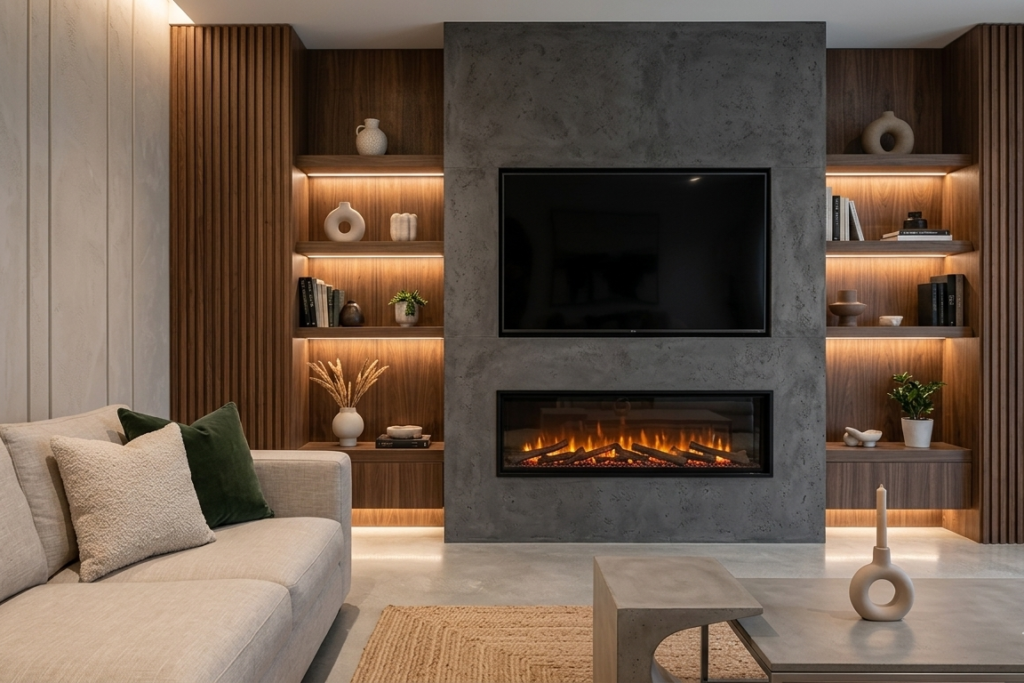
If you are planning a media wall, one of the most exciting decisions you will make is choosing the electric fire that sits at the heart of it. Get it right and your media wall becomes the defining feature of the room; a seamless, stunning focal point that combines warmth, atmosphere, and modern living in one beautifully designed space. Get it wrong and you can end up with a fire that is the wrong size for the wall, too shallow for the recess, too hot for the TV above it, or simply disappointing in person once the LED flame effect fails to impress the way it did on a website.
Searching for the best electric fires for media walls brings up hundreds of options at every price point, and it can quickly become overwhelming. This guide cuts through the noise. We explain every factor that genuinely matters when choosing an electric fire for a media wall, so you can make a confident decision that you will still be happy with years down the line.
At Blue Oak Fireplaces, we design, supply, and install media walls and electric fires across Leicester and the East Midlands. Everything in this guide comes from real installation experience, not just product brochures.
Why Electric Fires Are the Natural Choice for Media Walls
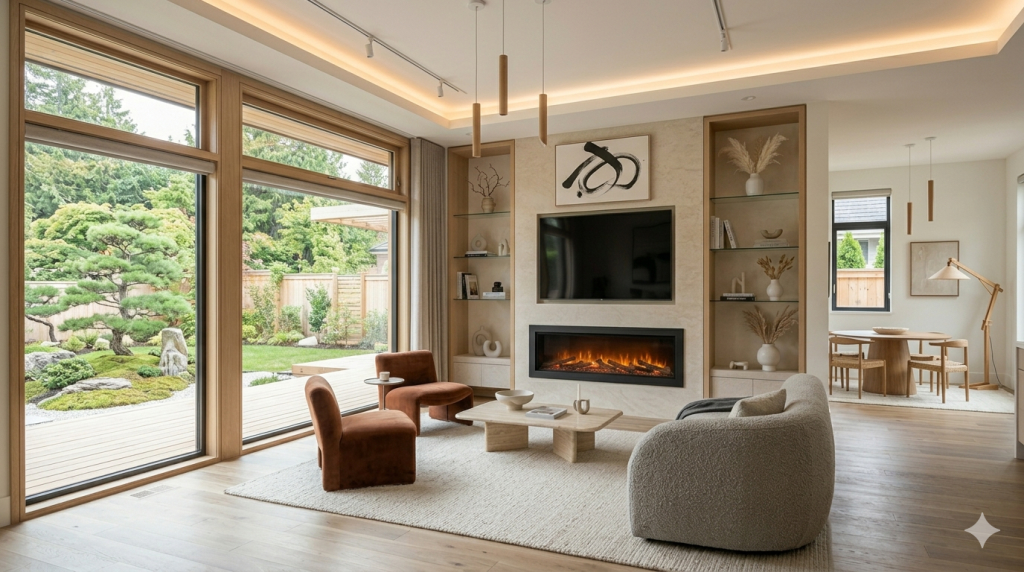
Before diving into what to look for, it is worth understanding why electric fires are the dominant choice for media wall installations in the first place.
A media wall is built around a stud wall framework, typically constructed from steel studwork lined with calcium silicate board and plasterboard. It is an internal structure, not a masonry chimney breast, and it requires no flue, no gas connection, and no specialist ventilation beyond what the fire manufacturer specifies.
Electric fires fit this environment perfectly because:
No chimney or flue is needed. The entire media wall concept depends on a clean, built-in look. A gas fire requires a flue terminal, which introduces complications in wall design and routing. An electric fire simply needs a mains power connection, keeping the build clean and straightforward.
No gas pipework is required. There is no Gas Safe connection to arrange, no gas supply to run to the wall, and no annual Gas Safe service obligation once the fire is installed.
Flame-only mode is available. One of the most popular features of modern electric fires is the ability to run the flame effect without the heat. This means you can enjoy the visual atmosphere of a glowing fire on a warm summer evening without overheating the room.
Installation is cleaner and faster. A media wall with an electric fire can typically be completed in two to five days by an experienced team. Introducing a gas fire into the build adds complexity, regulatory requirements, and cost.
Design flexibility is unmatched. Electric fires for media walls are available in widths from around 600mm all the way up to 2400mm, in a huge range of frame finishes, fuel bed styles, and flame colour options. Whatever aesthetic you are going for, there is an electric fire that fits.
You can explore how this all comes together in our media wall gallery and our media wall case studies.
The 9 Key Factors to Look For When Choosing an Electric Fire for a Media Wall
1. Width and Proportions: Getting the Size Right
Size is the starting point for every media wall electric fire decision, and the most common mistake homeowners make is choosing a fire that is too narrow for the wall and TV above it.
The widely accepted design rule is that your electric fire should be approximately 60 to 80 percent of the width of your TV, or roughly the same width as the TV itself for a balanced, symmetrical look. If your TV is 65 inches wide (approximately 1450mm), an electric fire in the 1000mm to 1500mm range will typically give you the most proportionate result.
Going narrower than 60 percent of the TV width creates a visual imbalance where the fire looks like an afterthought rather than a centrepiece. Going significantly wider than the TV can work well in larger rooms where the wall itself is the feature, but this requires careful planning to ensure the overall proportions feel intentional.
Common electric fire widths for media walls include:
- 600mm to 800mm for smaller rooms or walls where the TV is mounted above a narrow recess
- 1000mm to 1200mm for standard living rooms with 55 to 65-inch televisions
- 1500mm to 1800mm for larger living rooms and open-plan spaces
- 2000mm to 2400mm for statement walls in premium builds or large open-plan areas
Always measure your wall, decide on your TV size, and confirm proportions before selecting a fire width. Changing your mind after the stud wall framework is built is costly and disruptive.
2. Recess Depth: Plan the Build Around the Fire, Not the Other Way Round
This is one of the most practically important considerations, and it is the one that causes the most problems when it is overlooked.
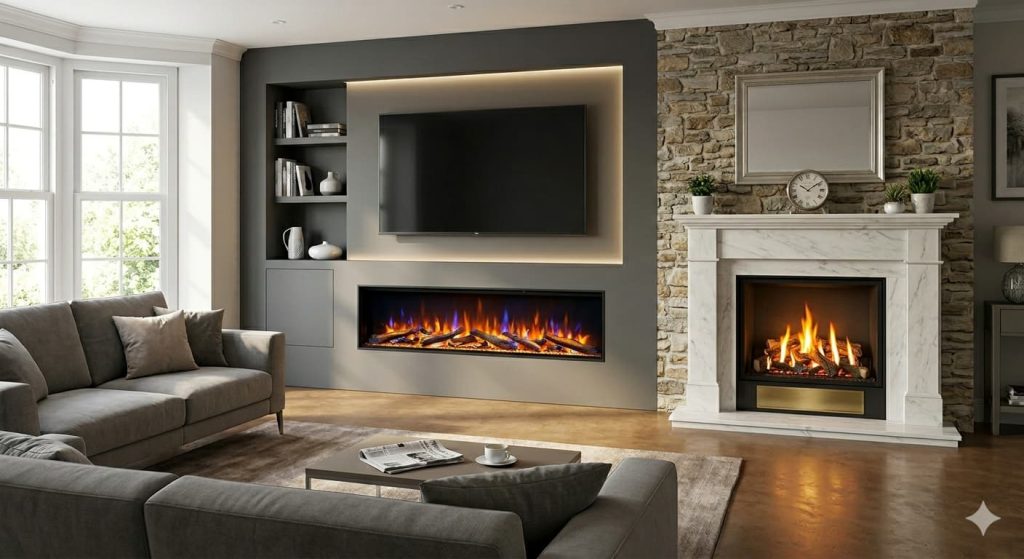
Every electric fire designed for media wall installation has a specific recess depth requirement stated in its installation manual. This is the depth of the void in the stud wall that the fire body sits within. Most landscape electric fires for media walls require a recess depth of between 150mm and 300mm, depending on the model.
The critical rule is: choose your fire first, then build the stud wall around its specifications. If the stud wall framework is built before the fire is chosen, you may find that your preferred fire is too deep for the void, or that ventilation clearances cannot be met without rebuilding sections of the wall.
Beyond the fire body depth itself, you also need to account for:
Ventilation clearance. Electric fires generate heat and require adequate airflow around the unit. The installation manual will specify minimum clearances above, below, and to the sides of the fire body. These must be maintained within the build.
Cable routing space. The power supply cable for the fire, as well as HDMI cables, power cables for the TV, and any audio cables, all need to be routed through the stud wall without creating hotspots or obstruction. Planning the cable route before boarding the wall is essential.
Power socket placement. The electric fire needs a mains power connection. This socket should be positioned within the recess or in a nearby concealed compartment so it is never visible. Plan its location before the electrician completes the first fix wiring stage.
A standard stud wall depth of 100mm is not sufficient for most media wall electric fires. A build depth of 200mm to 300mm is more typical for a well-planned media wall installation that accommodates the fire, cables, and clearances correctly.
Our media wall installation team always specifies the fire before a single piece of studwork is erected, ensuring the build is designed around the fire rather than compromised by it.
3. Heat Output Direction: Front Venting vs Top Venting
This is a detail that many homeowners overlook until it is too late, and it has a direct bearing on TV safety.
Electric fires release heat through a fan-assisted outlet. Where that outlet is positioned — on the front face of the fire, or on the top surface — makes a significant difference to how safely the fire can be installed below a television.
Front-venting fires direct warm air forward and outward into the room, away from the TV mounted above. This is the safest configuration for a media wall installation because it minimises the amount of heat rising toward the TV and the stud wall structure above the fire.
Top-venting fires release heat upward, which in an enclosed media wall recess can cause heat to accumulate in the void between the fire and the TV above. This does not necessarily make a top-venting fire unsuitable for a media wall, but it means you need to follow the manufacturer’s clearance specifications very carefully, and it may require a larger gap between the top of the fire and the base of the TV.
When shortlisting electric fires for your media wall, check the product specification sheet and installation manual for heat outlet direction. If in doubt, front-venting fires offer the most straightforward installation in terms of TV safety.
4. Flame Technology: What Separates a Realistic Fire from a Disappointing One
The flame effect is what you and your family will look at every evening, and the quality gap between a budget electric fire and a mid to premium model is significant.
Modern electric fires use LED technology to generate flame effects, but not all LED systems are equal. Here is what to look for:
3D flame projection. The best media wall fires use multiple layers of reflected and projected LED light to create depth within the firebox. This gives the impression of flames with genuine three-dimensional movement rather than a flat, two-dimensional image playing on a back screen. When viewing a fire in person at our showroom in Syston, the difference between a 3D flame system and a basic LED effect is immediately apparent.
Flame colour customisation. Premium electric fires allow you to choose between warm amber flames, contemporary blue or white flames, or a combination of both. Some models offer multiple colour options and intensity levels, allowing you to set the mood for different occasions.
Fuel bed realism. The material at the base of the firebox has a significant impact on overall realism. Handcrafted log fuel beds, realistic coal beds, or elegant crystal and pebble arrangements all add depth and authenticity to the flame picture. Look for fuel beds with genuine texture and detail rather than flat printed replicas.
Flame height and speed control. Being able to adjust the height and speed of the flame independently of the heat setting allows for much finer control over the atmosphere the fire creates. A slow, low flame has a very different feel to a tall, vigorous one, and both have their place.
Anti-reflection glass. Some premium fire models use specially coated anti-reflection glass that eliminates the visual interference you can get from ambient room light reflecting off the glass front. This dramatically improves flame realism, particularly during daylight hours or in brightly lit rooms.
5. Heat Output: Matching the Fire to the Room
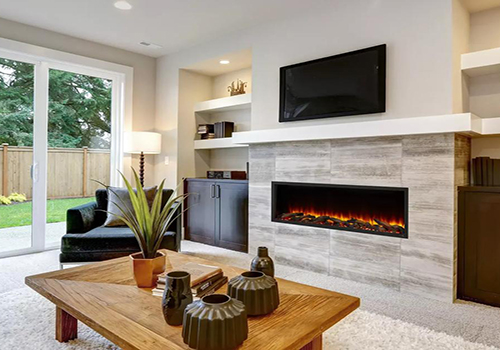
Most electric fires designed for media walls offer a maximum heat output of 2kW, which is the standard ceiling for domestic electric heating elements. Some models offer a lower setting of around 1kW for milder days, and many allow you to run the flame effect with the heat completely off.
2kW of electric heating is sufficient to comfortably warm a living room of approximately 20 to 25 square metres. For larger open-plan spaces, the electric fire is better thought of as a supplementary heat source and mood feature rather than the primary heating system for the room.
To calculate the heat output you need, use this simple guide: allow approximately 1kW of heat output for every 14 cubic metres of room volume (length x width x ceiling height). A living room measuring 5m x 4m with a 2.4m ceiling has a volume of 48 cubic metres, which suggests approximately 3.4kW of heating capacity is needed for efficient warmth. In this case, a 2kW electric fire will contribute meaningfully to the room’s warmth but will work best alongside the central heating system rather than replacing it.
The good news is that because the flame effect operates independently of the heat in most models, you can enjoy the visual ambience of the fire year-round without the heat output, making the 2kW ceiling less of a limitation than it might first appear.
6. Controls and Smart Features: Convenience Matters
The way you control your electric fire affects how much enjoyment you get from it on a daily basis. Modern media wall fires offer a range of control options:
Remote control. A handset remote is standard on most mid to premium media wall fires. It allows you to adjust flame height, heat settings, and sometimes flame colour from your sofa without needing to interact with the fire directly.
Touch controls. Many fires include touch-sensitive controls on the unit itself for when the remote is elsewhere. These are typically located on the top or side of the fire body and are concealed within the recess.
App control. An increasing number of electric fires now offer smartphone app control via Bluetooth or WiFi. This allows you to set schedules, adjust settings remotely, and integrate the fire into a broader smart home setup. If you use a smart home system such as Google Home or Amazon Alexa, check whether your chosen fire offers compatibility.
Thermostat control. A built-in thermostat allows the fire to maintain a target room temperature automatically, switching the heating element on and off as needed rather than running continuously. This improves energy efficiency and means you do not need to manually adjust the fire as the room warms.
Timer function. A programmable timer lets you set the fire to come on and turn off at specific times, which is useful for creating a warm, welcoming atmosphere before you arrive home.
7. Frame Finish and Aesthetic: Matching Your Interior

The frame surrounding the fire opening is what you see when the flames are not running, and it plays a significant role in the overall look of the media wall.
Electric fires for media walls are available with a range of frame finishes:
Frameless or slimline frames create a contemporary, minimalist look where the fire appears to float within the wall with no visible border. This suits modern interiors with clean lines, flat surfaces, and a restrained colour palette.
Black steel frames are a popular choice for both contemporary and transitional interiors. The contrast between the dark frame and the flame effect creates a bold, dramatic look that works particularly well with stone cladding, concrete-effect panels, or dark timber slats on the surrounding media wall.
Brushed chrome and stainless steel frames suit high-gloss, premium interiors where the fire is intended as a luxury statement.
Deep frames and surrounds can create a more traditional, recessed fireplace feel within a modern media wall, bridging the gap between a contemporary build and a more classic aesthetic.
The frame finish should be considered alongside the finish of the wider media wall. If the wall will be plastered and painted, a frameless or slimline frame works beautifully. If the wall will incorporate timber cladding, stone panels, or porcelain tiles, a bolder frame finish can complement the texture and depth of those materials.
Visit our fireplace surrounds range for inspiration on how the wider design can be brought together cohesively.
8. Safety Features: Essential for Homes with Children and Pets
Safety features should be a non-negotiable consideration, particularly in households with young children or pets.
Overheat protection with automatic cut-out. This is the most important safety feature on any electric fire. If the internal temperature of the unit exceeds a safe threshold, the heating element automatically shuts off. Look for this feature on every fire you consider.
Cool-to-touch glass. Some electric fires have glass fronts that remain relatively cool to the touch even during operation. This is an important consideration if young children or pets may come into contact with the fire front. Check the product specification for glass temperature data.
Child lock function. Certain models include a child lock that disables the controls to prevent settings being changed accidentally or by curious small hands.
IP ratings (for outdoor or bathroom use). If you are planning a media wall in a bathroom or outdoor area, you will need a fire with an appropriate IP (Ingress Protection) rating for the level of moisture exposure involved. For standard indoor living rooms, IP rating is not a concern.
9. Brand Quality and Warranty: Protecting Your Investment
A media wall is a substantial investment, and the electric fire at its centre should be chosen from a brand with a proven track record for reliability and customer support.
At Blue Oak Fireplaces, our electric fires range includes models from leading manufacturers including Dimplex, Gazco, and Stovax, all of which are known for build quality, realistic flame technology, and dependable after-sales support.
When evaluating any electric fire, check:
Warranty length. A minimum two-year warranty is standard for quality electric fires. Some premium brands offer three to five years, which gives you meaningful protection against component failure.
Parts availability. Confirm that replacement parts including heating elements, LED components, and remote controls are available and stocked by the manufacturer or their UK distributors.
UK-based customer support. If something goes wrong, being able to speak to a UK-based support team makes the resolution process significantly faster and less frustrating.
CE and UKCA marking. Confirm the fire carries appropriate UK and European safety certifications, confirming it has been tested to relevant safety standards.
Common Mistakes to Avoid When Choosing an Electric Fire for a Media Wall
Even with the best intentions, homeowners regularly make the same avoidable errors when planning a media wall fire. Here is what to watch out for:
Building the wall before choosing the fire. As discussed above, the fire’s recess depth and clearance requirements must inform the stud wall build. Getting this in the wrong order results in a wall that either cannot accommodate the chosen fire or requires expensive structural alteration.
Choosing a fire that is too narrow. A fire that is disproportionately narrow compared to the TV above it looks unbalanced and underwhelming. Use the 60 to 80 percent width rule as your starting point.
Ignoring ventilation requirements. Every electric fire needs airflow around it. Boarding up the recess without leaving adequate ventilation clearances as specified in the installation manual can cause the fire to overheat and trigger the automatic cut-out repeatedly.
Mounting the TV too high. A common mistake in media wall builds is raising the TV excessively to create clearance above the fire, which results in an uncomfortable viewing angle from a seated position. The centre of the TV screen should sit at approximately seated eye level, typically 100 to 110cm from the floor. A correctly specified clearance between the fire and the TV, combined with front-venting heat direction, usually means the TV can sit at a comfortable height without compromise.
Forgetting about the power socket. The fire needs a mains socket within the recess or a nearby concealed compartment. Planning this at the first-fix electrical stage is essential. Retrofitting a socket into a finished media wall is messy, disruptive, and expensive.
Choosing purely on aesthetics from online photos. Flame effects, frame finishes, and overall fire size all look different in person than they do in product photography. Visiting a showroom to see fires running live is one of the most valuable steps you can take. At our Syston showroom, you can see a range of electric fires operating at full effect and compare flame quality, frame finishes, and sizes in the context of a real room.
What Does a Media Wall with Electric Fire Installation Cost?
Costs vary considerably depending on the size and complexity of the build, the fire chosen, and the finish materials used. As a general guide for UK homeowners:
| Project Type | Approximate Cost Range |
|---|---|
| Simple media wall with budget electric fire | £2,000 to £4,000 |
| Standard media wall with mid-range electric fire | £4,000 to £7,000 |
| Premium media wall with high-end fire and tiling | £7,000 to £12,000+ |
| Bespoke multi-recess media wall with full AV integration | £10,000+ |
These figures include design, build, fire supply, and installation. The fire itself typically represents between 20 and 40 percent of the total project cost depending on the model chosen.
The most accurate way to budget for your project is to book a home consultation with our team. We will assess your room, discuss your design goals, and provide a detailed written quotation before any work begins.
Getting the Most From Your Media Wall Electric Fire: After Installation
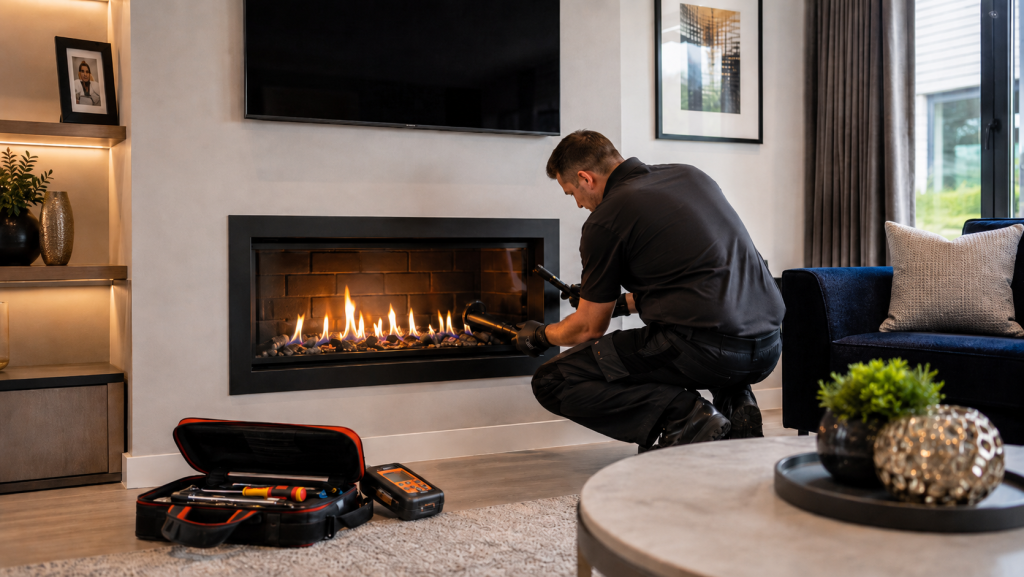
Once your media wall is complete and your electric fire is installed, a little routine care keeps it looking and performing its best:
Keep the glass clean. Dust and fingerprints on the glass front reduce the visual impact of the flame effect. A soft, dry microfibre cloth used periodically keeps the glass clear. Never use abrasive cleaners or harsh chemicals on the glass.
Clear the air intake grilles. Dust and pet hair can accumulate around the air intake vents on the fire body. A soft brush attachment on a vacuum used periodically prevents airflow restriction and maintains heating efficiency.
Test the remote and controls periodically. If the remote control becomes unresponsive, a battery change is usually all that is needed. Keep a note of the remote’s battery type for convenience.
Check the installation annually. While electric fires do not require professional annual servicing in the way gas fires do, it is good practice to visually check the power cable, the connection within the recess, and the condition of the glass and frame once a year.
For more guidance on caring for your fire, our fireplace services team is happy to advise.
Ready to Design Your Media Wall?
A well-chosen electric fire transforms a media wall from a functional TV unit into the most talked-about feature in your home. The key is taking the time to consider all the factors covered in this guide before committing to a model.
Whether you already have a specific fire in mind or you are starting from scratch, the best next step is to visit our showroom in Syston, Leicester, where you can see our full range of electric fires and media wall designs in person. Alternatively, contact us to arrange a free home consultation and design appointment.
Our team handles everything from initial design through to final commissioning, so you have one point of contact for the entire project.
Frequently Asked Questions
What is the best electric fire for a media wall?
The best electric fire for a media wall is one that is correctly sized for your wall and TV, has a recess depth that matches your stud wall build, directs heat forward rather than upward toward the TV, and uses a high-quality 3D LED flame system that looks convincingly realistic in person. There is no single best model for every home because the right fire depends on your room size, wall dimensions, aesthetic preferences, and budget. Visiting a showroom to see fires operating live is one of the most effective ways to identify which model delivers the flame quality and visual impact you are looking for before you commit to a purchase.
What size electric fire do I need for my media wall?
As a general rule, your electric fire should be approximately 60 to 80 percent of the width of your TV, or similar in width to the TV itself for a fully balanced look. For a 55-inch TV (approximately 1220mm wide), an electric fire in the 800mm to 1200mm range is typically proportionate. For a 65-inch TV (approximately 1440mm wide), a fire between 1000mm and 1500mm usually works best. The final choice should also take into account the overall width of the media wall itself, the position of any recesses or shelving on either side, and the proportions of the room.
How deep does a media wall recess need to be for an electric fire?
The required recess depth varies by model and is specified in the fire’s installation manual, but most landscape electric fires designed for media wall installation require a recess depth of between 150mm and 300mm. You also need to account for additional clearance around the fire body for ventilation and cable routing. A total stud wall build depth of 200mm to 300mm is typical for a well-planned media wall that accommodates the fire, its clearances, and concealed cabling. The most important rule is to choose your fire before the stud wall framework is built so the void can be sized correctly around the fire’s specifications.
Can you put a TV directly above an electric fire in a media wall?
Yes, and this is the standard configuration for a media wall, but it requires careful planning to ensure it is done safely. The critical factors are the heat outlet direction of the fire, the clearance distance specified by the manufacturer between the top of the fire and the base of the TV, and ensuring the stud wall build provides adequate ventilation around the fire body. Front-venting electric fires are generally the safest choice for installations directly below a TV because they direct warm air forward into the room rather than upward. Always follow the fire manufacturer’s specified clearance distances, which typically range from 150mm to 300mm between the top of the fire and the TV above it.
Do electric fires for media walls need a chimney or flue?
No. Electric fires produce no combustion and therefore require no chimney, flue, or external venting of any kind. This is one of the primary reasons electric fires are the most popular choice for media wall installations. The only utility connection required is a standard mains electricity supply. This makes them suitable for any room in the house, including rooms with no existing chimney, upper-floor rooms, and properties where structural constraints make a flue impractical or impossible.
How much does a media wall with an electric fire cost in the UK?
The total cost of a media wall with an integrated electric fire depends on the complexity of the build, the size of the wall, the fire model chosen, and the finish materials used. As a broad guide, a straightforward media wall with a mid-range electric fire typically falls in the £4,000 to £7,000 range inclusive of design, build, fire supply, and installation. Larger or more complex builds with premium fires, tiling, LED strip lighting, and integrated AV equipment can cost significantly more. The most accurate way to budget your project is to arrange a free home consultation so the scope can be properly assessed and a detailed quotation prepared.
What is the difference between a front-venting and top-venting electric fire?
A front-venting electric fire releases warm air through an outlet on the front face of the unit, directing heat outward into the room. A top-venting fire releases heat upward through an outlet on the top surface of the unit. For media wall installations where a TV is mounted above the fire, front-venting fires are generally the preferred choice because they minimise the amount of warm air rising toward the TV and the structural materials above the recess. Top-venting fires can still be used in media walls, but they require strict adherence to the manufacturer’s clearance specifications and may need a larger gap between the fire and the TV above.
Can I run my media wall electric fire without the heat on?
Yes. Almost all electric fires designed for media wall installation include a flame-only mode that allows you to enjoy the visual effect of the flame without activating the heating element. This makes the fire suitable for year-round use, including warm summer evenings when you want the atmosphere of a lit fire without additional warmth. The flame-only mode typically uses a very small amount of electricity to power the LED system and motor, making it extremely economical to run purely for visual effect.
What flame technology should I look for in a media wall electric fire?
For the most realistic result, look for a fire that uses a 3D flame projection system, which creates genuine depth within the firebox through layered LED lighting and reflective surfaces rather than a flat projected image. Other quality indicators include adjustable flame height and speed controls, customisable flame colours (typically warm amber, cool white, or a combination), a detailed and realistic fuel bed (handcrafted logs, realistic coals, or elegant crystals), and anti-reflection glass that eliminates surface glare in brightly lit rooms. The best way to assess flame quality is to see fires running in a showroom environment rather than relying on product photography or video, which rarely captures the full effect accurately.
How do I maintain an electric fire in a media wall?
Electric fires in media walls require minimal ongoing maintenance. The glass front should be wiped periodically with a soft, dry microfibre cloth to remove dust and fingerprints that can diminish the flame effect. The air intake grilles on the fire body should be kept clear of dust and pet hair, which can be addressed with a soft brush vacuum attachment. There is no requirement for annual professional servicing as there is with gas fires, and no chimney sweeping required. A visual check of the power cable and connection within the recess once a year is good practice. If the fire develops a fault or the flame effect diminishes, contact the manufacturer or your installer for guidance.
Is a media wall electric fire a good investment for my home?
A well-designed and professionally installed media wall with an integrated electric fire consistently adds visual appeal and perceived value to a home. It transforms the primary living space into a modern, cohesive focal point that combines a clean entertainment setup with warmth and atmosphere. From a financial perspective, a quality media wall is viewed positively by estate agents and prospective buyers, and it avoids the ongoing costs associated with gas or solid fuel alternatives. For homeowners in Leicester and the Midlands who are planning this type of project, we recommend booking a consultation so the design can be properly planned and costed from the outset, ensuring the investment delivers the result you have in mind.
Blue Oak Fireplaces serves homeowners across Leicester, Syston, and the wider East Midlands. Visit our showroom at 1159 Melton Road, Syston, LE7 2JS, or call us on 0116 373 4193 to arrange your free design consultation.