
Many modern models let you use an electric fire without heat, enjoying the visual display while the heater is switched off. This can make a fireplace useful on a mild evening or when the room is already warm. However, independent flame and heat controls are a model-specific feature, so check the actual appliance before buying.
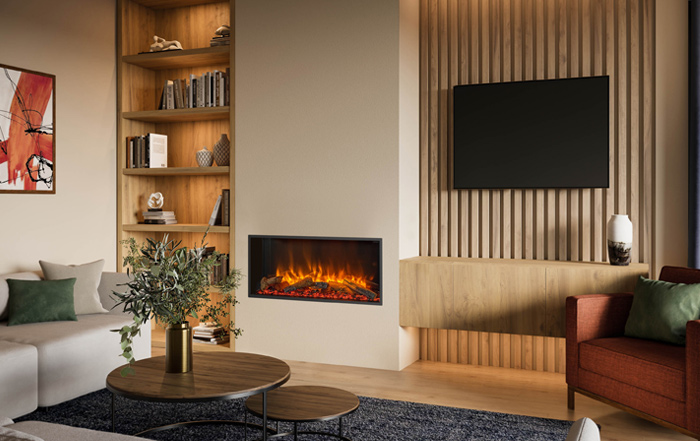
This guide focuses on choosing and using a visual mode. For broader product options, explore Blue Oak’s electric fires.
Electric fire without heat: practical checklist
Choosing an electric fire without heat is about finding a visual effect you enjoy as well as checking the controls. Confirm how the selected model separates flame effects from heating. Before ordering an electric fire without heat, ask the retailer to demonstrate the exact operating mode and explain which features remain available.
What flame-only mode actually does
An electric flame effect is a visual display. When an appliance supports separate controls, the display can operate without its heating element being selected. It still uses electricity and is not a completely free way to light a room.
Gazco’s media-wall range information describes models that operate with or without heat. That is useful evidence for the feature, but it should not be applied to every electric fire or every control system. Ask the retailer to demonstrate the exact model you are considering.
Why a visual mode can suit everyday use
Think about the times you want a focal point but do not need more warmth. You might be hosting people in an already comfortable room, reading with central heating running, or watching television on a mild evening. A separate visual setting gives you a different way to use the appliance in those situations.
Make your shortlist around the effect you find comfortable. An intense flame colour can be attractive for a short demonstration but distracting over a whole evening. Try a lower brightness as well as the showroom’s display setting.
Check the controls rather than assuming
Ask the demonstrator to start from the appliance switched off, select the flame display and show how heating is added and removed. Watch the handset symbols or screen while this happens. You should be able to tell which mode is active without guessing from the flame colour.
- Can heat be disabled while the flame effect stays on?
- Does a timer affect the display, the heater or both?
- Which settings are remembered after switching off?
- Is there a simple manual control if the handset is unavailable?
- Does an app offer features that the physical control does not?
Write down the answers for the exact model. Similar-looking handsets do not necessarily mean that the appliances behave identically.
Compare the display in realistic lighting
Look at the fire with nearby room lighting on and off if the showroom can demonstrate this. Stand to one side, then sit approximately where you would sit at home. Reflections, viewing distance and the surrounding finish all affect the visual result.
If there are adjustable log or ember-bed lights, compare a few combinations. Ask which features are standard and which require an accessory. Avoid choosing a model because of a photograph that includes optional lighting you have not included in the quotation.
Understand energy use without guessing a tariff
Flame-only consumption is different from heater consumption, and the actual figure depends on the appliance and selected features. Ask for the manufacturer’s stated electrical consumption for the relevant mode. Do not use the maximum heater rating as though it describes the visual display.
To estimate a mode’s cost, convert its power in watts to kilowatts, multiply by hours of use and then by your own electricity unit rate. Treat this as an estimate, since some appliances vary their operation. A current tariff and model-specific information are more useful than a generic claim that every electric fire costs the same.
Keep installation and routine care unchanged
Using a visual mode does not remove the need to follow the installation manual. Required openings, power access and maintenance arrangements still matter, especially when an appliance is built into a media wall. Keep the controls accessible and do not cover vents or alter the appliance.
Follow the manual for cleaning and switching off. If you notice an unfamiliar smell, unusual noise or a damaged cable, stop using the appliance and ask for appropriate advice rather than trying to investigate internal components.
Does flame-only mode heat the room?
It is not intended to provide the appliance’s selected heating output. If you need warmth, check the heater mode and the model’s suitability for your room separately.
Can I leave the display on unattended?
Follow the exact manufacturer’s instructions for operating times, supervision and switching off. The existence of a visual mode is not permission to disregard those instructions.
To compare flame settings and controls in person, contact Blue Oak Fireplaces or plan a visit to the Syston showroom.