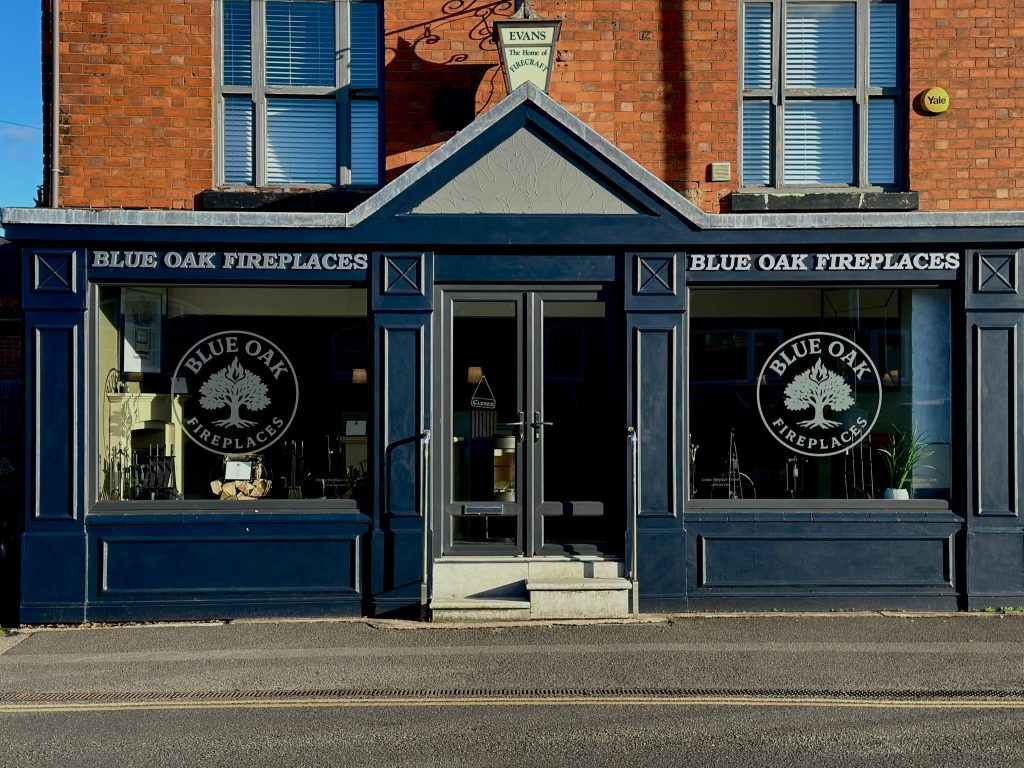
Knowing what to bring to a fireplace showroom makes it easier to turn an attractive display into a realistic plan for your own home. A few room measurements, clear photographs and a short list of priorities usually tell a retailer more than a folder full of inspiration pictures.
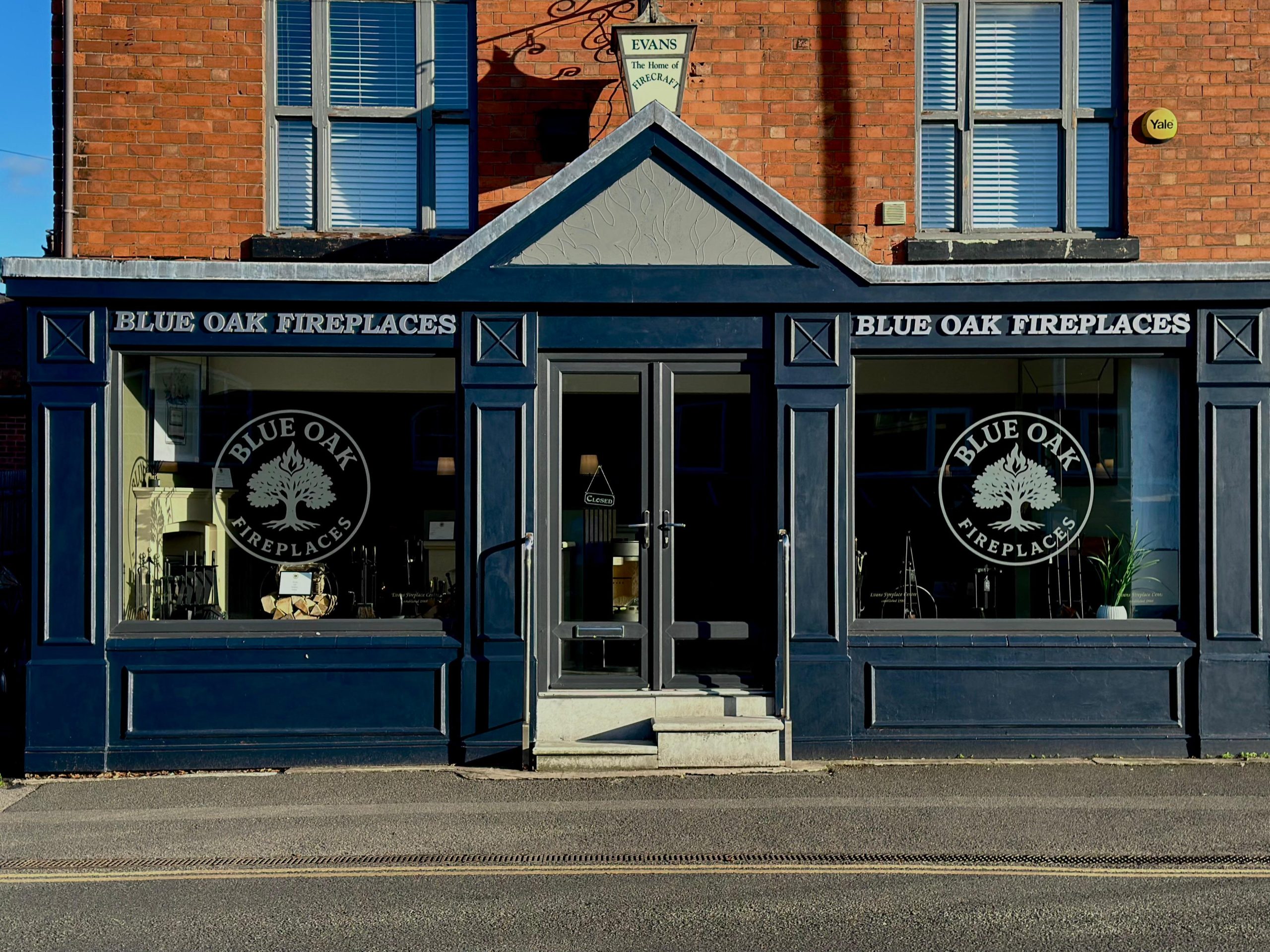
You do not need technical drawings or a final decision before visiting. The aim is to explain the room, compare suitable options and identify what needs checking at a site survey. If you are unsure what to bring to a fireplace showroom, start with information you already have rather than attempting technical checks yourself. This checklist helps Leicester homeowners prepare for a useful conversation at Blue Oak Fireplaces’ Syston showroom.
What to bring to a fireplace showroom: start with how you want to use the fireplace
Write down whether the fire is mainly for atmosphere, occasional extra warmth or regular heating while you sit in one room. Include when you use the space and who uses the controls. A living room used for quiet reading has different priorities from an open-plan family space where the television is usually on.
Bring a ranked list of three priorities, such as a natural-looking flame, straightforward controls and a compact installation. Keep a separate list of preferences you could compromise on. This helps compare options without choosing solely by the largest display or the most dramatic finish.
Take room measurements that explain the layout
Measure the room’s approximate length and width, the available wall width and the ceiling height. Add the distance from the proposed fireplace to the main seating position. These measurements are starting information for discussion, rather than an instruction to order a particular appliance.
- Mark doors, windows, radiators and built-in cupboards on a simple sketch.
- Note furniture you intend to keep, including its approximate size.
- Record any alcoves or projecting chimney breast.
- If a television is involved, bring its model number and dimensions.
Use one unit consistently and label every measurement. If an area is difficult to reach, photograph it and leave the technical measurement to the surveyor. Do not remove a fire, panel or surround to obtain a better view.
Photograph the whole room as well as the fireplace
Take one image from each main doorway, one facing the proposed fireplace wall and one showing the existing fireplace from a safe distance. Include the ceiling line and floor where possible. A close-up of the hearth alone cannot show circulation space, competing focal points or how a new surround would relate to the room.
If you are considering a gas fire or stove, an exterior photograph taken safely from ground level may help explain the property. It does not confirm the condition or suitability of a chimney or flue. The installer still needs to assess the actual installation.
Bring existing appliance details if you have them
A model name, user manual, previous installation paperwork or a photograph of an accessible identification label can be useful. Do not open the appliance or move components to find one. If you have no paperwork, say so: the visit can still establish which checks should happen next.
Manufacturer guidance from Stovax & Gazco identifies flue compatibility and fuel supply as important selection factors for gas appliances. The appearance of an existing opening is therefore only part of the information needed.
Set a project budget with clear boundaries
Distinguish the appliance budget from the overall project budget. Ask what the proposed figure includes: removal, preparation, installation, hearth or surround, making good and disposal may be separate items. If you are decorating or changing flooring, explain who is managing those jobs.
You do not need to disclose an artificial maximum to get a useful recommendation. Explain the range you are comfortable considering and ask which specification changes make the greatest difference to the finished result. Compare written scopes rather than assuming similarly priced projects include the same work.
Test the details you will notice every day
Ask to see controls demonstrated. If available, compare flame effects under different lighting and from a seated position. For an electric model, ask whether you can experience both its visual mode and heating operation. Note which settings you actually like instead of trying to remember several similar model names afterwards.
Discuss cleaning access, routine care and how the appliance would be serviced. A design that suits your room should also suit the way you want to look after it.
Leave with a clear next step
Before leaving, confirm the shortlisted model names, what a survey needs to check and whether the next quotation will cover the complete scope. A short written summary makes the decision easier to revisit with anyone who could not attend.
Who can help me decide what to bring to a fireplace showroom?
The showroom team can explain which details are useful for your particular project before you travel. Ask whether they need information about an existing appliance, a new media wall or a complete room redesign.
Do I need an appointment?
Contact the showroom before travelling if you need time to discuss a particular project or want to see a specific display. Check current opening hours and model availability directly.
Can a showroom visit replace a site survey?
No. Photos and measurements help the initial discussion, but they cannot verify concealed conditions or establish installation suitability.
Keep this checklist of what to bring to a fireplace showroom with your room sketch, photographs and shortlisted models. Ready to plan your visit? Explore electric fires, gas fires and stoves, then contact Blue Oak Fireplaces with your room sketch and questions.