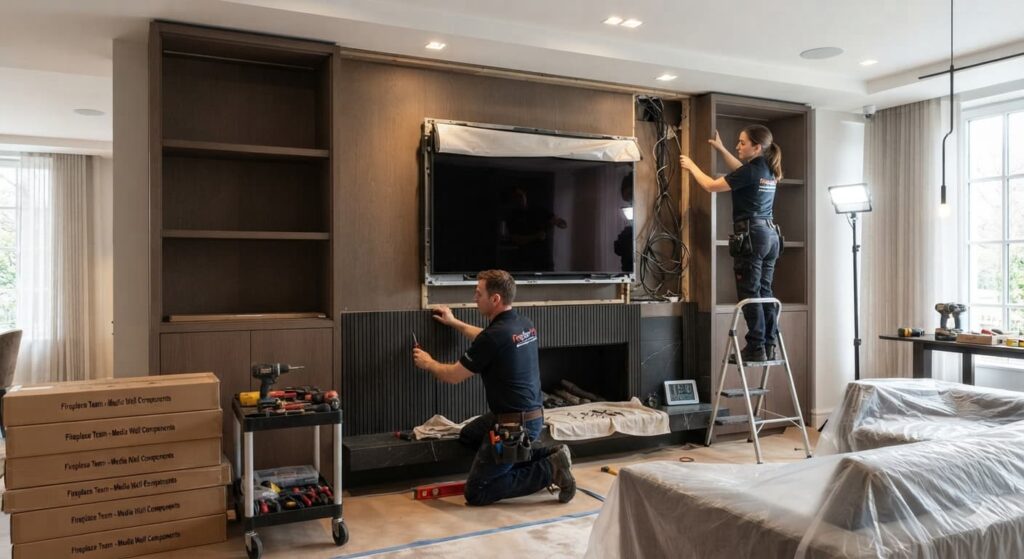
If you are planning to add a fireplace to your home, one of the first questions you will likely ask is: what exactly does a professional fireplace installation involve? It is a fair question. For many homeowners, a fireplace is one of the most significant investments they will make in their property, and knowing what is covered from start to finish helps you plan with confidence.
At Blue Oak Fireplaces, we have been designing, supplying, and installing fires and fireplace surrounds across Leicester and the Midlands for over two decades. In this guide, we walk you through everything that is included in a professional fireplace installation, whether you are choosing a gas fire, an electric fire, a wood-burning stove, or a full media wall build.
Why Professional Fireplace Installation Matters
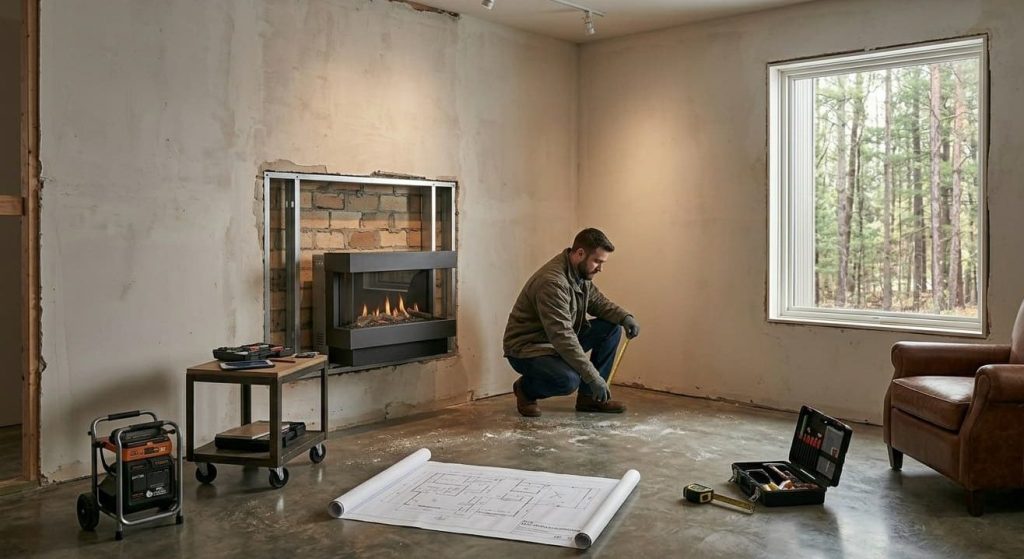
Installing a fireplace is not like hanging a picture or laying new flooring. It involves gas connections, flue systems, building regulations, ventilation requirements, and structural considerations that must all be handled correctly. A poorly installed fire can lead to carbon monoxide leaks, chimney fires, structural damage, or a voided insurance policy.
Choosing a professional installer means you get:
- A certified and experienced fitter who follows UK building regulations and manufacturer guidelines
- A complete home survey to assess your chimney, flue, and structural suitability before any work begins
- Proper commissioning and testing to confirm your fireplace is safe and performing efficiently
- Full documentation including Gas Safe certificates (for gas fires), HETAS certification (for solid fuel appliances), and building notification records
The peace of mind alone is worth it. Let us break down exactly what happens at each stage.
Step 1: Initial Consultation and Design
Every professional fireplace installation begins with a conversation, not a toolkit.
When you visit our showroom in Syston, Leicester, or get in touch via our contact page, our experts take time to understand your home, your heating needs, your aesthetic preferences, and your budget.
During the consultation, your installer will typically discuss:
- The type of fire you want (gas, electric, solid fuel, or bio-ethanol)
- Your existing chimney or flue situation (whether you have a working chimney, a blocked one, or no chimney at all)
- The size and layout of the room to recommend the correct heat output (measured in kW)
- Your preferred surround style, from classic stone and marble to sleek modern frameless designs
- Budget and lead times so you know what to expect before committing
This stage is about making sure the right fireplace is chosen for your specific home. Installing a fire that is too powerful for a small room, or the wrong type for your chimney, creates problems down the line.
Step 2: Home Survey
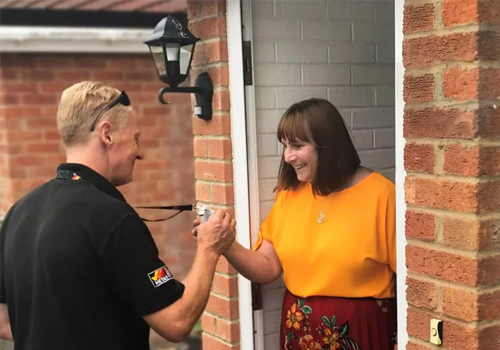
Before any installation date is confirmed, a qualified surveyor or fitter will visit your property to carry out a full home survey. This is a critical step that many homeowners are surprised to learn is part of the process.
The home survey typically covers:
Chimney and Flue Assessment
Your installer will inspect whether your existing chimney is structurally sound, the correct size for your chosen appliance, and free from blockages or damage. For properties without an existing chimney, they will discuss options such as:
- Twin-wall flue systems for internal or external installation
- Prefabricated flue liners that can be inserted into existing masonry chimneys
- Balanced flue gas fires that do not require a traditional chimney at all
If you are unsure about the condition of your chimney liner, our guide on when to replace a flue liner is a useful starting point.
Structural Assessment
The fitter will check that the wall, hearth, and floor can support the weight and heat output of the proposed installation. Fireplaces and stoves can be heavy, and hearth regulations in the UK specify minimum dimensions and non-combustible material requirements that must be met.
Ventilation Check
All solid fuel appliances and many gas fires require adequate ventilation to work safely and efficiently. Your installer will check whether air bricks or vents are in place, and whether additional ventilation needs to be installed.
Gas Supply Check (for gas fires)
For gas fire installations, the engineer will assess the proximity of the gas supply and whether the existing pipework is suitable for the new appliance.
Step 3: Preparation and Removal of Existing Fireplace (if applicable)

If you are replacing an old fireplace, gas fire, or electric fire, your installer will remove the existing unit safely before the new installation begins. This typically includes:
- Disconnecting any gas or electric connections safely
- Removing the old fire surround, back panel, and hearth if they are being replaced
- Making good any damage to the chimney breast or surrounding wall
- Carrying out a chimney sweep to clear the flue before the new appliance is fitted
A chimney sweep before installation is standard practice. You would not put a new engine in a car with a blocked exhaust, and the same logic applies here. Our fireplace services team includes professional chimney sweeping as part of comprehensive installation projects.
Step 4: The Installation Itself
This is where the visible transformation happens. What is included during the actual installation day (or days, for more complex builds) depends on the type of fireplace you have chosen.
Gas Fire Installation
For a gas fire installation, a Gas Safe registered engineer will:
- Position and secure the fire within the fireplace opening or on the wall
- Connect the appliance to the gas supply using approved pipework and fittings
- Install or check the flue or balanced flue terminal (for flueless/balanced flue fires)
- Fit any back panels, glass fronts, or decorative surrounds
- Test for gas tightness to confirm there are no leaks in the pipework
- Light the fire and run it through its operating cycle to confirm safe combustion
- Set the flame effect, heat output controls, and any remote control or thermostat settings
Only a Gas Safe registered engineer is legally permitted to connect and commission gas appliances in the UK. Always ask to see your installer’s Gas Safe ID before any gas work begins.
Electric Fire Installation
Electric fire installations are generally less complex from a regulatory standpoint but still require careful fitting. Your installer will:
- Position the fire into the chosen recess, wall cavity, or surround
- Connect to the mains electricity supply (a dedicated circuit may be required for larger electric fires)
- Fit any surrounding framework, trim, or surround panels
- Test all functions including heat settings, flame effect settings, and remote control operation
- Confirm the unit is level, secure, and sealed correctly
Electric fires are a popular choice for rooms with no chimney, rented properties, or homeowners who want a realistic flame effect with minimal maintenance.
Wood-Burning Stove or Multi-Fuel Stove Installation
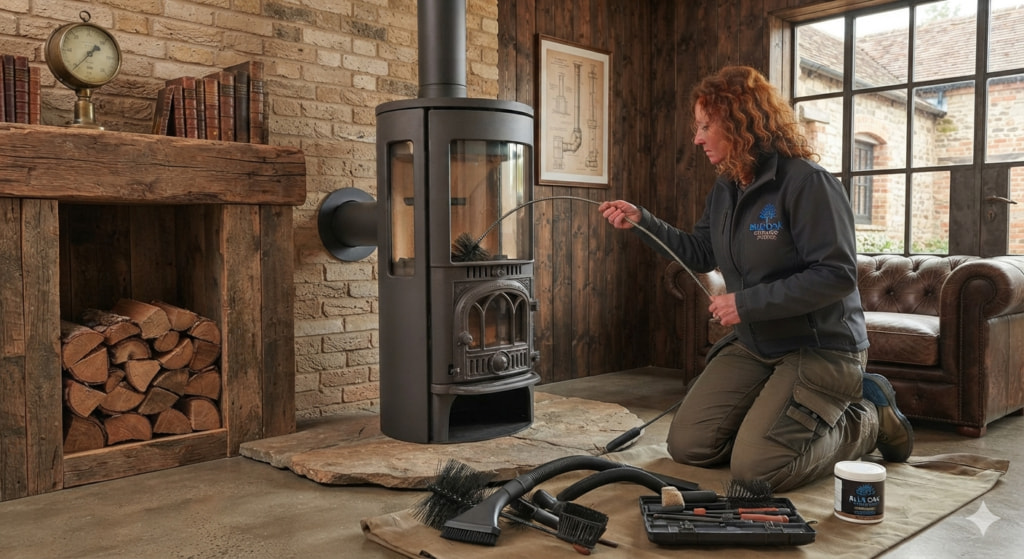
A stove installation is typically the most involved type of fireplace fitting. Your installer will:
- Position the stove correctly on the hearth (which must meet minimum size and material requirements under UK Building Regulations)
- Connect the stove to the flue system, either via a liner inside an existing chimney or a twin-wall flue system installed through the room and roof
- Seal all flue joints and connections to prevent smoke or CO from entering the room
- Install any register plate to seal the chimney opening around the flue pipe
- Fit a chimney cowl or rain cap to prevent weather ingress and down-draughts
- Carry out a smoke draw test to confirm the flue is pulling correctly
- Light the stove for the first time and run it through a low-temperature commissioning burn
- Advise you on how to run in your stove correctly (a gradual break-in process that cures the paint and rope seals)
For stoves installed in England, your installer must notify the installation to your local building control authority. A HETAS-registered installer can self-certify the work, which streamlines this process considerably.
Media Wall Installation
A media wall with an integrated fireplace is the most bespoke of all installation types. It combines electrical, structural, and fireplace fitting work together. Your installer and build team will:
- Design and construct the media wall framework (typically in steel studwork with calcium silicate board for fire resistance)
- Create a recess for the fire and a separate housing for the TV and AV equipment
- Install the electric or gas fire within the recess according to manufacturer clearance requirements
- Cable all electrical connections including TV points, power sockets, and fire controls
- Plaster, skim, and finish the wall surface
- Fit any decorative panels, LED strip lighting, or tile finishes around the fireplace and TV
- Commission all elements and demonstrate operation
A media wall project can take two to five days depending on complexity, and the results are transformational for any living space.
Step 5: Commissioning, Testing, and Safety Checks
Once the installation is physically complete, your fitter does not simply pack up and leave. Professional commissioning is what separates a safe, compliant installation from a risky one.
Commissioning includes:
- Gas tightness testing (for gas appliances) to confirm no leaks exist anywhere in the pipework
- Flue flow testing using smoke pellets or a smoke match to confirm the chimney or flue is drawing correctly
- Thermostat and control calibration so the fire responds correctly to temperature settings
- Running the appliance at full output to check for any unusual smells, sounds, or performance issues
- Carbon monoxide detector placement advice or installation (strongly recommended for all gas and solid fuel appliances)
At this stage, any small adjustments are made on the spot to ensure everything is working exactly as it should.
Step 6: Homeowner Demonstration and Handover
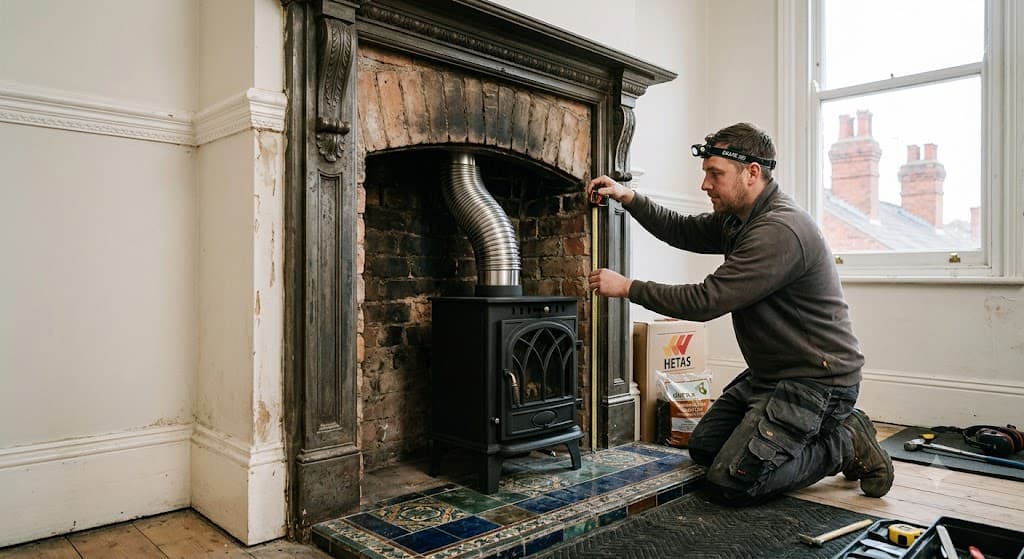
A professional installer will always take time to show you how to use your new fireplace correctly. This is more important than many homeowners realise, particularly for gas fires with complex controls or wood-burning stoves that require a specific lighting and fuelling technique.
Your demonstration will typically cover:
- How to light and operate the fire safely
- How to adjust heat output and flame settings
- How to use any remote control, thermostat, or smart home integration
- Maintenance tips specific to your appliance type
- How often to book a service or chimney sweep (annually for gas fires and stoves is the standard recommendation)
- What to do in an emergency, including how to shut off the gas supply if needed
Step 7: Certificates and Documentation
At handover, your installer should provide you with all relevant paperwork. Do not accept an installation without it.
Depending on your fireplace type, this includes:
- Gas Safe certificate confirming the gas work meets current regulations (for gas fires)
- HETAS certificate or building regulations compliance certificate (for solid fuel appliances)
- Building control notification confirmation (for stoves in England)
- Manufacturer’s warranty documentation for the fire and any component parts
- Commissioning report detailing the tests carried out and results
- Service record card to log future annual services
Keep these documents safe. They will be needed when you come to sell your property, as conveyancing solicitors routinely request installation certificates for gas and solid fuel appliances.
What Is NOT Typically Included in a Standard Installation
Understanding what falls outside a standard installation quote is equally important. These items may be quoted separately or flagged as additional work during the home survey:
- Chimney re-lining if the existing liner is cracked, corroded, or the wrong diameter for the new appliance
- Structural repairs to the chimney breast, breast removal, or chimney stack if there is existing damage
- New hearth construction if the existing hearth does not meet current regulations in size or material
- Plastering or decorating around the fireplace opening after installation (beyond making good)
- Additional ventilation work if new air bricks or grilles need to be installed
- Asbestos removal if your property is older and the existing fireplace contains asbestos materials (this requires a specialist contractor)
A reputable installer will identify all of these potential additional costs during the home survey, before any work begins, so there are no unpleasant surprises on the day.
How Long Does a Professional Fireplace Installation Take?
The time required varies significantly by fireplace type:
| Fireplace Type | Typical Installation Time |
|---|---|
| Electric fire (inset or wall-mounted) | Half a day to 1 day |
| Gas fire (existing chimney) | 1 day |
| Gas fire (new flue required) | 1 to 2 days |
| Wood-burning stove (existing chimney) | 1 day |
| Wood-burning stove (new flue system) | 1 to 2 days |
| Media wall with integrated fire | 2 to 5 days |
These are estimates. Larger projects, older properties, or unforeseen structural issues can extend timelines, which is why a thorough home survey is so valuable.
Choosing the Right Installer: What to Look For
Not all fireplace fitters are equal. Here is what to check before booking any installer:
For gas fire installations: Confirm your installer is registered with Gas Safe (formerly CORGI). You can verify any Gas Safe engineer at gassaferegister.co.uk using their registration number.
For solid fuel stoves: Look for HETAS registration, which confirms the installer is trained and competent to fit solid fuel appliances and self-certify the work to building control.
For all installations: Look for membership of the National Fireplace Association (NFA), evidence of manufacturer training on the specific products being installed, and a portfolio of recent completed projects.
At Blue Oak Fireplaces, our services team includes Gas Safe registered engineers and experienced stove fitters who have been trusted by homeowners across Leicester and the East Midlands for over 25 years. You can view completed projects in our gallery and read about real installations in our case studies.
After the Installation: Ongoing Care and Servicing
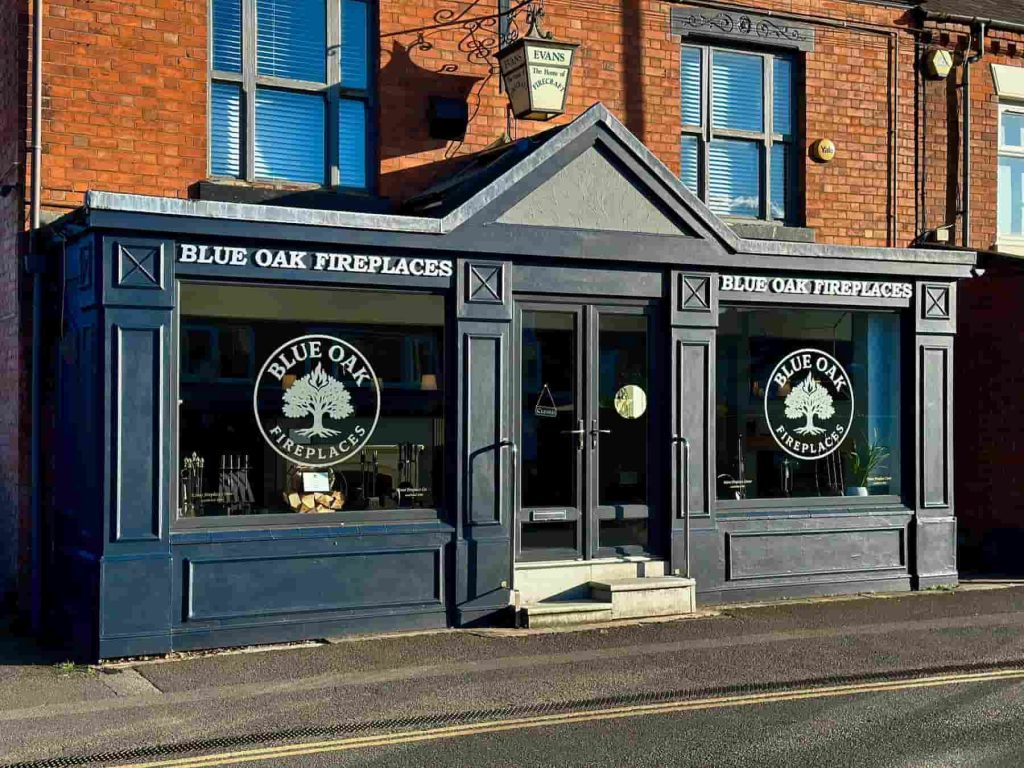
Your relationship with your fireplace does not end at installation. Ongoing maintenance is essential to keep it safe, efficient, and looking its best.
Annual gas fire servicing is strongly recommended and includes a full inspection of the burner, heat exchanger, flue, and all controls. Our Gas Safe team provides this as part of our ongoing fireplace services.
Annual chimney sweeping is required for all solid fuel appliances and recommended for gas fires with a conventional flue. Regular sweeping removes creosote, soot, and blockages that can cause chimney fires or carbon monoxide ingress.
Stove maintenance, including glass cleaning, door rope replacement, and firebrick inspection, is typically needed every one to two years depending on how frequently the stove is used.
If you are thinking about your stove or gas fire surround as well, visit our surrounds range to see how the complete picture comes together with beautiful stone, marble, wood, and cast iron options.
Ready to Get Started?
A professional fireplace installation is a rewarding investment. It adds warmth, character, and real value to your home, and when done properly by an experienced team, it is built to last for decades.
Whether you already know exactly what you want or you are at the very beginning of your research, the best next step is to visit our showroom in Syston, Leicester, where you can see our full range of fires, stoves, and surrounds in person, or contact us to book your free home survey.
Our team is ready to guide you through every step of the process, from first conversation to final commissioning.
Frequently Asked Questions
What does a professional fireplace installation include?
A professional fireplace installation near me includes an initial design consultation, a full home survey to assess your chimney, flue, ventilation, and structural suitability, the physical fitting of the fire and any surround or hearth, commissioning and safety testing of the appliance, a full homeowner demonstration, and the issue of all relevant compliance certificates. For gas fires, this means a Gas Safe certificate. For solid fuel stoves, this includes a HETAS certificate or building regulations notification.
Do I need a chimney to have a fireplace installed?
No, you do not necessarily need an existing chimney. Many modern gas fires are available as balanced flue or flueless models that do not require a traditional chimney at all. Electric fires need no flue of any kind. For wood-burning and multi-fuel stoves, if you do not have a chimney, a twin-wall flue system can be installed internally or externally to provide the required draught. Your installer will assess your options during the home survey.
How long does a fireplace installation near me take?
Most standard fireplace installations take between half a day and two days. A straightforward electric fire inset can often be completed in half a day. Gas fires with an existing chimney typically take one full day. Wood-burning stove installations with a new twin-wall flue system may take one to two days. A bespoke media wall with an integrated fire is the most involved project and can take two to five days depending on size and complexity.
Is a Gas Safe certificate required for a new gas fire installation?
Yes. In the UK, any gas appliance installation must be carried out by a Gas Safe registered engineer, and a Gas Safe certificate must be issued on completion. This certificate proves the installation meets current gas safety regulations. It is also required by mortgage lenders and conveyancing solicitors when you sell your property. Never accept a gas fire installation from someone who cannot provide this certificate.
Do I need building regulations approval for a fireplace installation?
For gas fires installed in existing openings, building regulations notification is typically not required, though the work must still comply with Part J of the Building Regulations. For new solid fuel stoves and wood-burning fires, you do need to notify your local building control authority. A HETAS-registered installer can self-certify the work on your behalf, which simplifies the process considerably. Your installer will advise on what notifications are needed for your specific project.
How much does a professional fireplace installation cost in the UK?
Costs vary widely depending on the type of fireplace, the complexity of the installation, and whether any additional work is needed such as chimney relining or new hearth construction. As a broad guide, a basic electric fire installation might start from a few hundred pounds, while a gas fire installation in an existing chimney typically ranges from £500 to £1,500 for labour. Wood-burning stove installations with a new flue system can range from £1,500 to £4,000 or more. A bespoke media wall build is priced individually based on design. The most accurate way to get a price is to book a home survey with your chosen installer.
How often should I service my fireplace after installation?
Annual servicing is the standard recommendation for all gas fires and wood-burning stoves. For gas fires, an annual service by a Gas Safe registered engineer checks the burner, flue, seals, and controls to keep the appliance safe and efficient. For stoves, an annual inspection covers the door seals, glass, firebricks, and flue integrity. Chimneys and flues should be swept at least once a year for gas fires with a conventional flue, and between one and three times per year for solid fuel appliances depending on how frequently they are used.
Can I install a fireplace in any room in my house?
In principle, yes, though the practicalities vary by room and appliance type. Electric fires are the most flexible option and can be installed in virtually any room without a flue. Gas fires require either an existing flue, a new flue, or a balanced flue terminal on an external wall. Solid fuel stoves require a suitable flue with adequate height and draw, which can limit installation locations. Bathrooms have specific regulations around gas appliance installation due to the risk of moisture and combustion air contamination. A home survey will confirm what is achievable in your chosen room.
What is the difference between a flue and a chimney?
A chimney is the masonry structure that you see running up through a house and protruding above the roofline. A flue is the internal passageway or liner within the chimney through which combustion gases travel from the fireplace up and out of the building. In modern installations, a flexible stainless steel liner is often inserted into an existing masonry chimney to create a correctly sized, sealed flue for the new appliance. You can learn more about flue liner health and when to consider replacement in our guide on when to replace a flue liner.
What should I do to prepare my home for a professional fireplace installation?
Clear the area around the fireplace opening and along the route your fitters will need to access. Remove any furniture, rugs, or decor that could be affected by dust or activity. If your fitter has advised you to arrange a chimney sweep in advance, book this before the installation date. Make sure the fitters have easy parking access. Your installer will give you a specific pre-installation checklist during the survey stage so you know exactly what is expected on the day.
Blue Oak Fireplaces serves homeowners across Leicester, Syston, and the wider East Midlands. Visit our showroom at 1159 Melton Road, Syston, LE7 2JS, or call us on 0116 373 4193 to book your free consultation.