Introduction
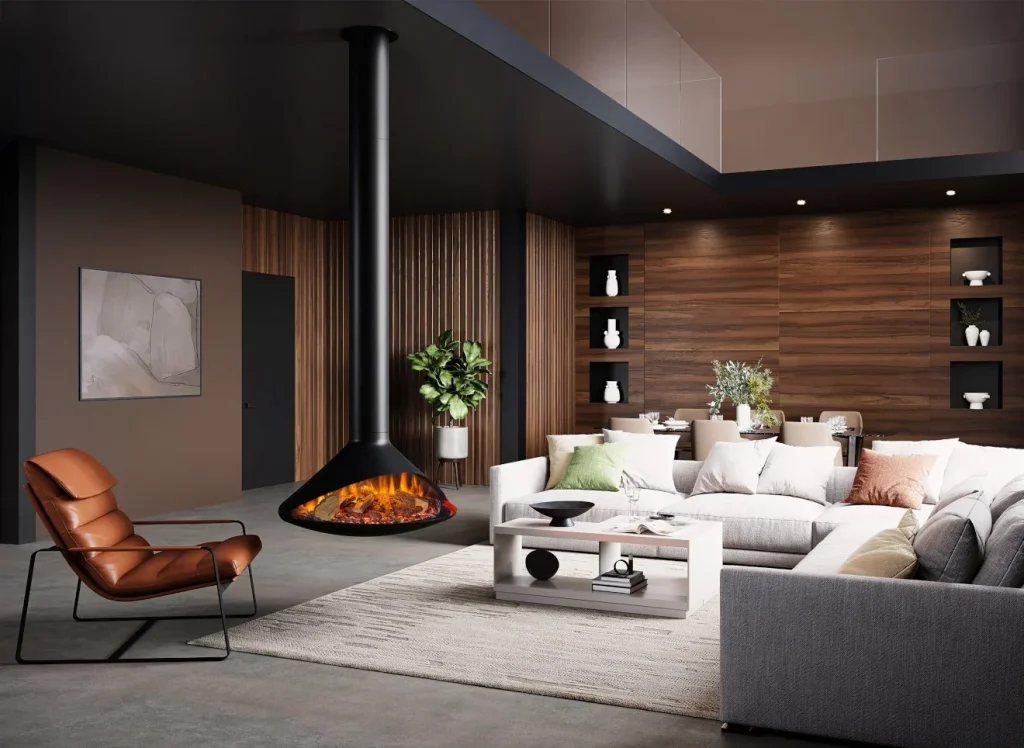
For a long time, electric fireplaces were treated as a compromise.
They were chosen when a chimney was not available, or when installation needed to be simple. They were rarely the first choice, and almost never the preferred one.
For many UK homes, especially modern properties, new builds and smaller living rooms, electric fires are becoming increasingly popular. For traditional homes, larger rooms and homeowners who want real flame heat, gas fires remain a strong option. At Blue Oak Fireplaces, we help customers compare electric fires, gas fires, stoves, fireplace surrounds and media wall fireplaces so they can choose the right solution with confidence.
Modern Electric fireplaces are now often selected deliberately, not out of necessity, but because they align more naturally with how modern homes are used. They offer flexibility, consistency and a level of design freedom that traditional options struggle to match.
The shift is not about imitation. It is about relevance.
How the Role of the Fireplace Has Changed
Historically, fireplaces were defined by function. They were the primary source of heat, and their presence dictated the structure of the room.
Today, that role is different.
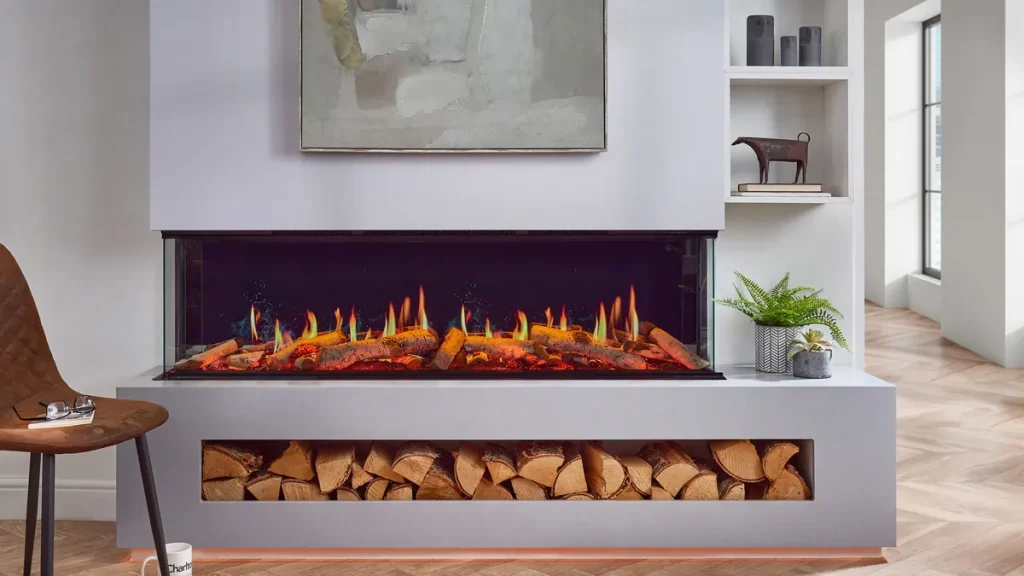
Heating is no longer dependent on a single feature. Central systems have replaced that need. As a result, the fireplace has shifted from necessity to choice.
This change allows homeowners to prioritise how a fireplace feels in a space, rather than what it must do. It becomes a visual anchor, a source of atmosphere, a point of balance within the room.
electric fireplaces fit naturally into this evolution.
Electric Fires vs Gas Fires: Which Should You Choose?
Choose an electric fire if you want simple installation, modern design, low maintenance, no chimney requirement and strong media wall flexibility. Electric fires are ideal for homeowners who want a stylish fireplace feature without major structural work.
Choose a gas fire if you want real flames, strong heat output and a more traditional fireplace experience. Gas fires are ideal for homes with a suitable chimney or flue and for homeowners who value realistic flame performance.
The best fireplace is not just about the appliance. It is about the room, the wall, the heat requirement, the finish and the way you live. That is why visiting a fireplace showroom can make the decision much easier.
Why Electric Fireplaces Work So Well in Leicester Homes
Leicester offers a wide mix of property types. Victorian terraces, semi-detached homes from the mid-20th century, and newer developments all coexist within the same areas.
Many of these properties either lack a usable chimney or have layouts that do not suit traditional fireplace placement.
Electric fireplaces remove those constraints.
They do not require structural alteration. They can be installed in almost any position. They allow the room to dictate the design, rather than the other way around.
This flexibility is what makes them increasingly relevant.
The Shift From Heat to Atmosphere
One of the most important differences with modern electric fireplaces is how they are used.
They are not always switched on for warmth. In many cases, they are used for presence. The movement of light, the subtle flicker, the visual warmth they introduce into the room.
Most modern units allow the flame effect to operate independently of heat. This means the fireplace can contribute to the atmosphere of the space throughout the year, not just in colder months.
It becomes part of the room’s identity, rather than a seasonal feature.
Where Electric Fireplaces Work Best
Electric fireplace are particularly effective in certain environments.
In new build homes, where no chimney exists, they provide a clean and practical solution. In renovated properties, they avoid the disruption that comes with structural work. In media walls, they integrate seamlessly into a wider design.
They are also well suited to smaller rooms, where scale and flexibility are critical. Their ability to be wall-mounted, inset or freestanding allows for more control over how space is used.
This adaptability is difficult to replicate with gas fires or solid fuel options.
Comparing Electric Fireplaces With Other Options
Understanding why electric fireplaces are gaining popularity becomes clearer when compared with alternatives.
Gas fires offer stronger heat output, but they require connection, certification and ongoing servicing. They are less flexible in placement and often more restrictive in design.
Log burners provide character and strong heat, but they demand maintenance, fuel storage and compliance with regulations. They also impose a fixed location within the room.
Electric fireplaces, by contrast, require minimal infrastructure. They can be positioned more freely and integrated into a wider range of designs. Their limitation is not functionality, but perception, and that perception is rapidly changing.
For many homeowners, the trade-off is no longer a compromise. It is a preference.
Running Costs: Which Is Cheaper?
Running costs are one of the biggest questions when comparing an electric fire vs gas fire. The answer depends on how often you use the fireplace, the heat setting, your energy tariff and the size of the room.
Electric fires are often used for ambience because many models allow you to enjoy the flame effect without using the heater. This is useful if you want the look of a cosy fireplace without constant heat. When the heater is on, electric fires are typically best for supplementary warmth rather than heating a large room all day.
Gas fires can provide strong heat output and may be suitable for regular room heating. However, they also require professional servicing and must be installed correctly. The cheapest option is not always the best option. Homeowners should compare running costs, installation costs, maintenance and long-term value.
Choosing an Electric Fireplaces That Feels Right
Not all electric fireplaces are equal.
The difference is not just in features, but in how they present themselves within the room.
Flame quality is one of the most noticeable factors. A realistic, well-layered effect creates depth. A flat or overly artificial effect can feel distracting.
Scale is equally important. A fireplace that is too narrow can feel temporary. A wider unit tends to anchor the space more effectively.
Even when switched off, the fireplace should feel intentional. The frame, the finish and how it sits within the wall all contribute to this.
A good electric fireplaces does not rely on being on to justify its presence.
Maintenance and Servicing
Electric fires are generally low maintenance. There is no ash, no soot, no chimney sweeping and no gas safety check. The main care usually involves keeping the fire clean, checking the remote control and following the manufacturer’s instructions.

Gas fires need more regular care. A gas fire should be serviced by a qualified professional to keep it safe, efficient and working correctly. Regular gas fire servicing can help identify issues with ventilation, flame quality, pilot lights, seals and appliance performance.
If low maintenance is your priority, electric fires have a clear advantage. If you prefer the warmth and feel of a real gas flame, the extra maintenance may be worth it.
Safety: What Should UK Homeowners Know?
Both electric fire vs gas fire can be safe when installed and used correctly. Electric fires should be fitted according to manufacturer guidance, with safe wiring and proper clearance around the appliance. Gas fires need correct installation, ventilation and servicing.
Any gas fire installation or service should be handled by a suitably qualified engineer. For solid fuel appliances and stoves, homeowners should also seek appropriate professional advice for the flue, chimney liner, hearth, ventilation and building requirements.
At Blue Oak Fireplaces, safety is always part of the design and installation conversation. A fireplace should look beautiful, but it also needs to be suitable for the home.
Running Costs and Everyday Practicality
Electric fireplaces are straightforward to live with.
They do not require fuel deliveries, chimney maintenance or specialist servicing in the same way as other options. Their running costs are predictable, and their use is simple.
For many homeowners, this ease becomes one of their most valued qualities. The fireplace becomes something that can be used without thought, rather than something that requires preparation.
This simplicity aligns with how modern homes are used efficiently, consistently and without unnecessary complexity.
The Quiet Details That Define Quality
What makes one electric fireplace feel better than another is rarely obvious at first glance.
It is in the proportions. The depth of the flame effect. The subtlety of the lighting. The absence of unnecessary detail.
A well-designed unit feels calm. It does not try to impress immediately. Instead, it settles into the space and continues to feel appropriate over time.
This is what separates a temporary solution from something that feels permanent.
Why Visit Blue Oak Fireplaces?
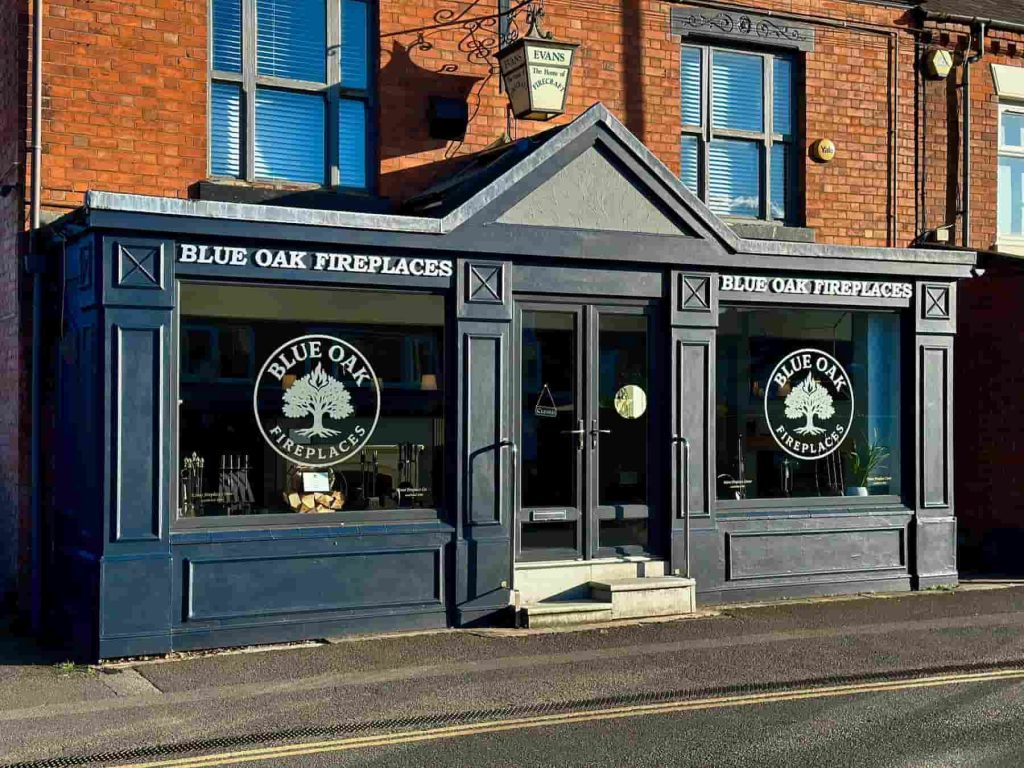
Blue Oak Fireplaces helps homeowners explore electric fires, gas fires, stoves, media walls, fireplace surrounds and professional fireplace installation. Whether you want a modern electric fireplace, media wall, or a traditional gas fires with a surround, contact us at +44 116 373 4193. The right advice can help you avoid costly mistakes.
If you are comparing electric fires vs gas fires in Leicester or across the Midlands, visiting a showroom gives you the chance to see flame effects, finishes, sizes and design options in person.
Final Thought
Electric fireplaces have not replaced traditional options. They have redefined what a fireplace can be.
They offer a different kind of value; one based on flexibility, design and ease of use. For many Leicester homeowners, that combination is not a compromise. It is exactly what they need.
A fireplace no longer needs to dictate the room. It can now adapt to it.
If you are still unsure, the best next step is to speak with a fireplace specialist. Blue Oak Fireplaces can help you compare the options and choose a fireplace that suits your home, style and heating needs.